I’m still playing catch-up after my month of sickness. Two colds and a stomach virus! Good riddance, April! Now I just have to make it through a crazy insane week and we’ll have our beach vacation!
I’m currently working on a rainbow page for Jax’s quiet book. It’s taken some though and revisions, but last night in bed I finally got it figured out by sketching ideas on the iPad. I should get it done in the next few days. I also sketched out a cupcake page idea. My next page’s pattern is already drawn and printed – a vegetable farmer’s market! I’m excited to work on it during vacation. I’m also going to draw the pattern for the cupcake page before the trip, just in case I finish the veggies fast. Sneak peaks will be in the Facebook page, as usual.
Do you have any great quiet book pages you are proud of that you’d like to show off? I’d love to feature others’ pages here occasionally. If you’d like to be featured, email me your photos (or links to your photos), your name and any notes you’d like to add about them, and a link to your website (if applicable).
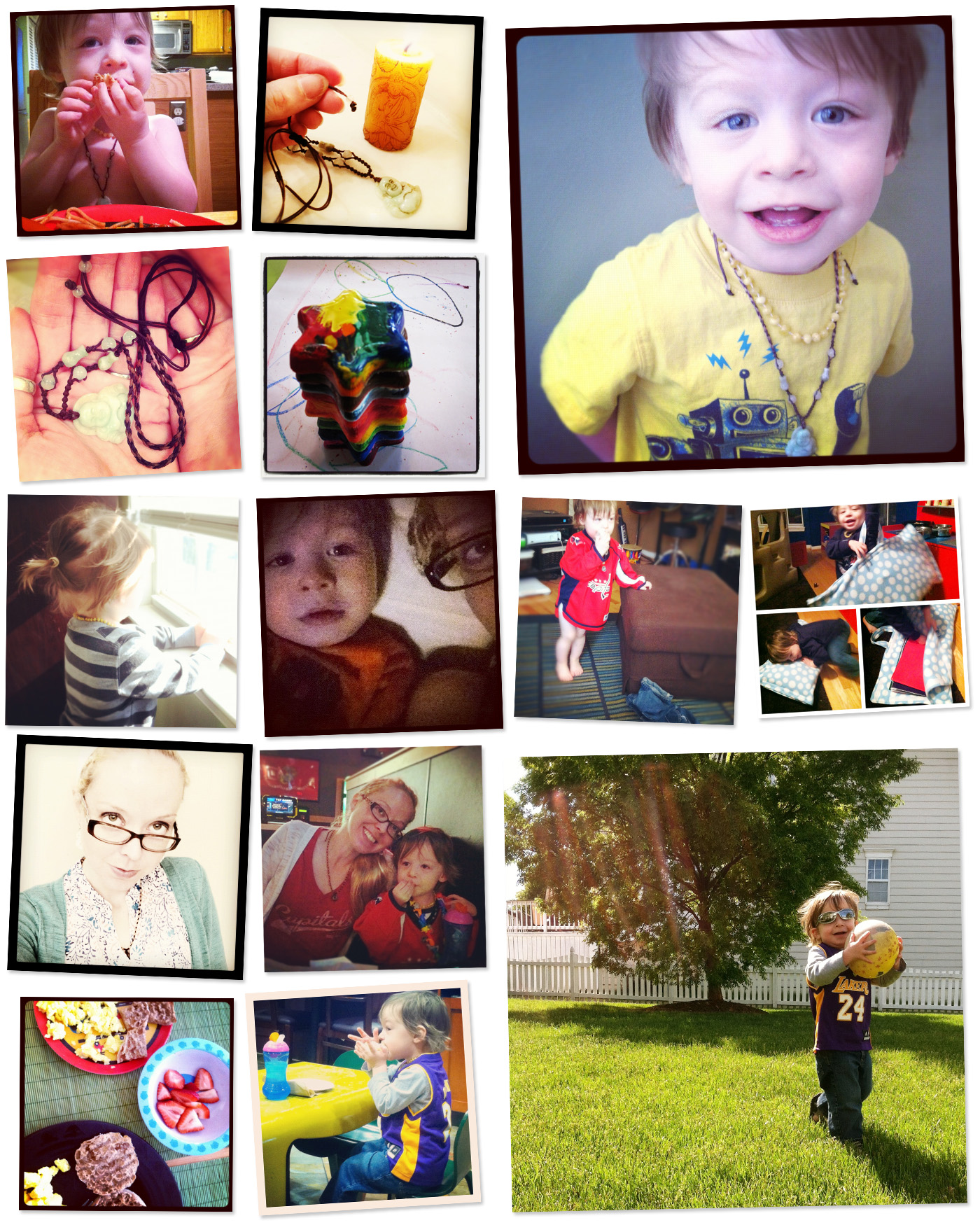
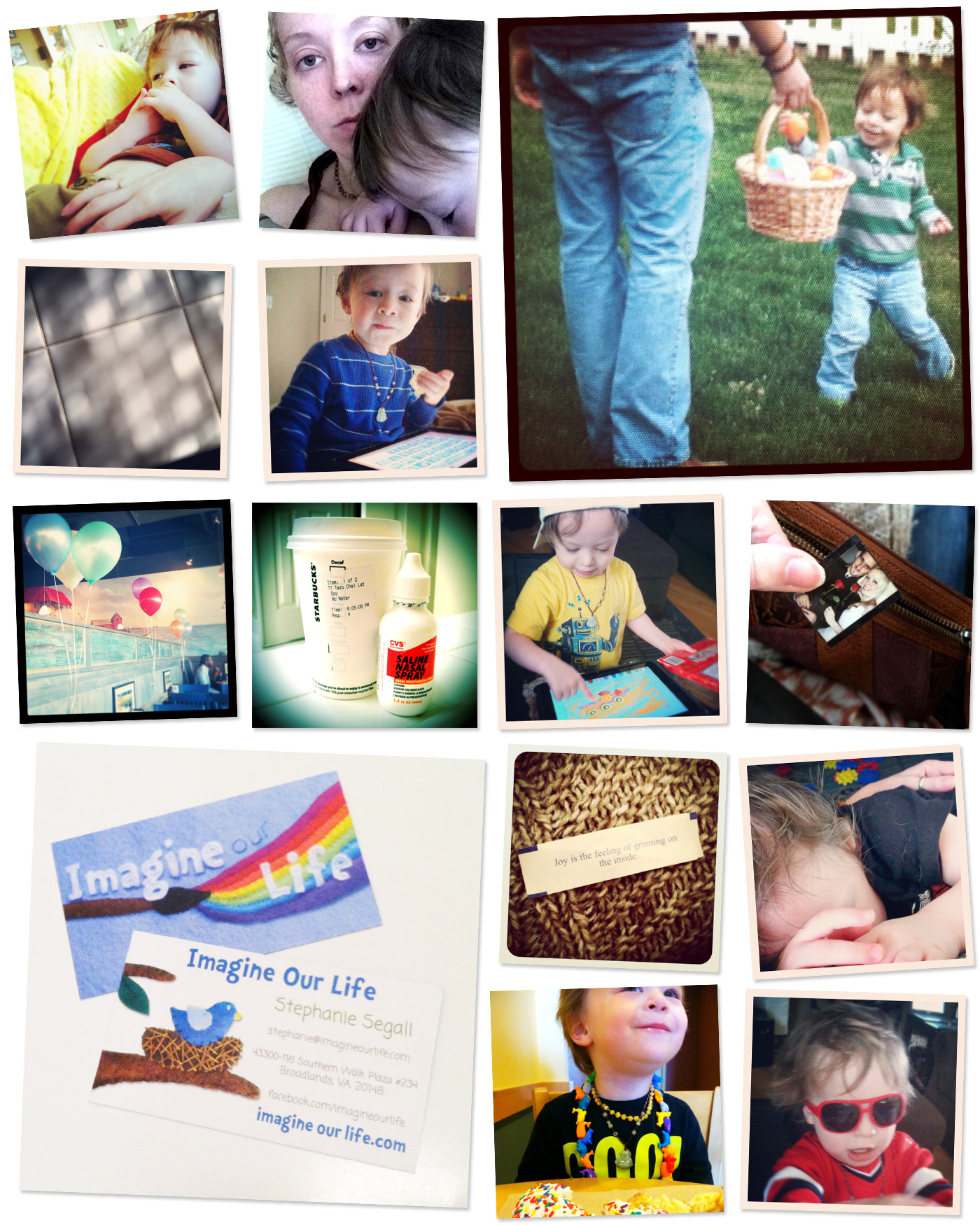
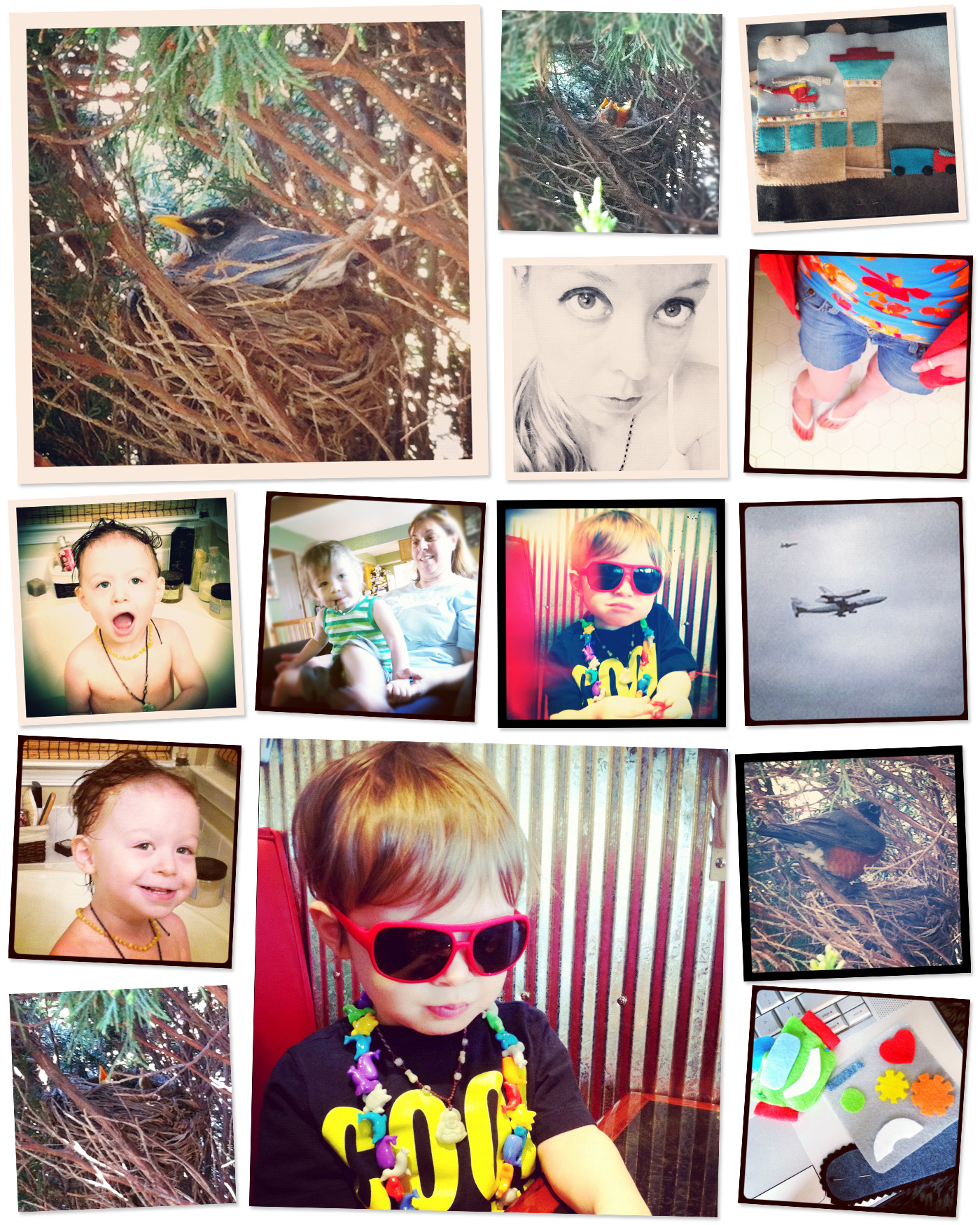
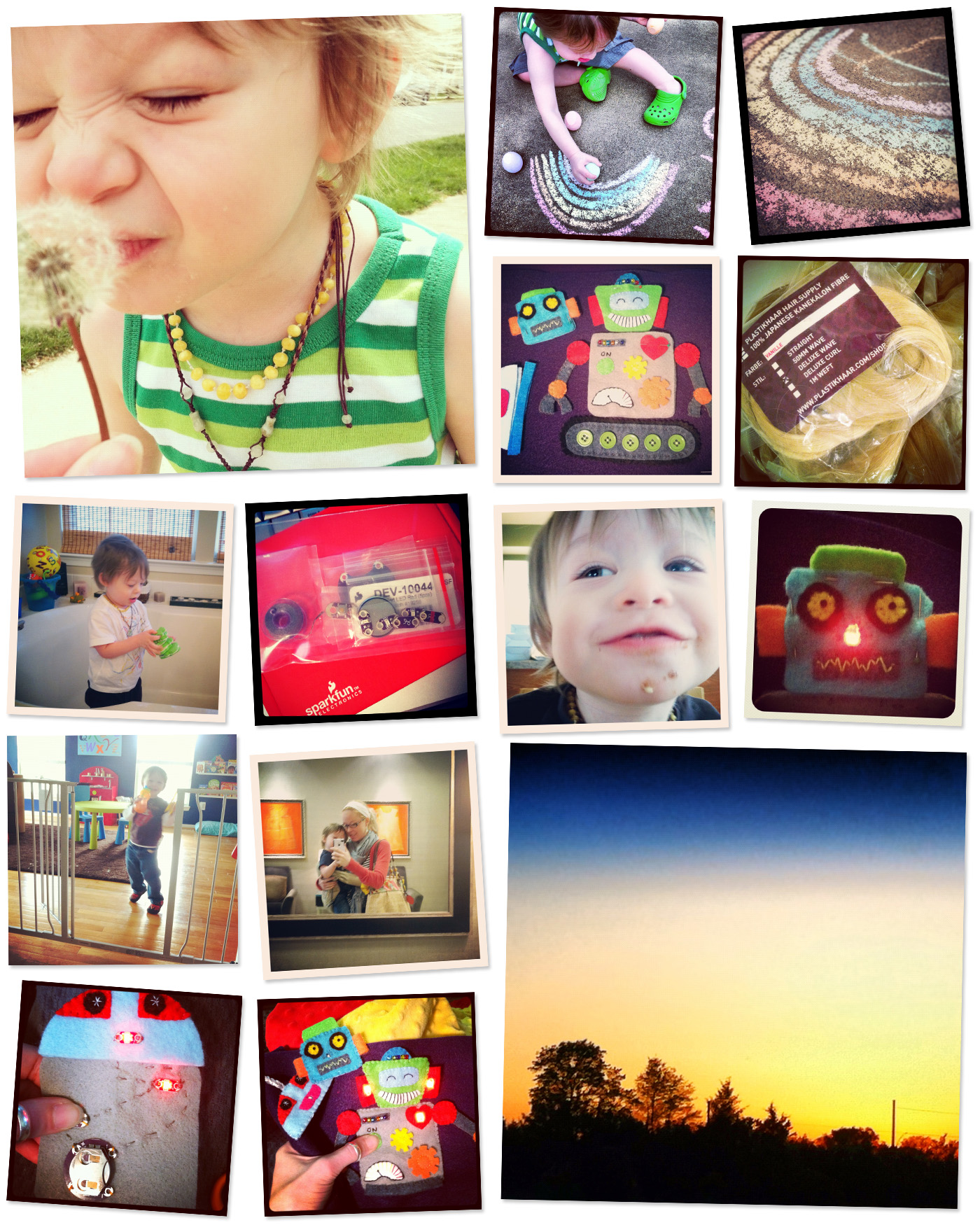
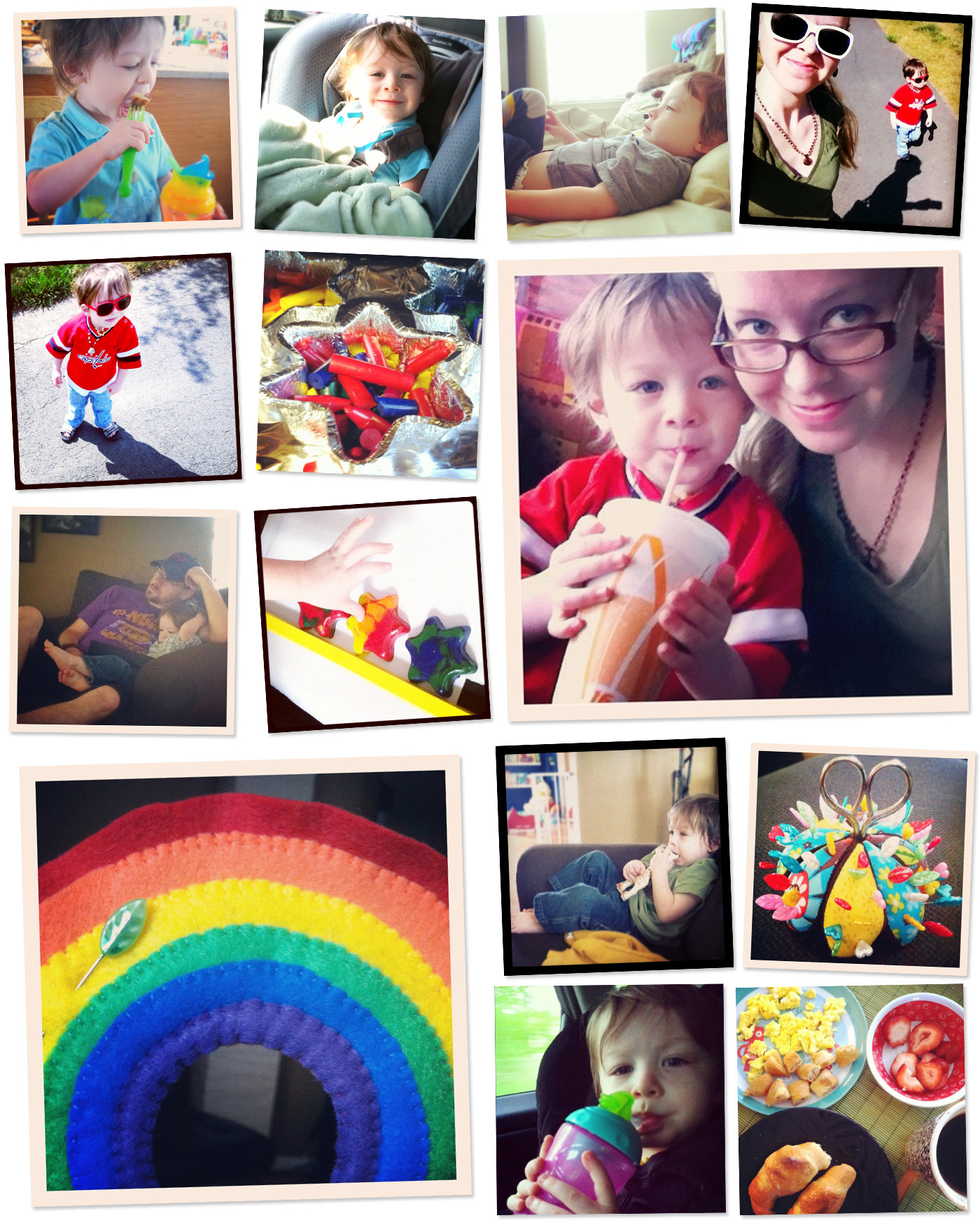
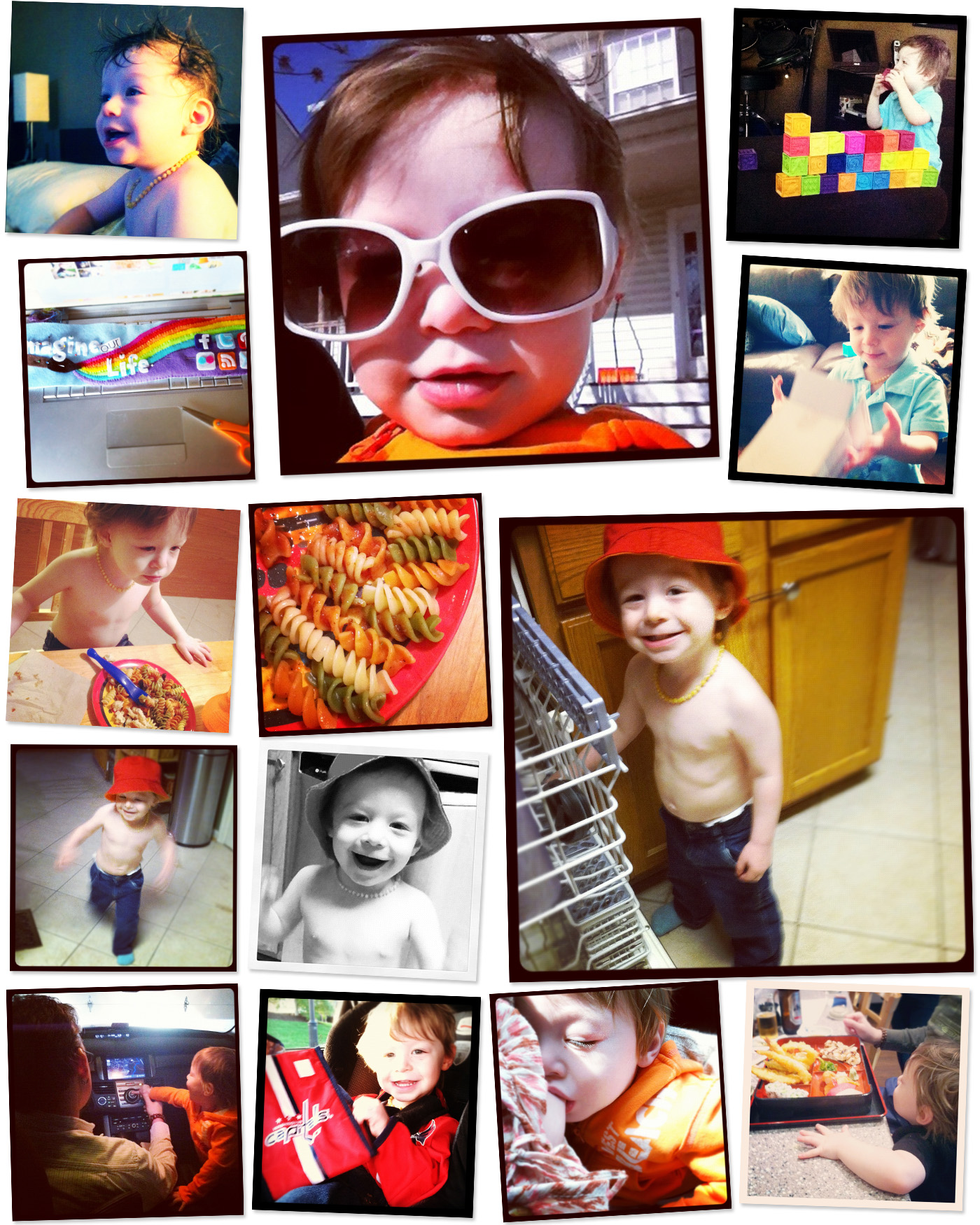
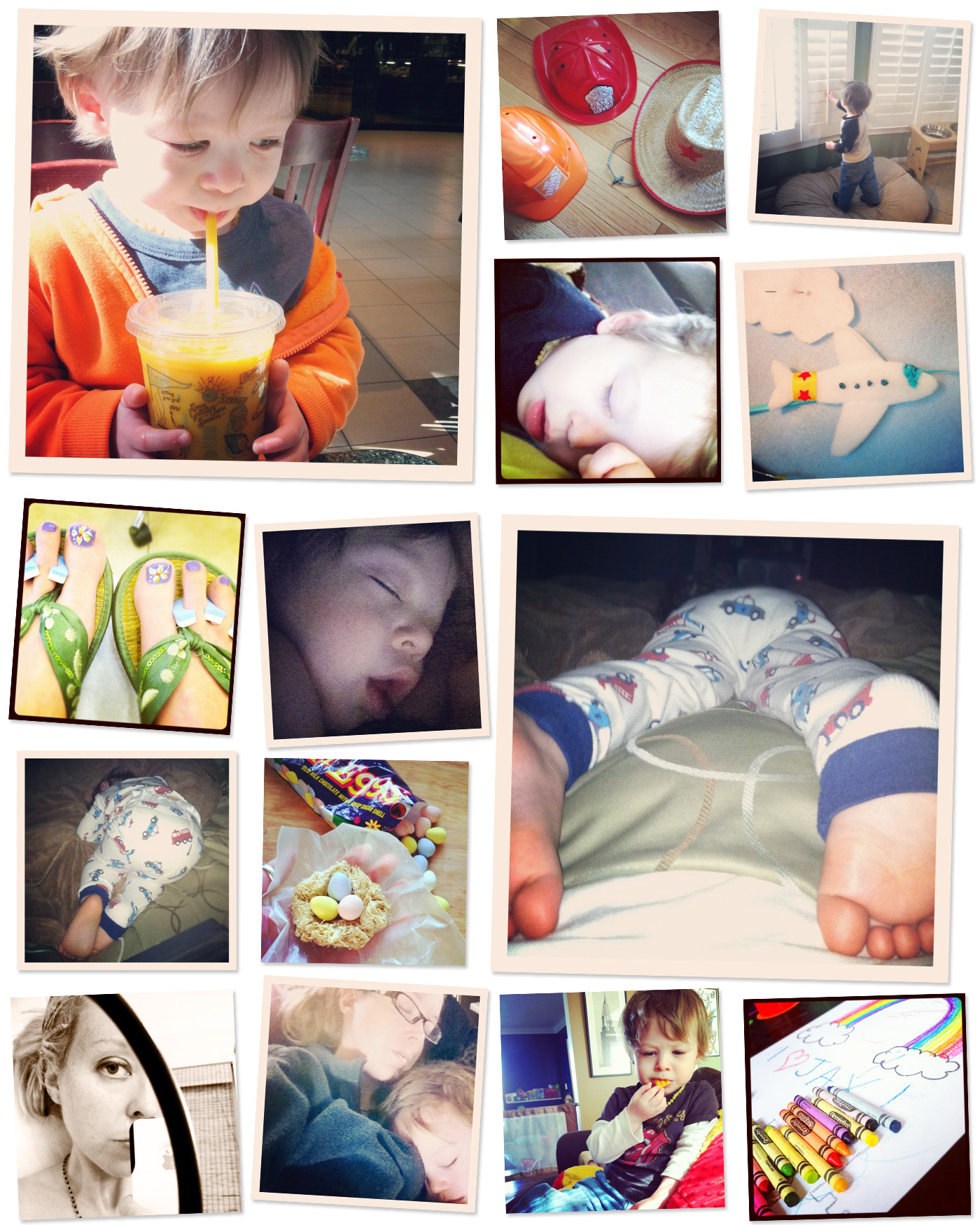
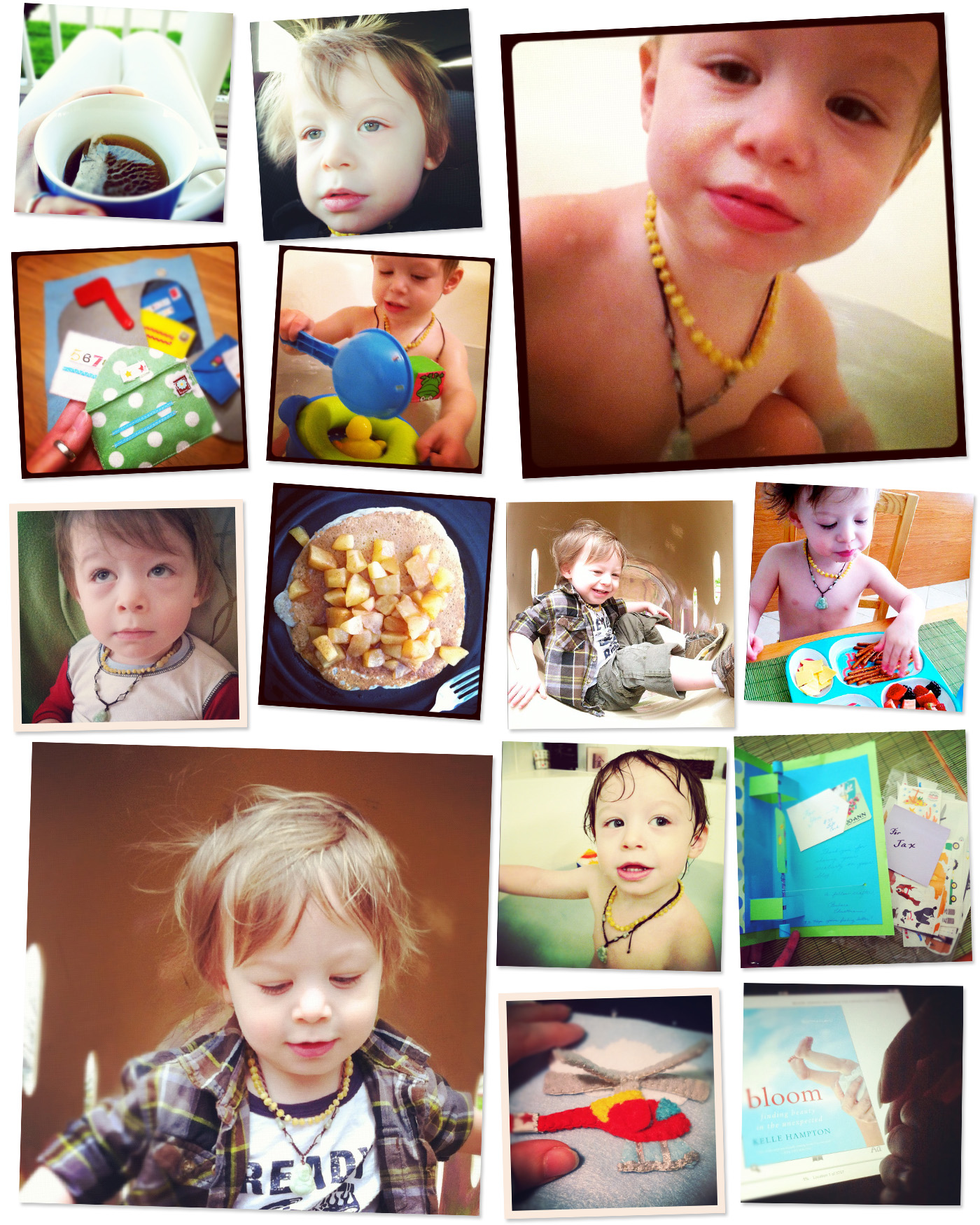
Since I haven’t posted my Instagram photos in a while, I have a ton of them! Do you use Instagram? You can follow me at username “iolstephanie”.
We eat out more than most families – I’m vegetarian and my husband is not. It can be hard to cook meals that satisfy us both. It can be easier (and often cheaper) for us to each pick out what we want in a restaurant instead of us having to cook two dinners at home.
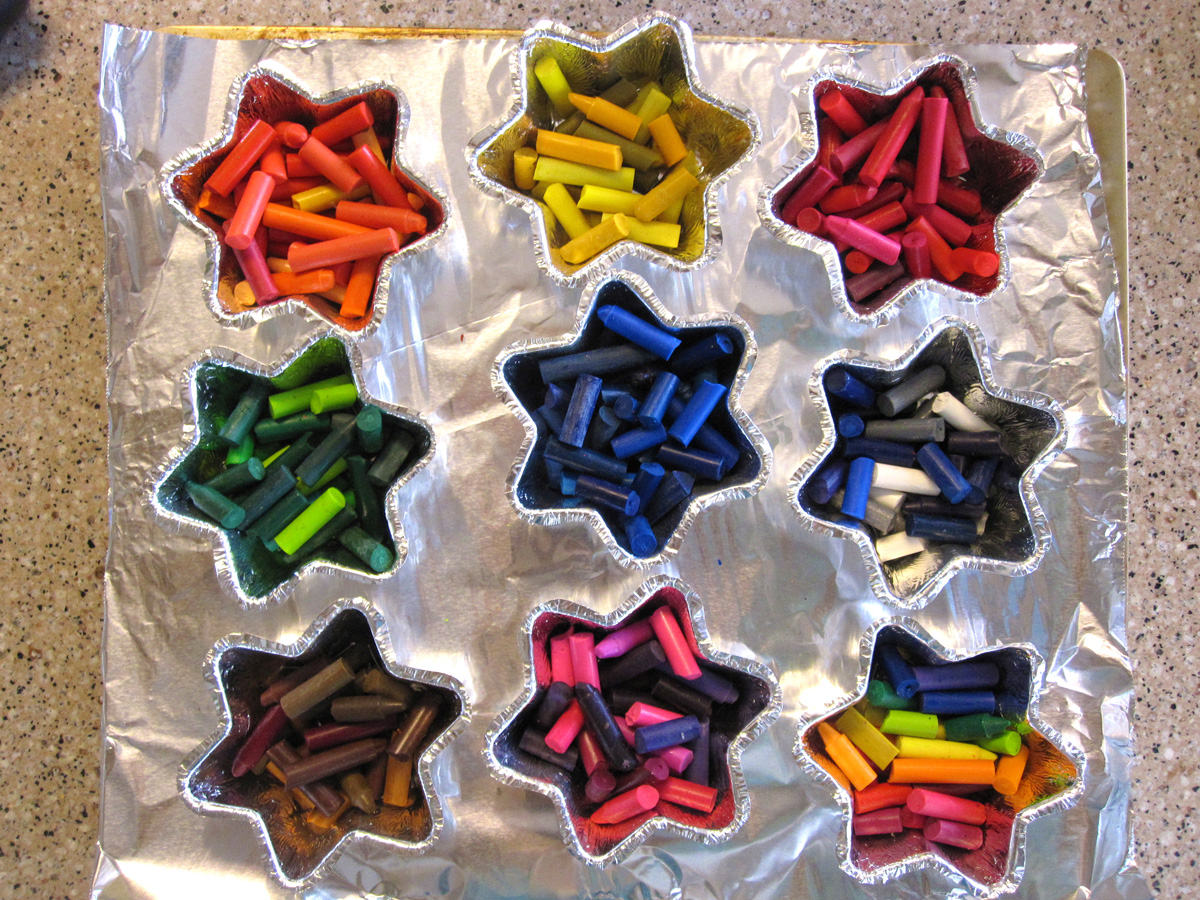
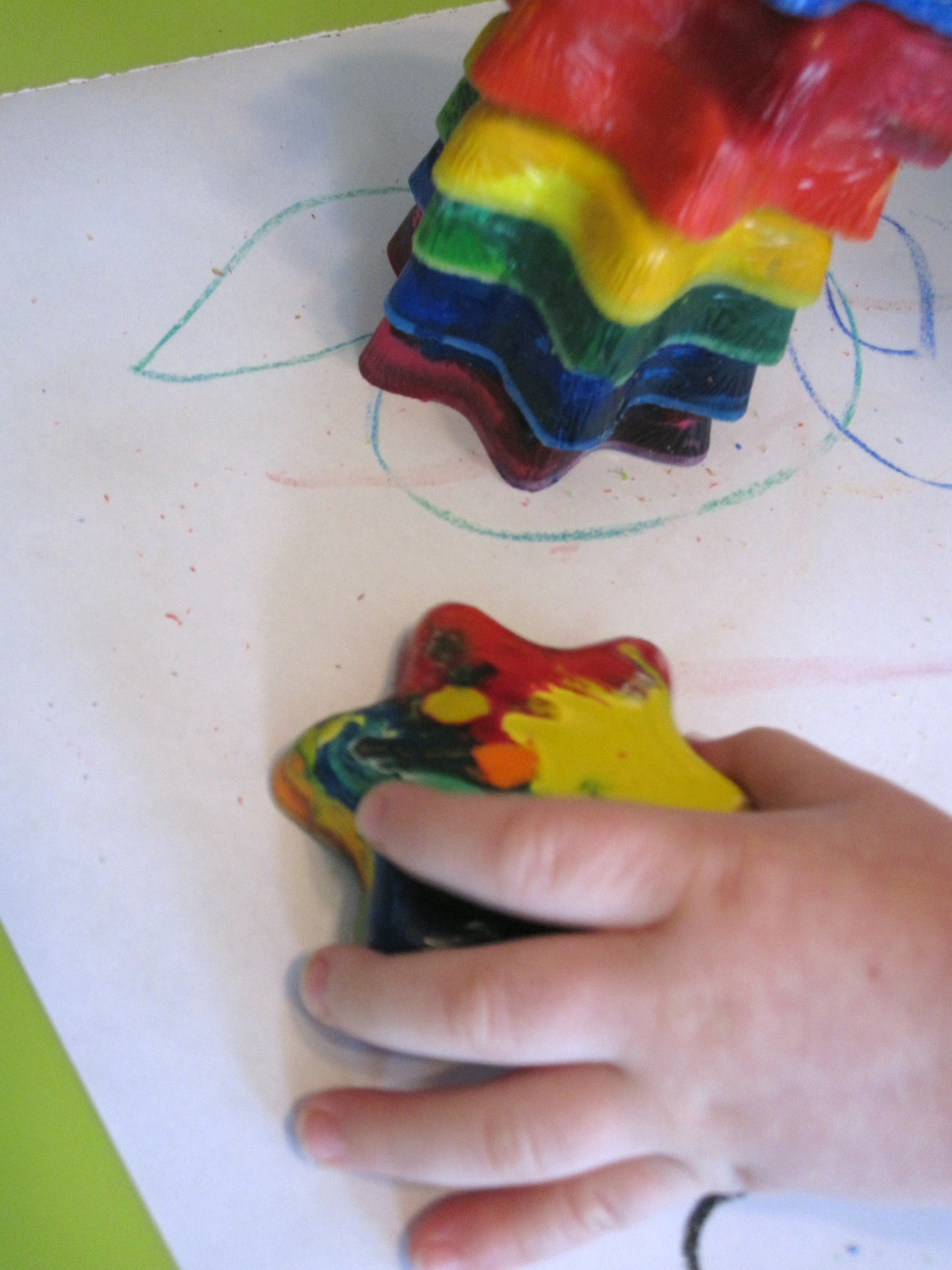
One side effect to eating out with a toddler is I end up with a lot of kids’ menu crayons in my purse. I’ve been collecting them in a baggy for some time (as well as broken ones from home and party leftovers) and was finally ready to create something new with them.
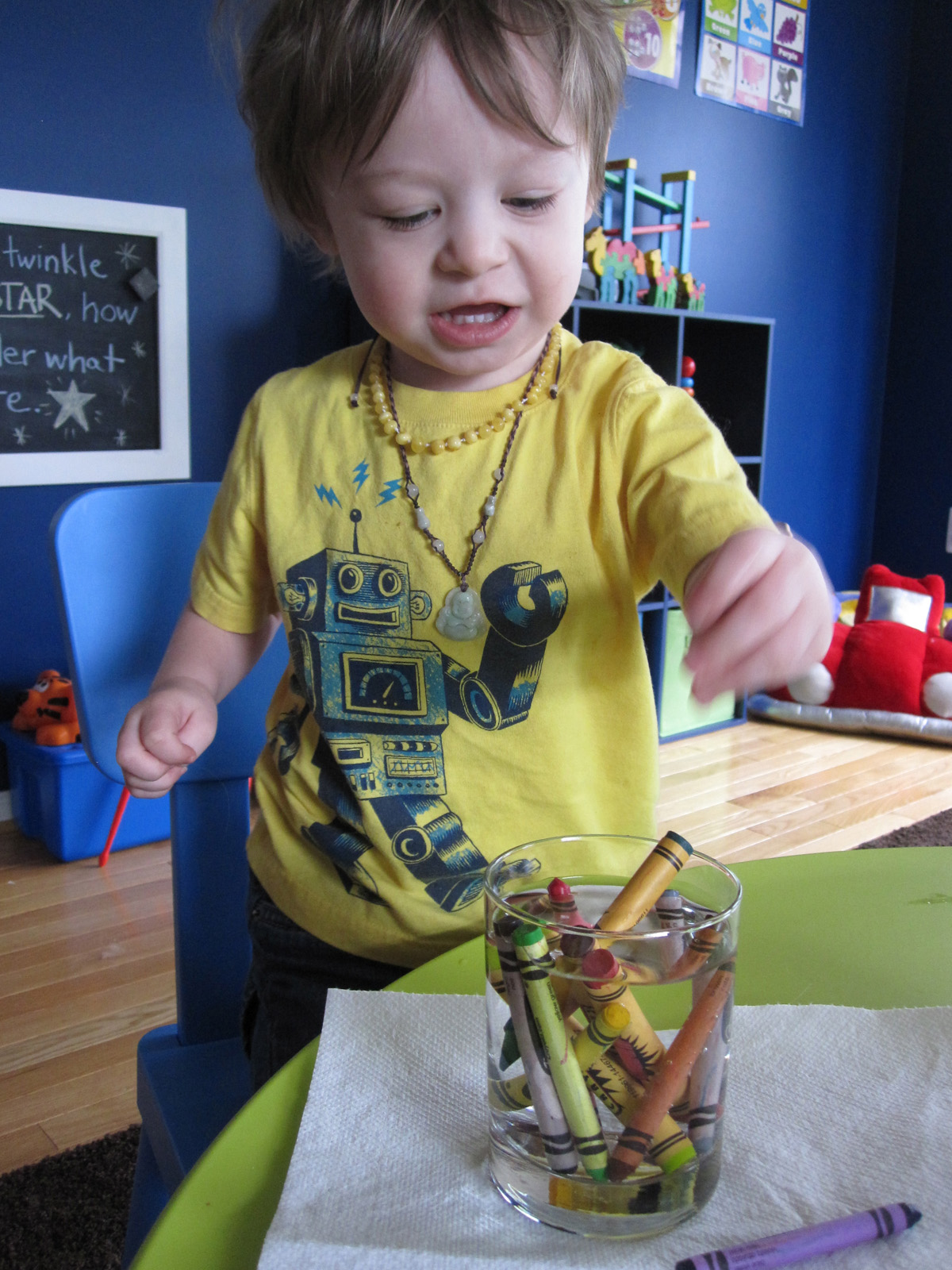
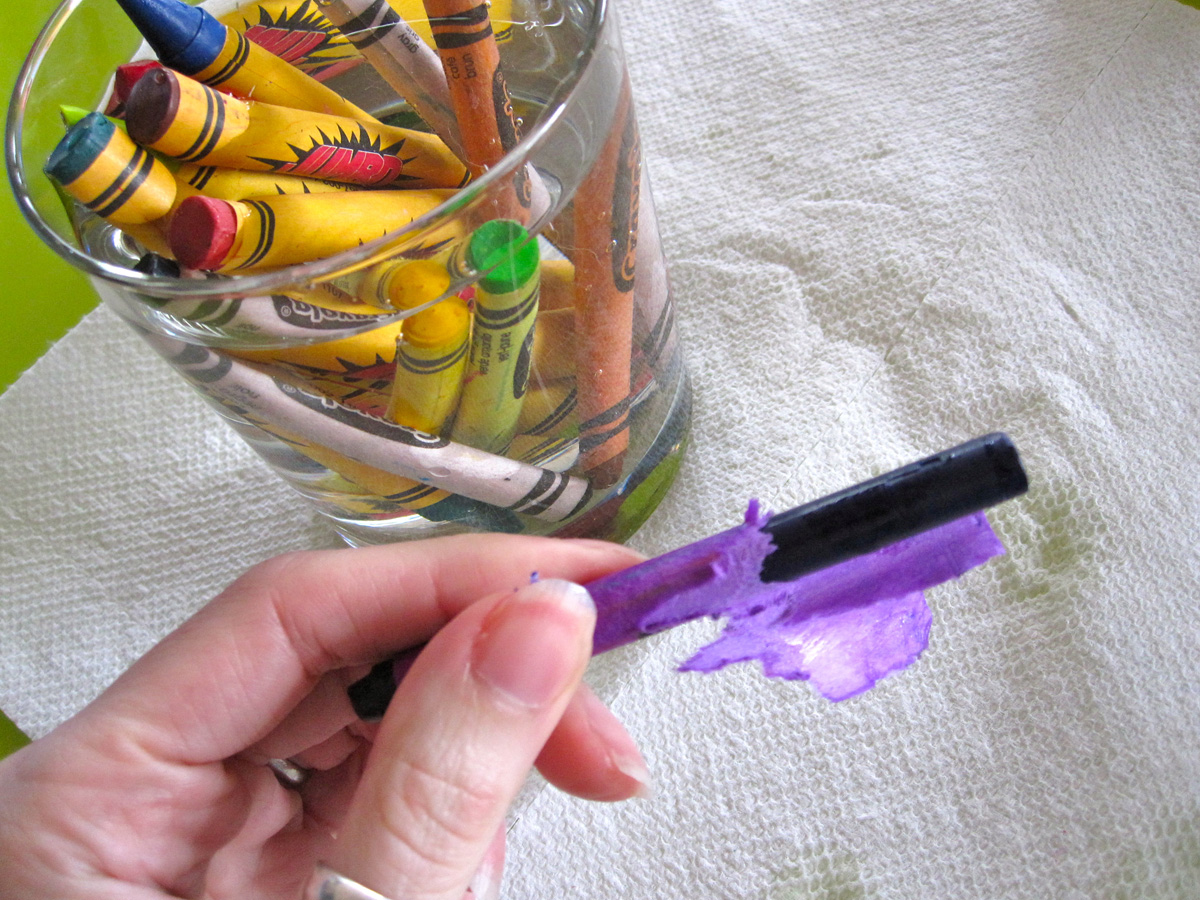
There are plenty of recycled crayon tutorials online, though we just winged it. I heated the oven to 275° F and sat down at lunch time to rip the wrappers off. Ugh! Easier said than done! I ended up dropping the crayons into a glass of warm water. After a little soak, 90% of then peeled right off. Some of them were difficult to peel regardless of what I did. I think the baggy got left in the car at one point.
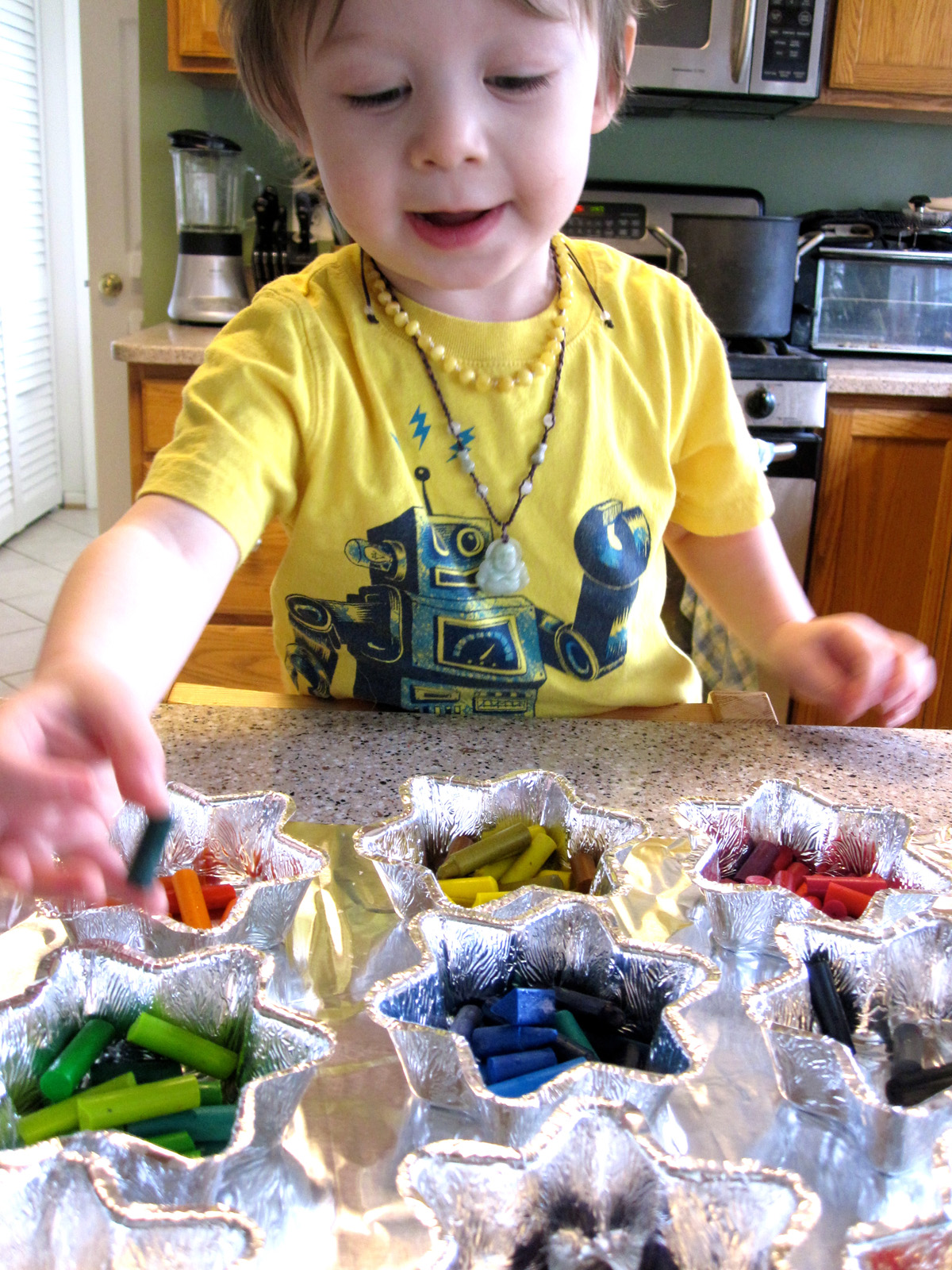
Sorting by color is a great toddler activity!
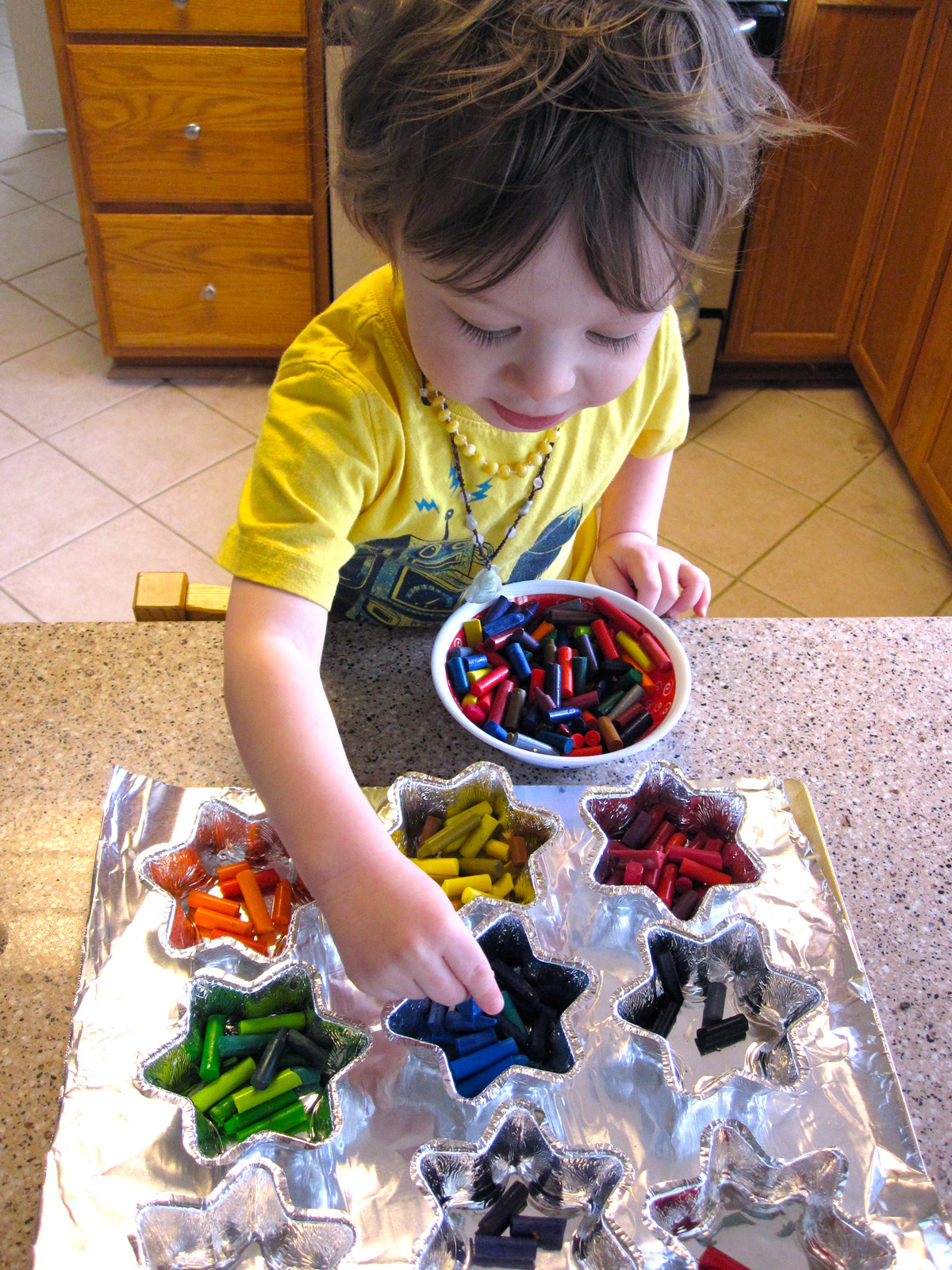
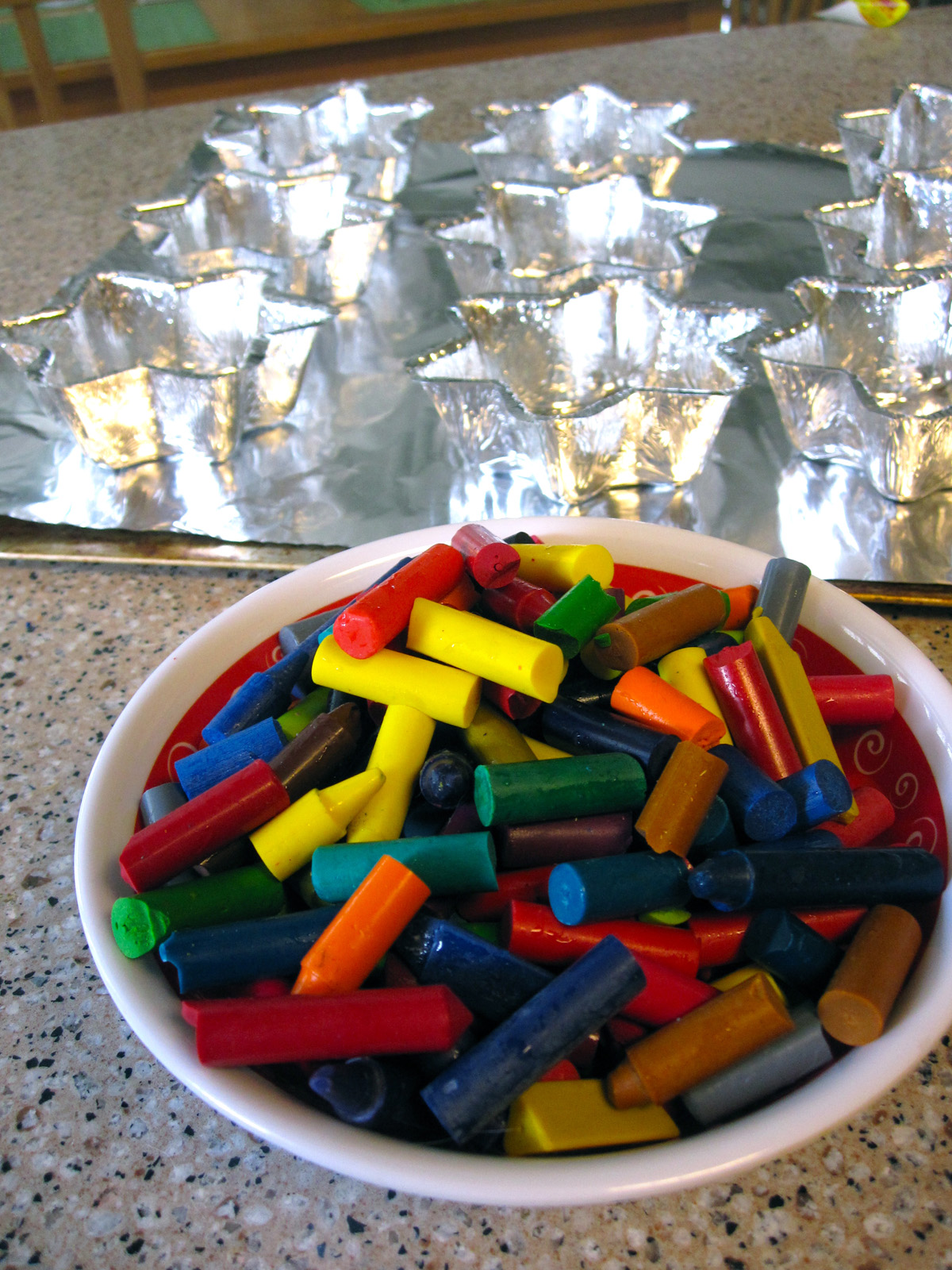
When the crayons were all peeled, I broke them up into a bowl. Jax loves to sort items by color right now, so he helped me put all the like colors together into cupcake tins. I also did a rainbow one with some extras. My tins are Reynolds Wrap Fun Shapes I’ve had forever, but you could use a normal tin or a silicone mold.
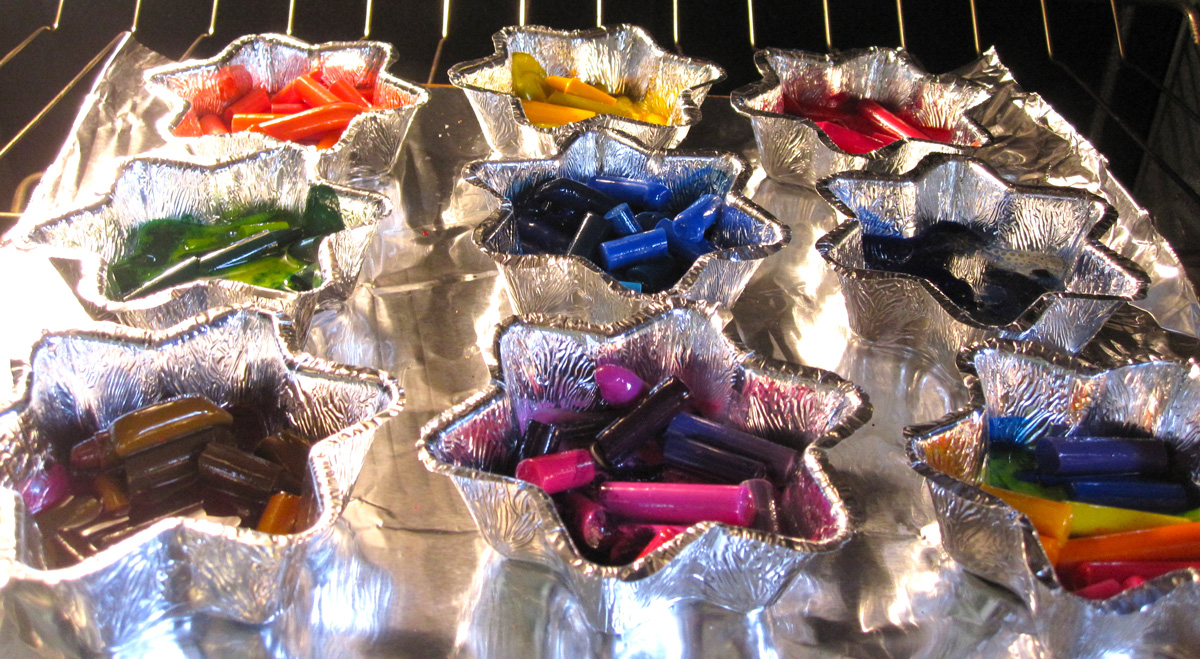
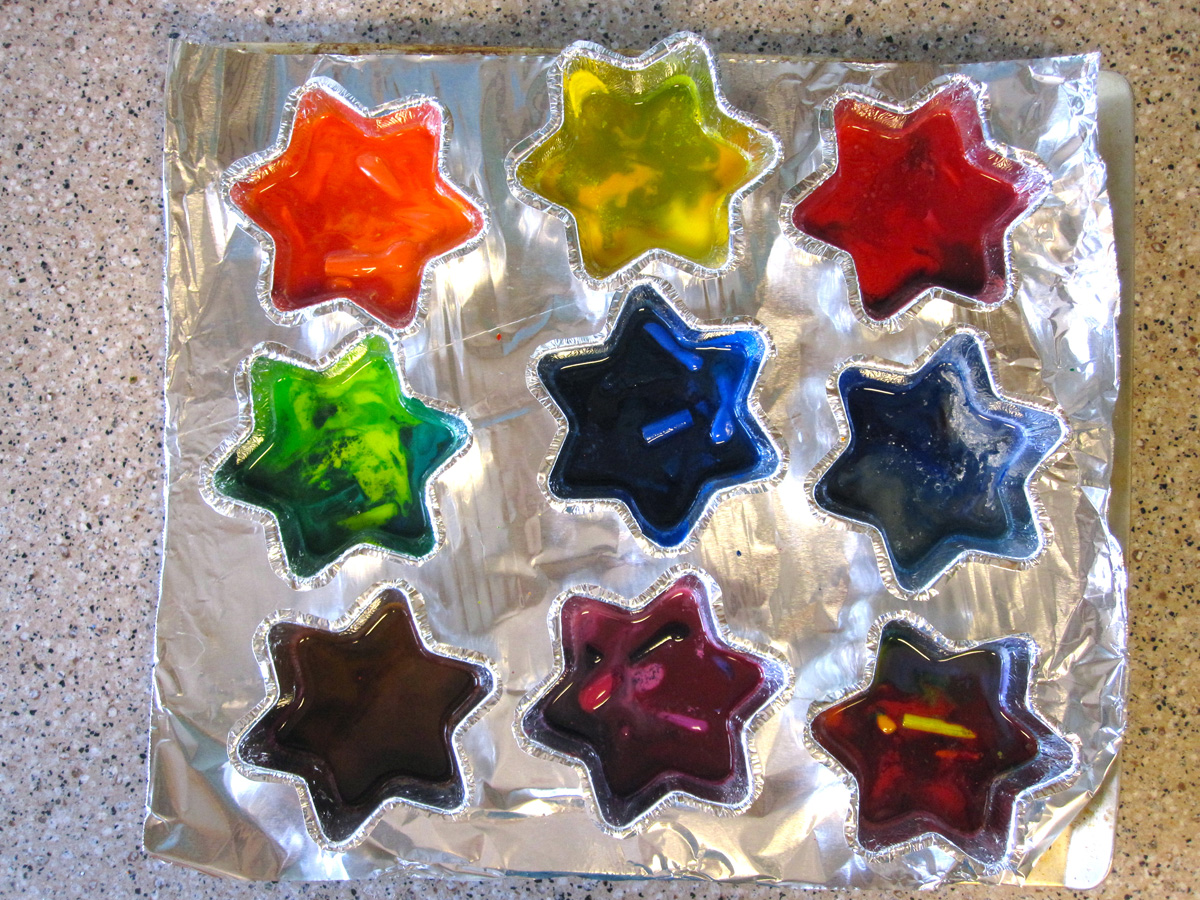
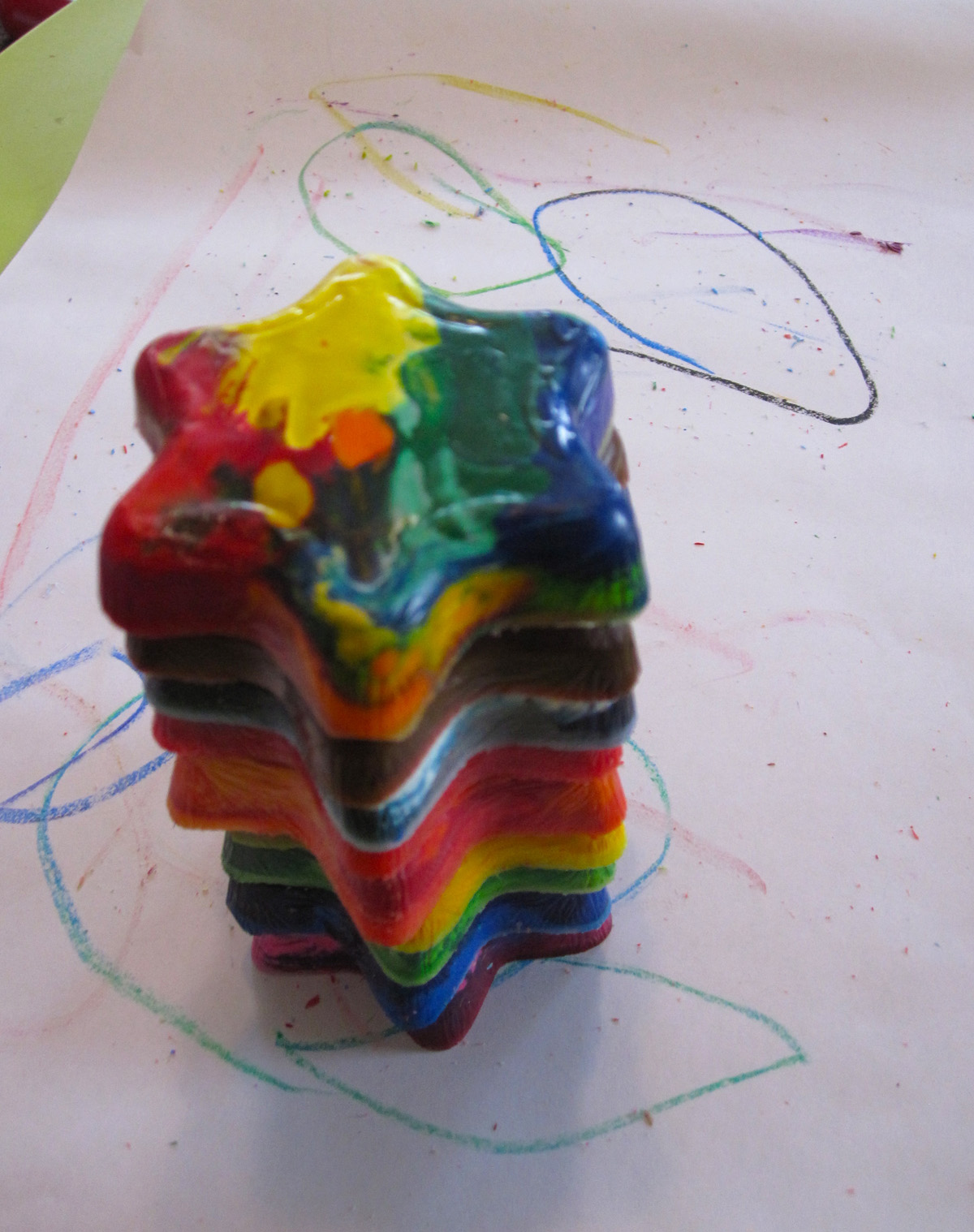
We stuck them in the oven and I watched until they were all melted. It was maybe 20 minutes. The deeper the crayons, the longer it takes. Quality crayons like Crayolas melt the best and color the best. Cheap, waxy crayons (which we unfortunately had a lot of) don’t melt as well or color as dark. I’d recommend Crayolas if you are making these as a gift. I made a trio of crayons (not shown) with just some of the primary color Crayolas we’ve collected, and they color great.
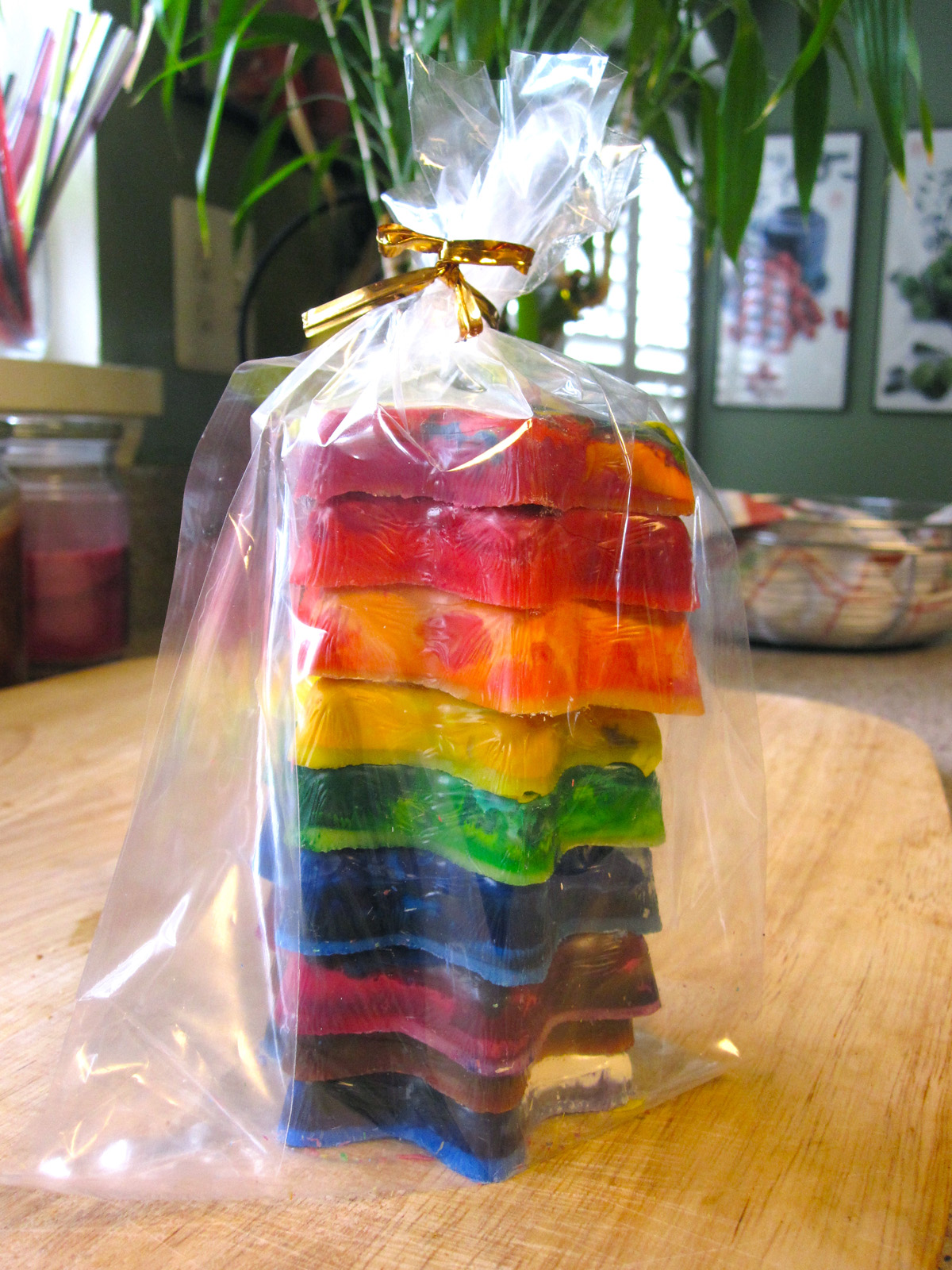
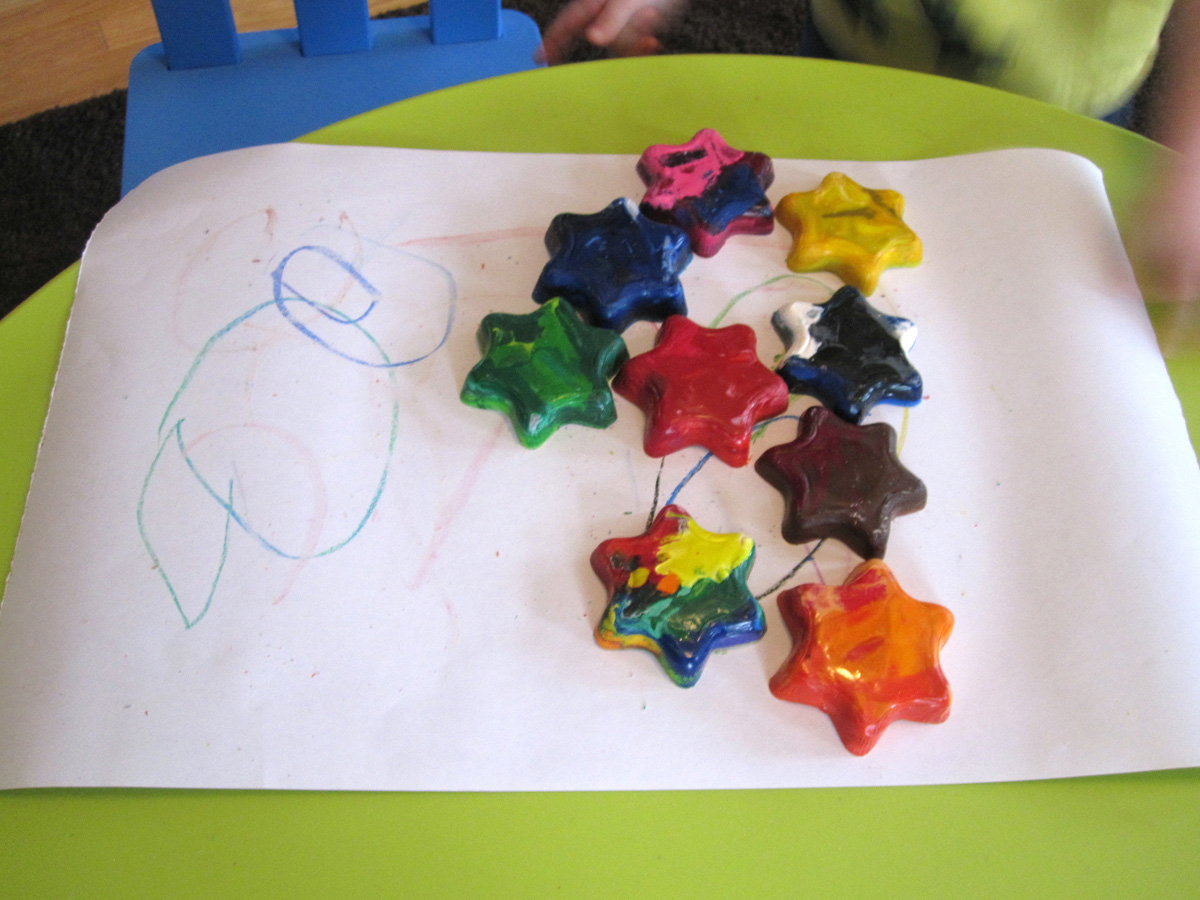
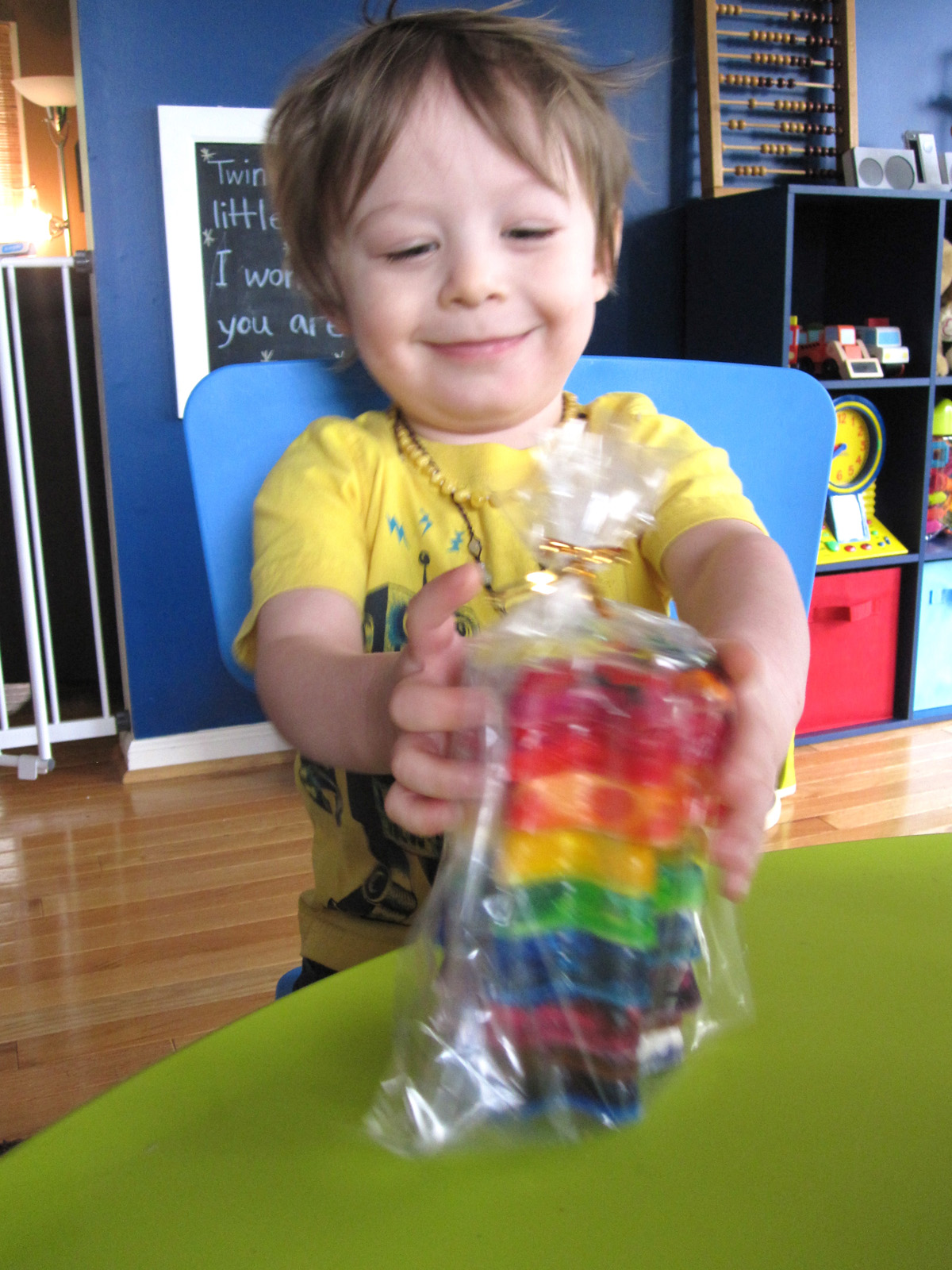
When they were fully melted, I took them out of the oven to cool. I sped up the cooling by sticking them in the fridge. They popped right out of the tins once solid again. They look so cute all stacked in a treat bag! Jax loves then, even though some of them don’t color very dark due to the cheap crayons. I’ll definitely be making these again!
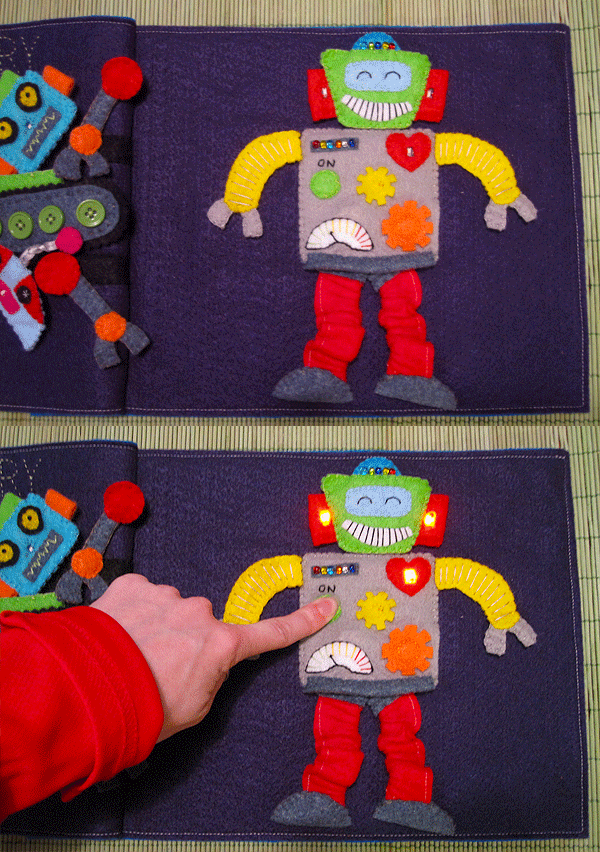
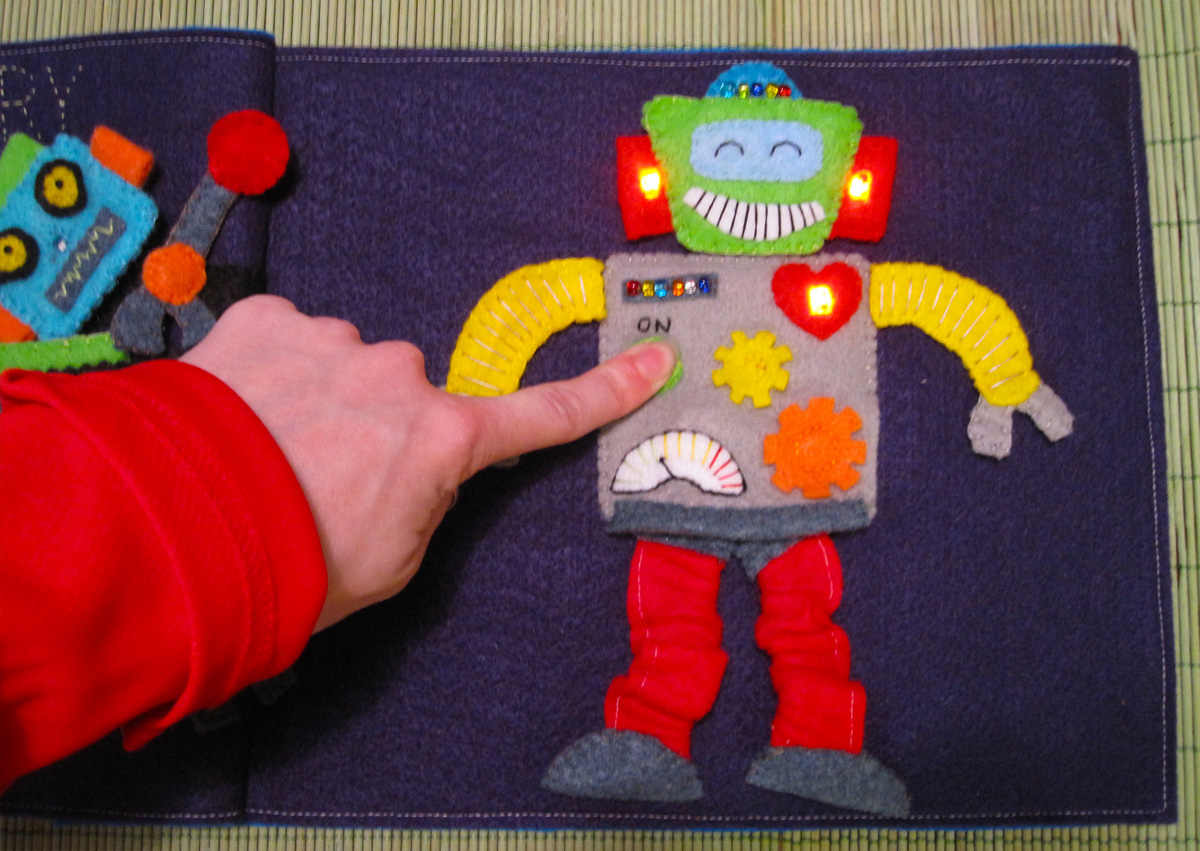
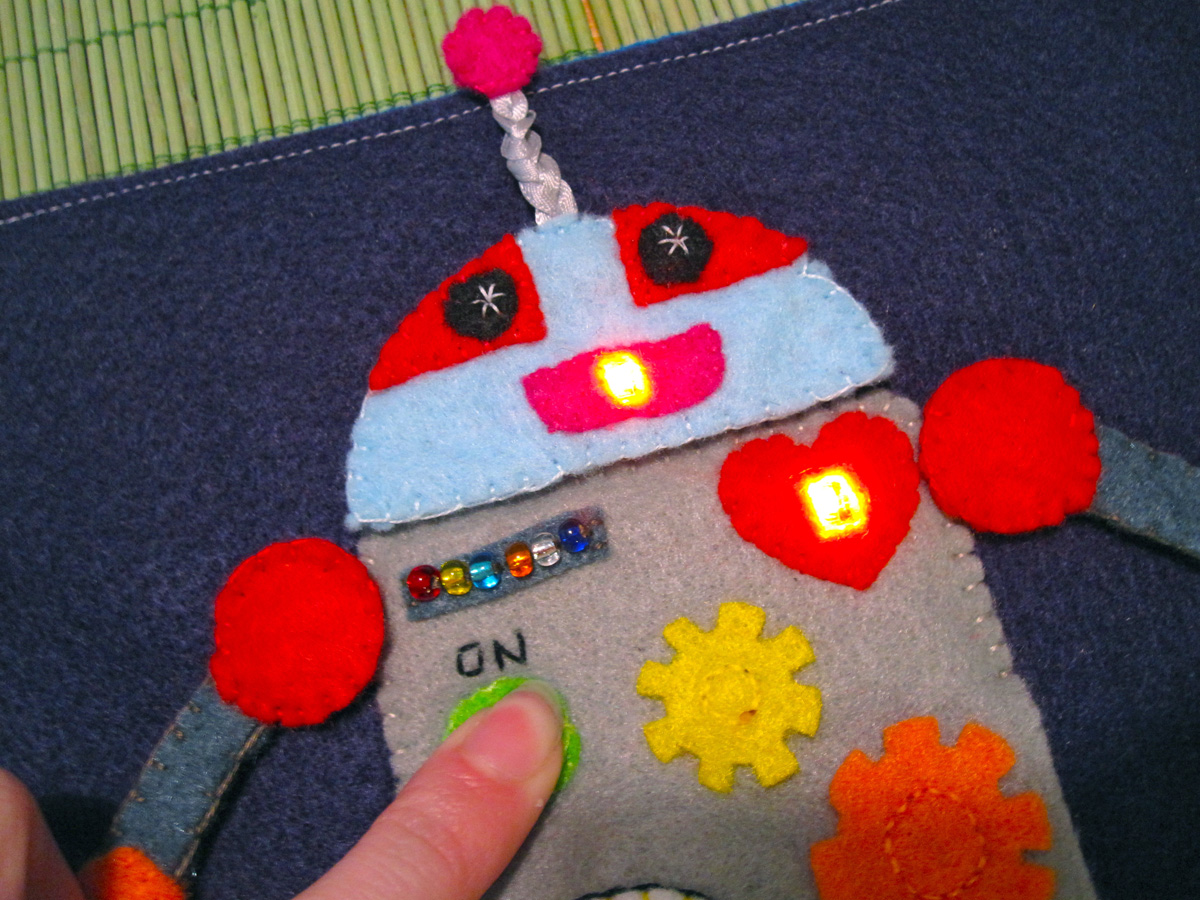
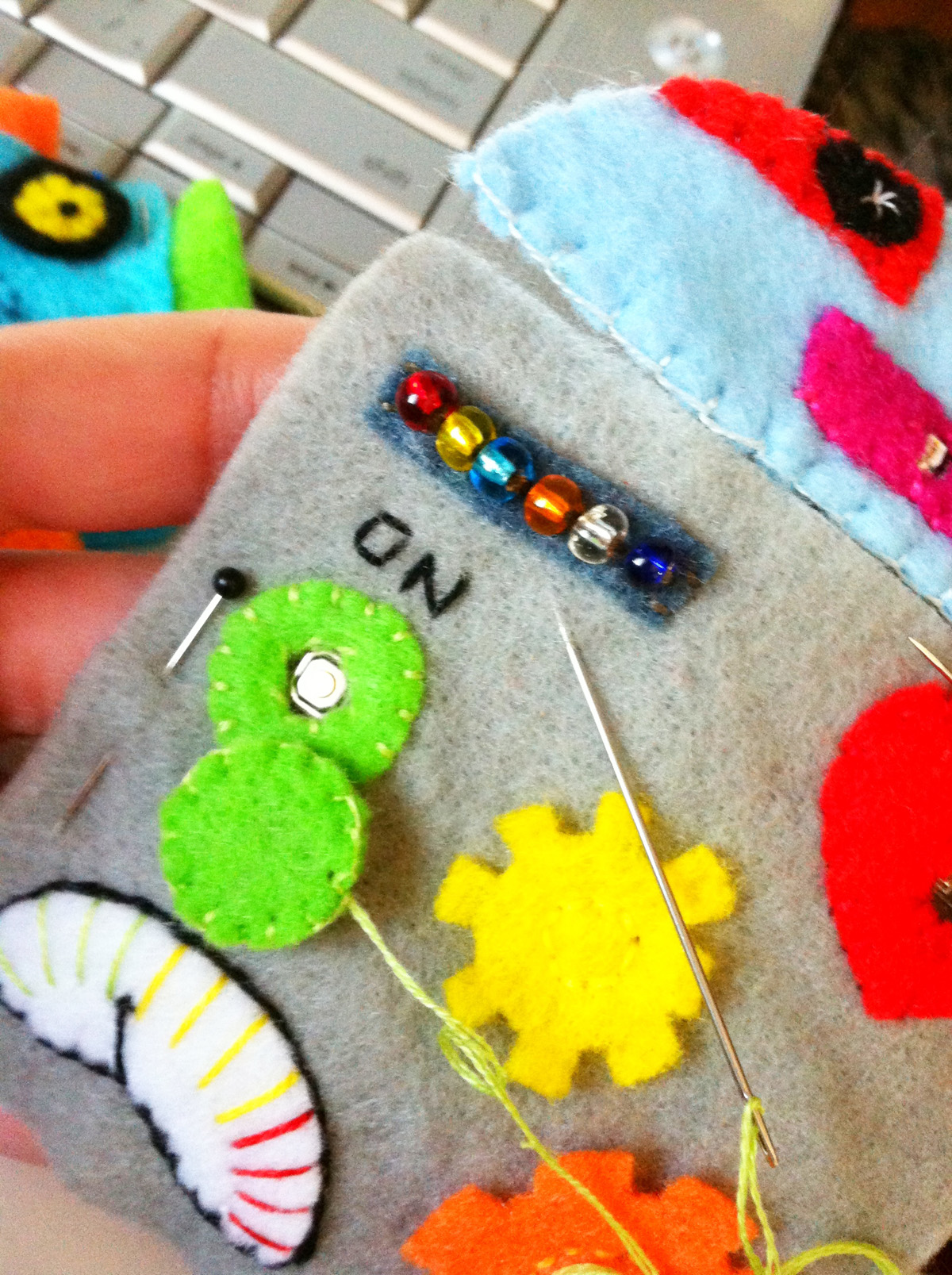
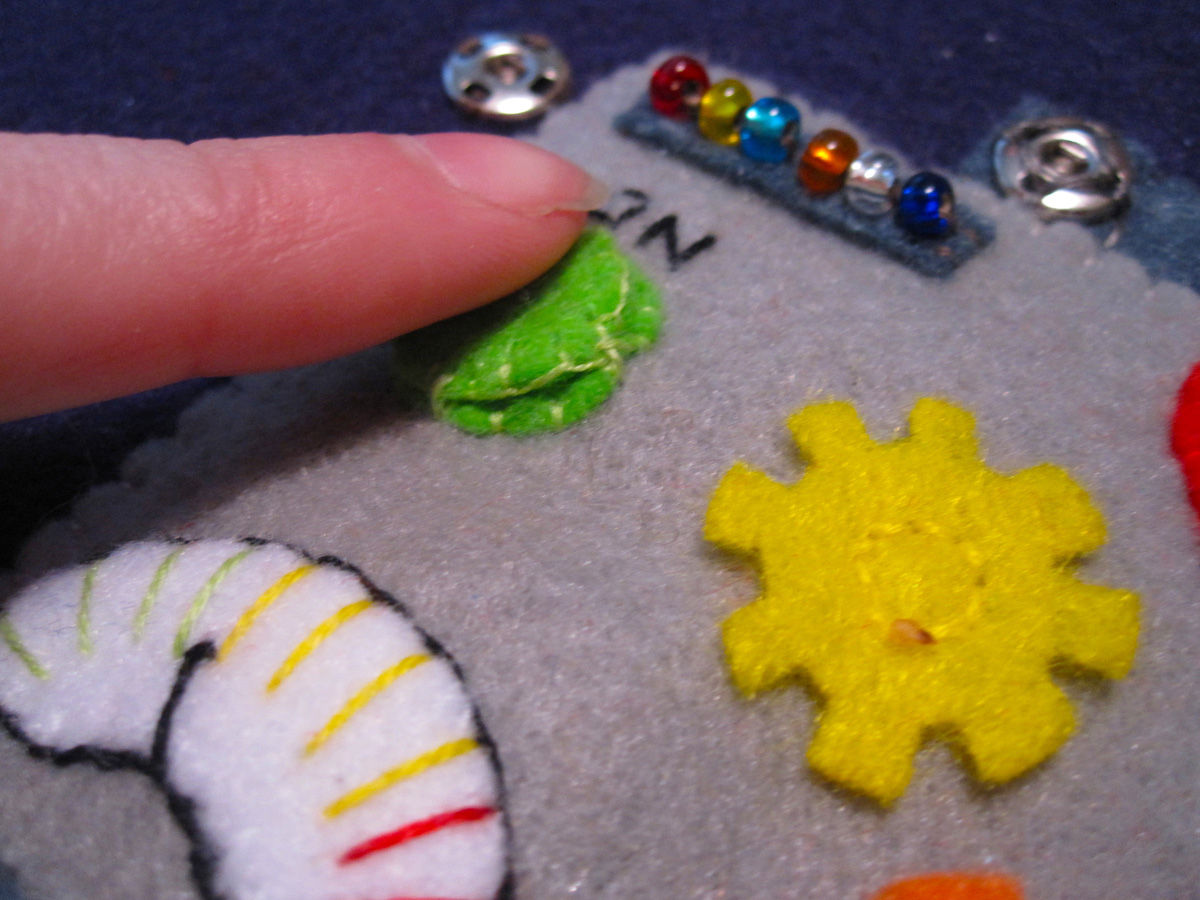
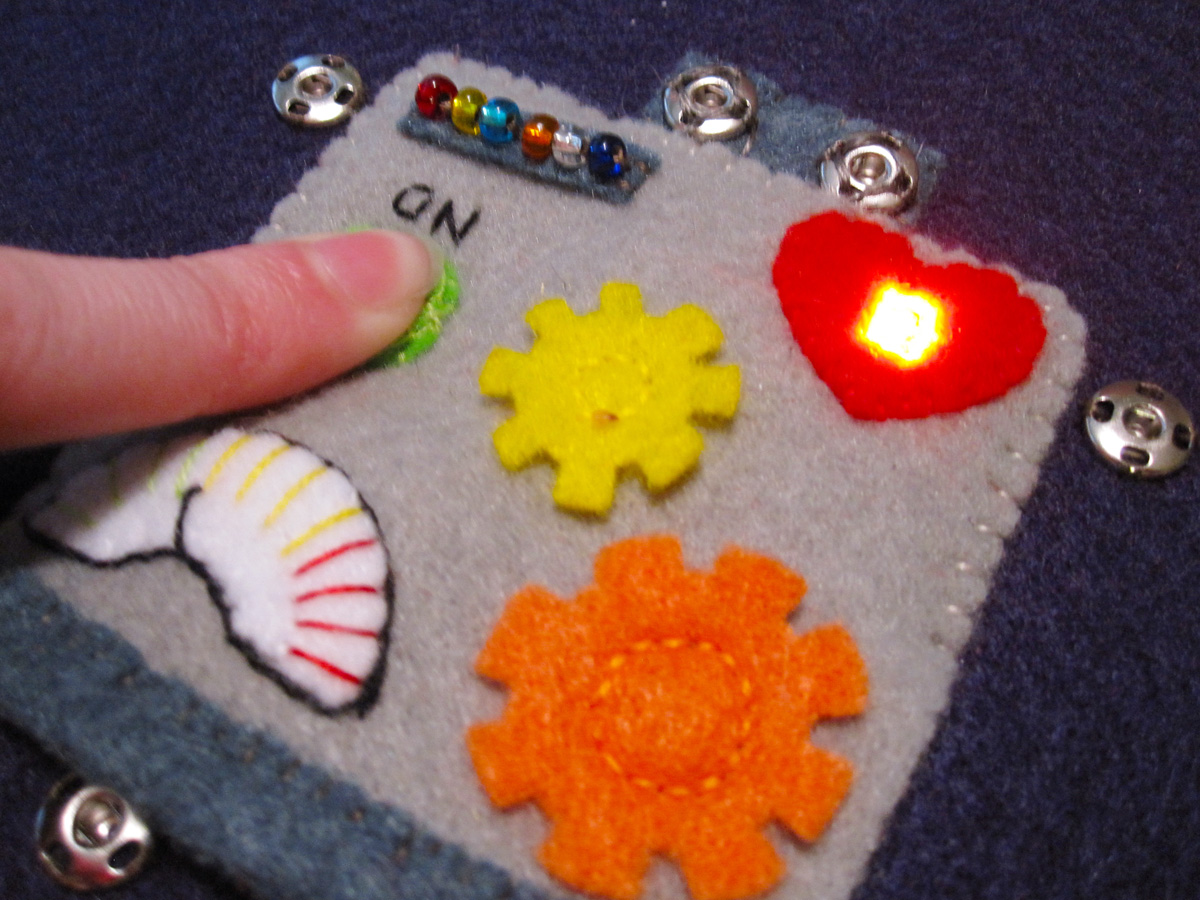
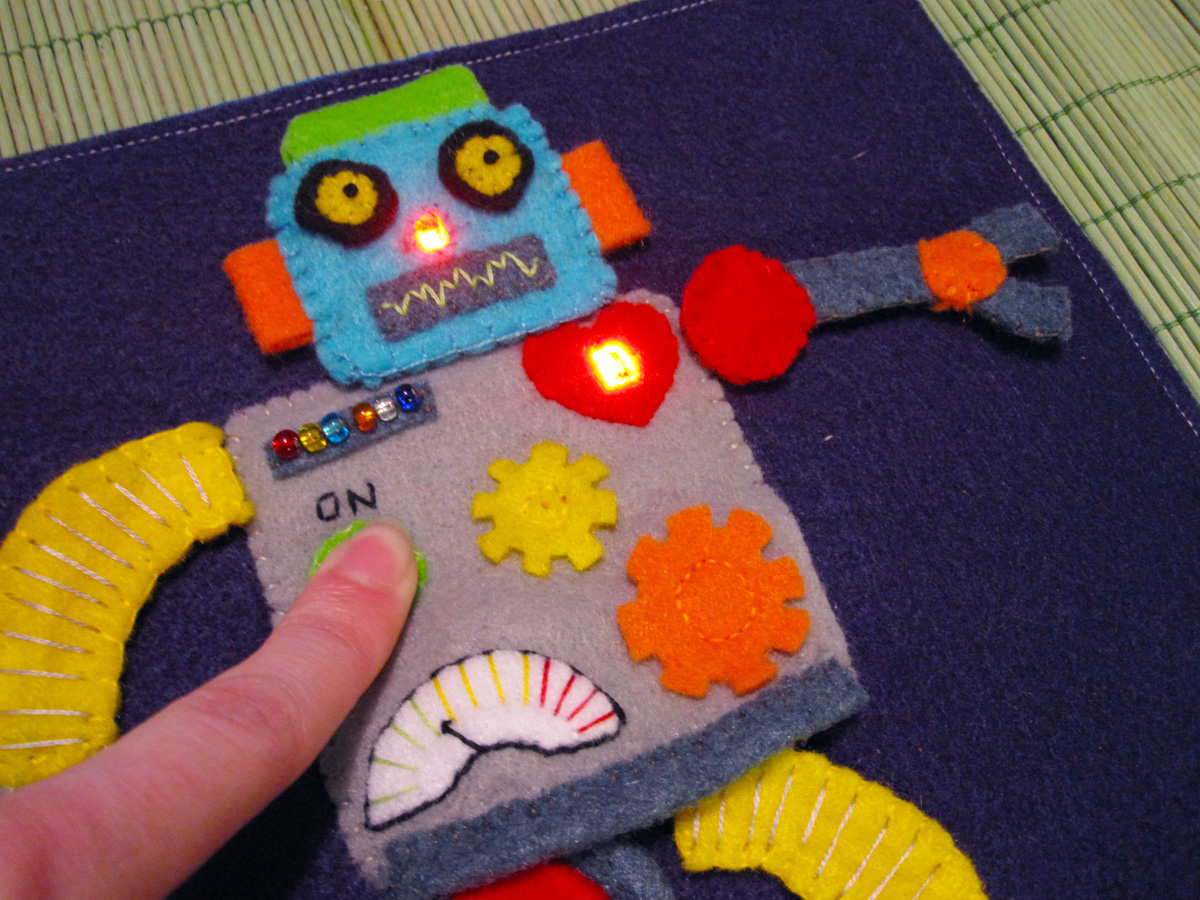
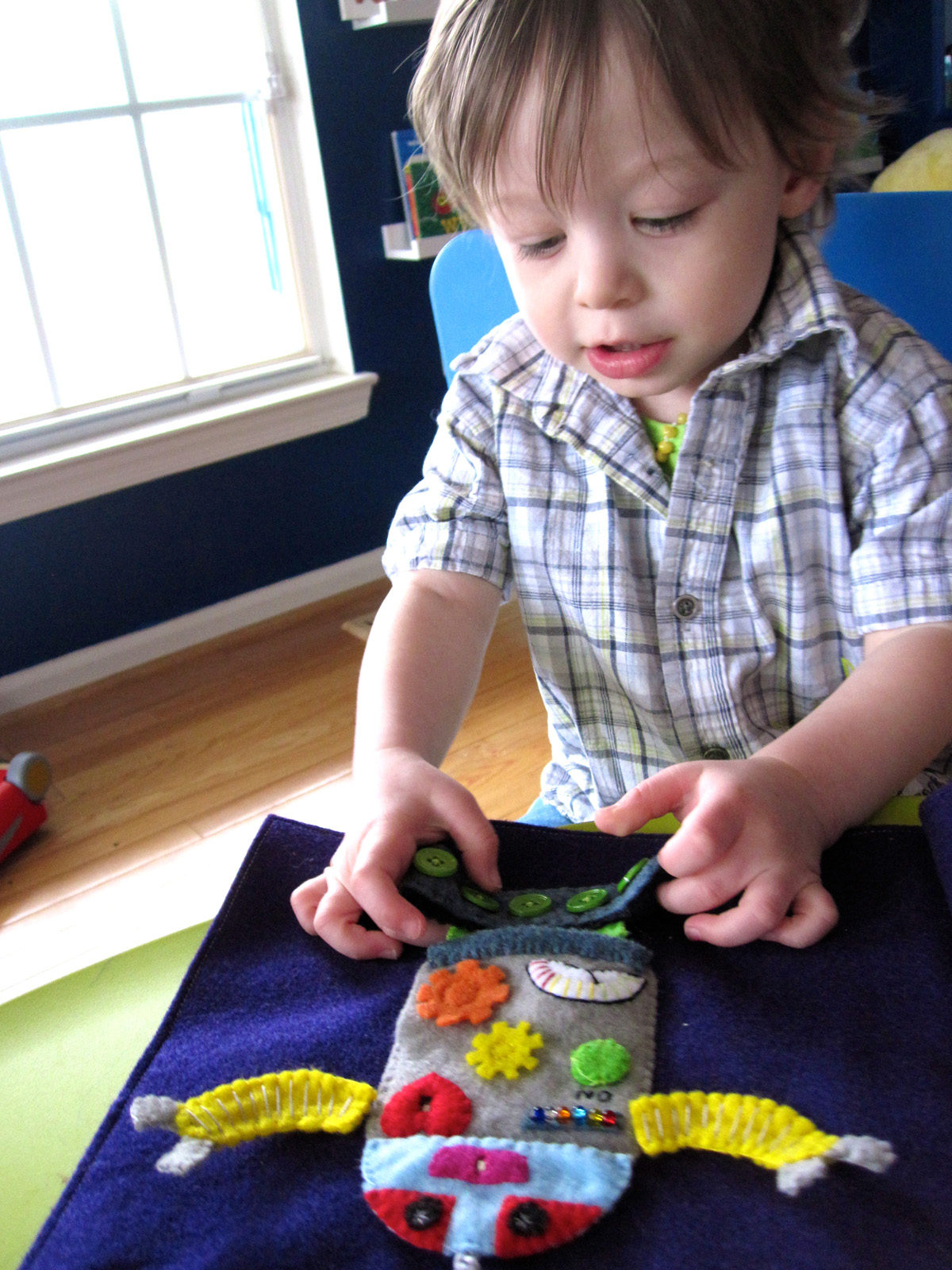
I’ve wanted to create a robot page ever since I learned what a quiet book is. I’m very glad I waited so long to really think it through, because I learned about e-sewing. E sewing is using special electronic components and conducive thread to create interactive textile projects. In simple terms? Push a button and my robot lights up!!
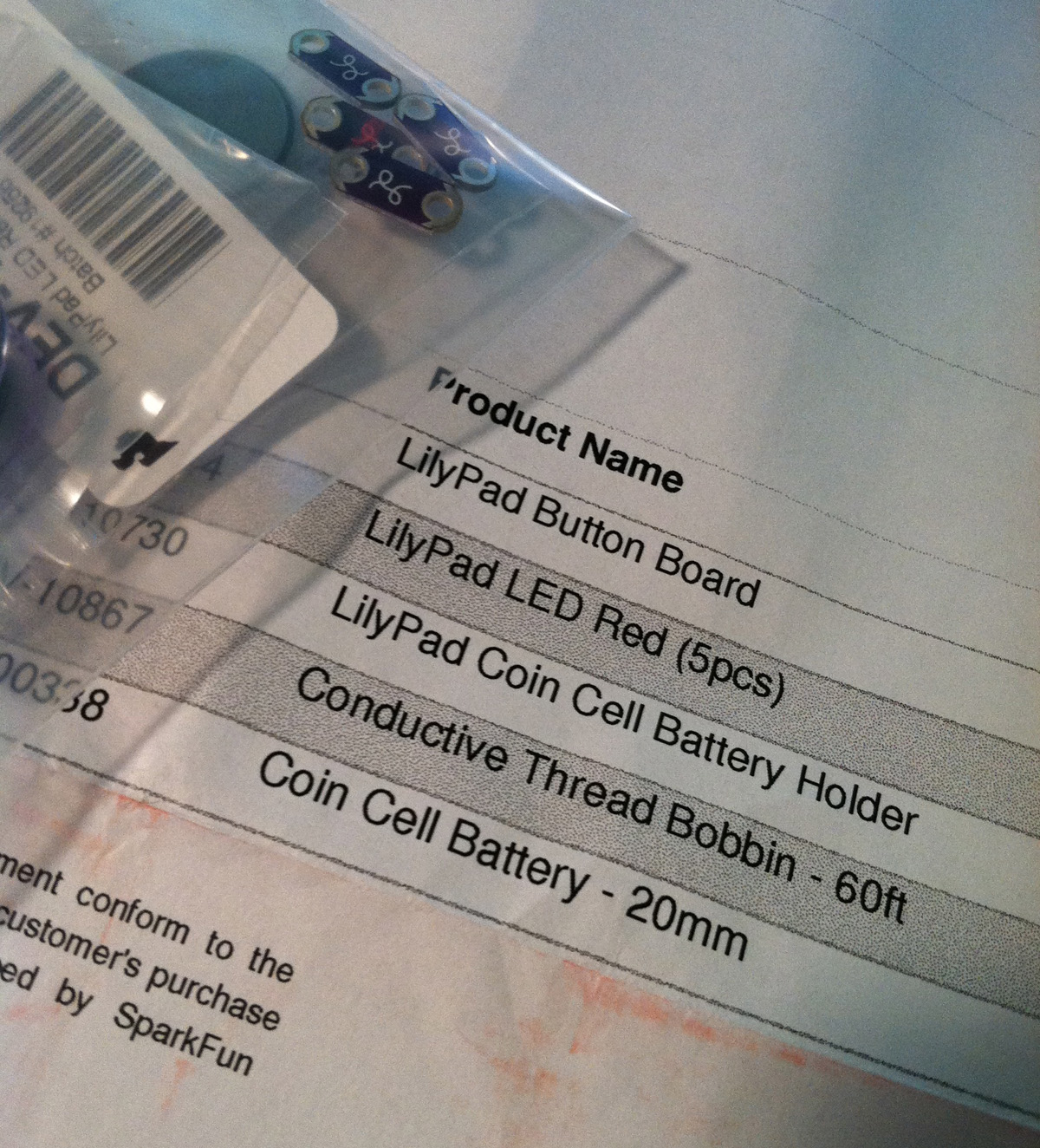
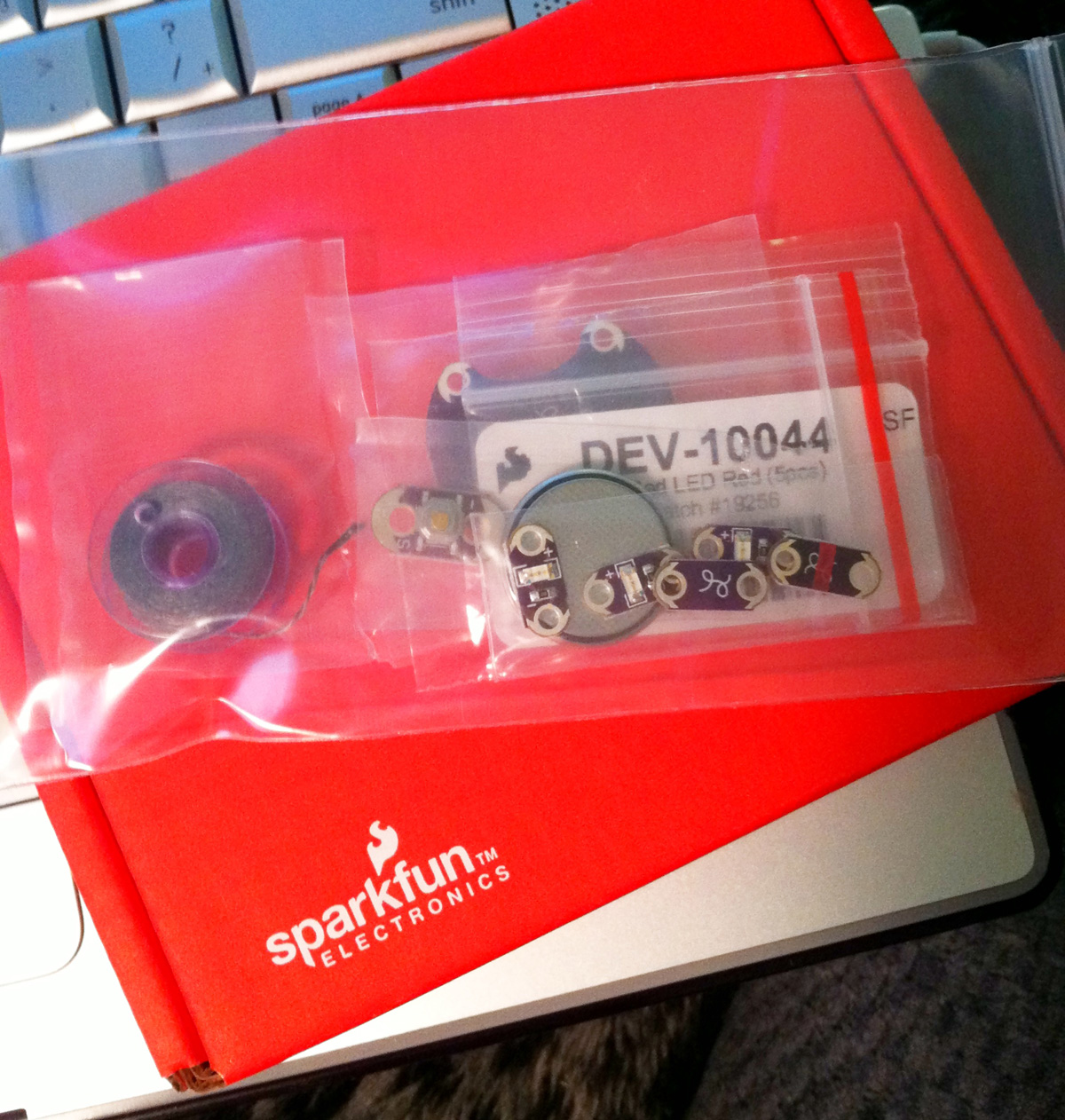
E-sewing is easy, but you have to make your circuits just right, or it will not work. The LilyPad system I used can be spot washed, which is all I’d recommend for a detailed quiet book. I did read somewhere that the conducive thread will eventually need to be replaced years down the road, so that is something to keep in mind. I sewed my thread to a piece of felt and not the actual page, to make it easier to pull off should I need/want to run new lines in the future. Make sure you cut your knot tails short on the back of your work so they don’t touch anything else. If threads from two different parts of your circuits touch, you will have a short and it won’t work.
This page can certainly be made without the electronic components. It is still fun to mix and match the robot parts! My tutorial assumes you are installing the LEDs.
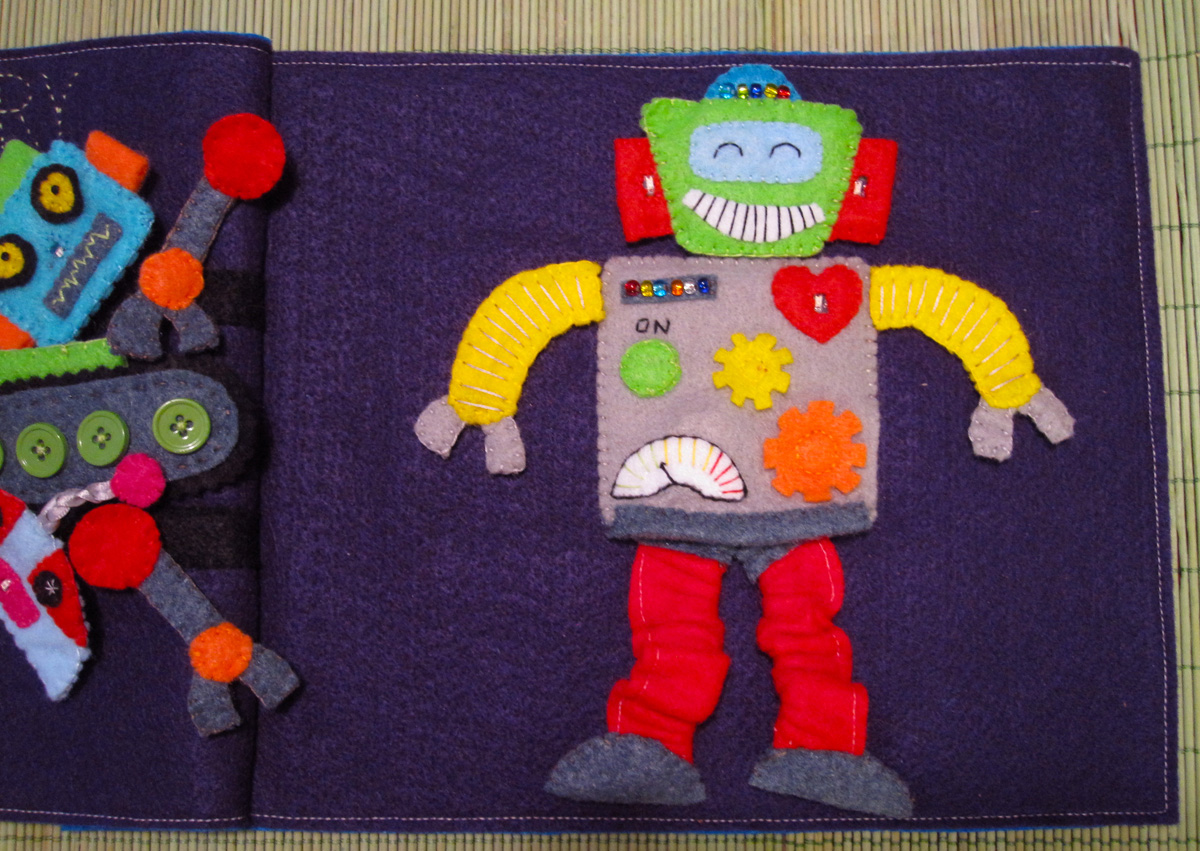
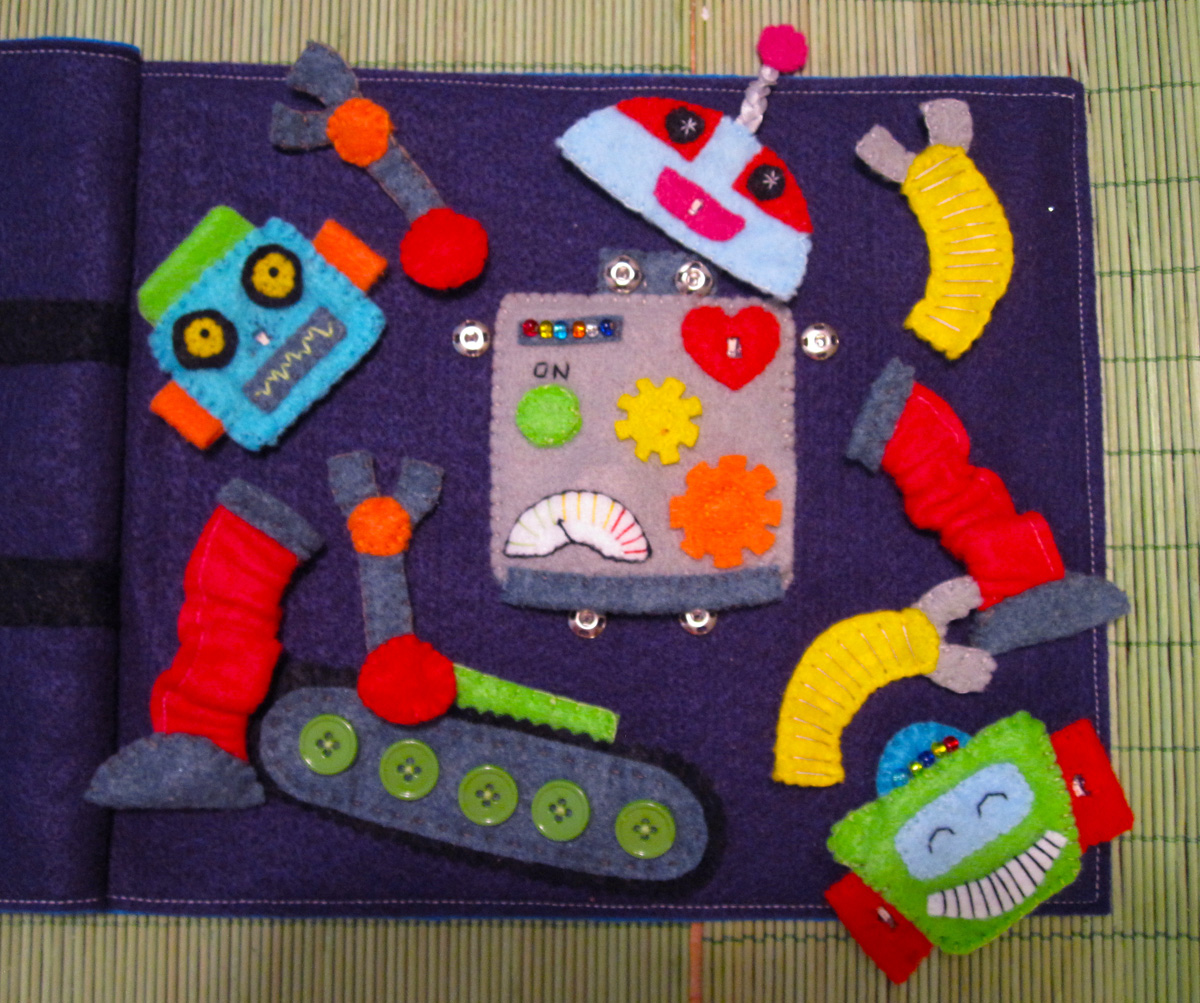
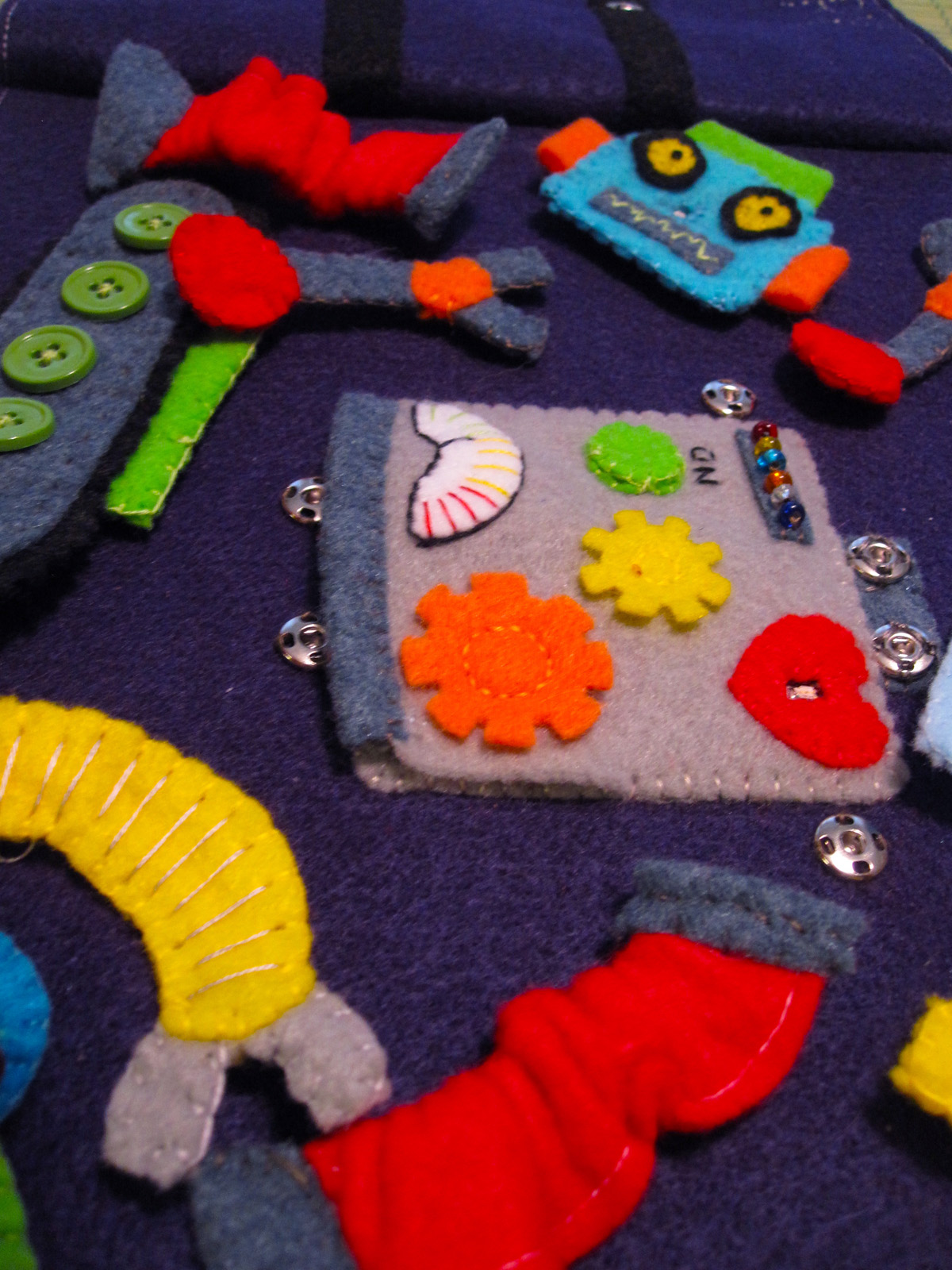
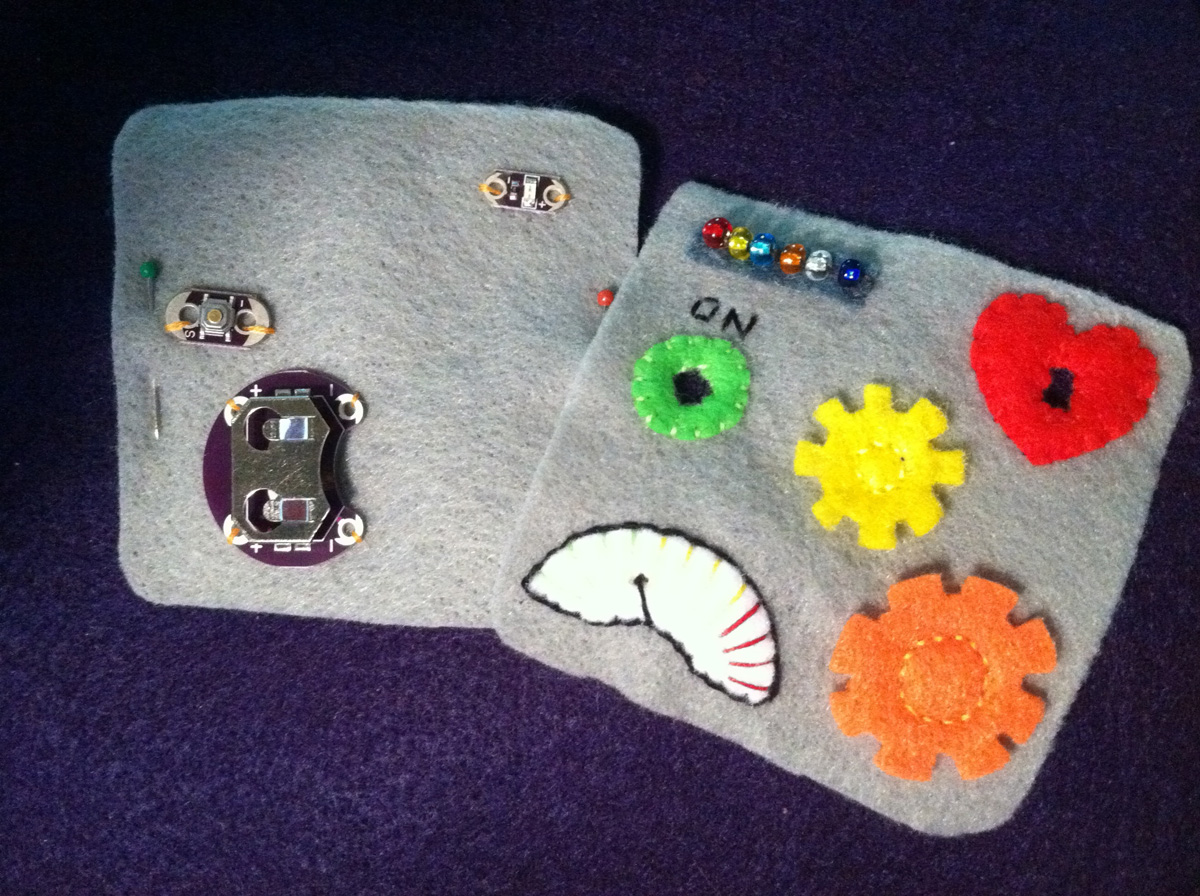
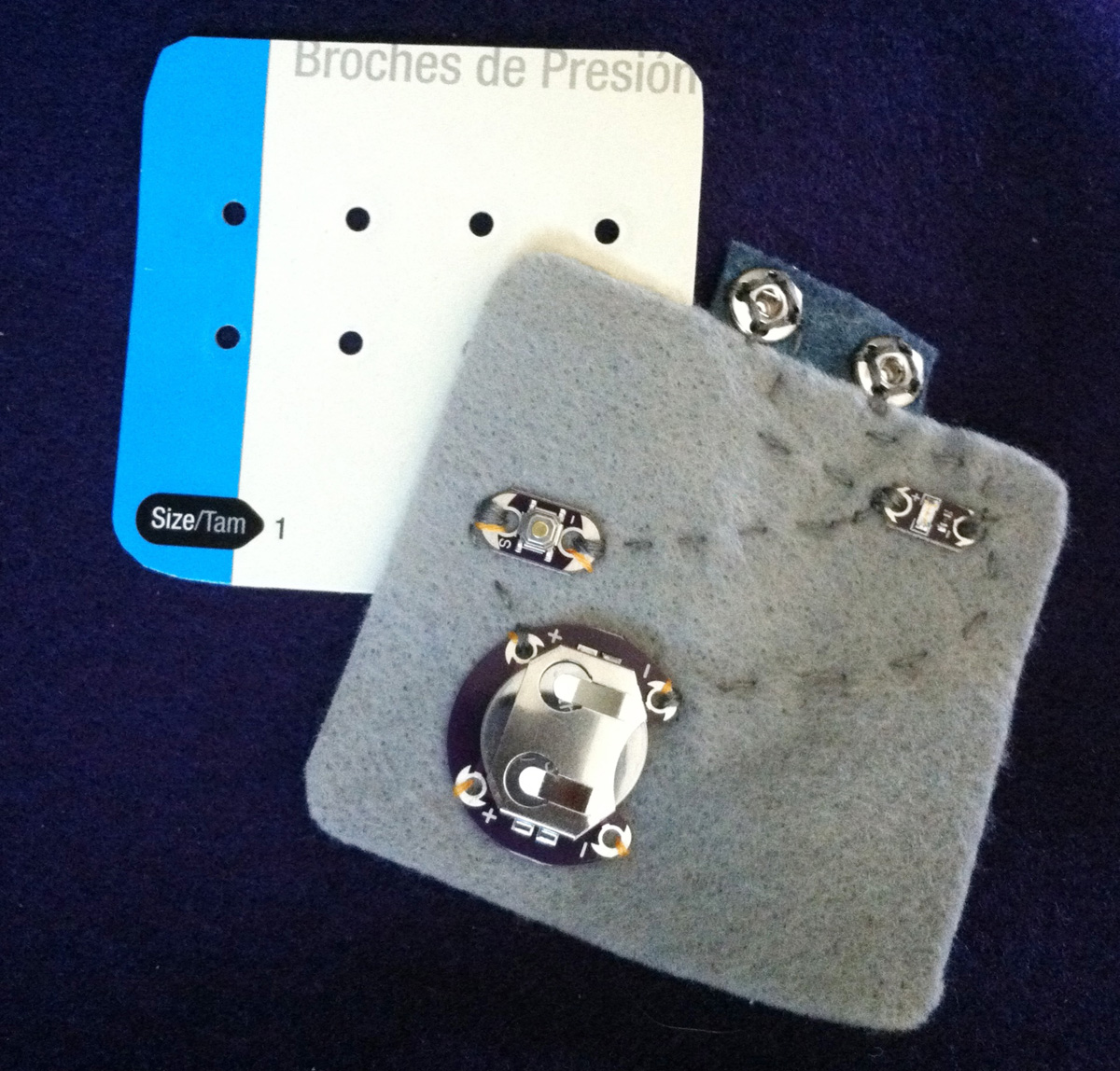
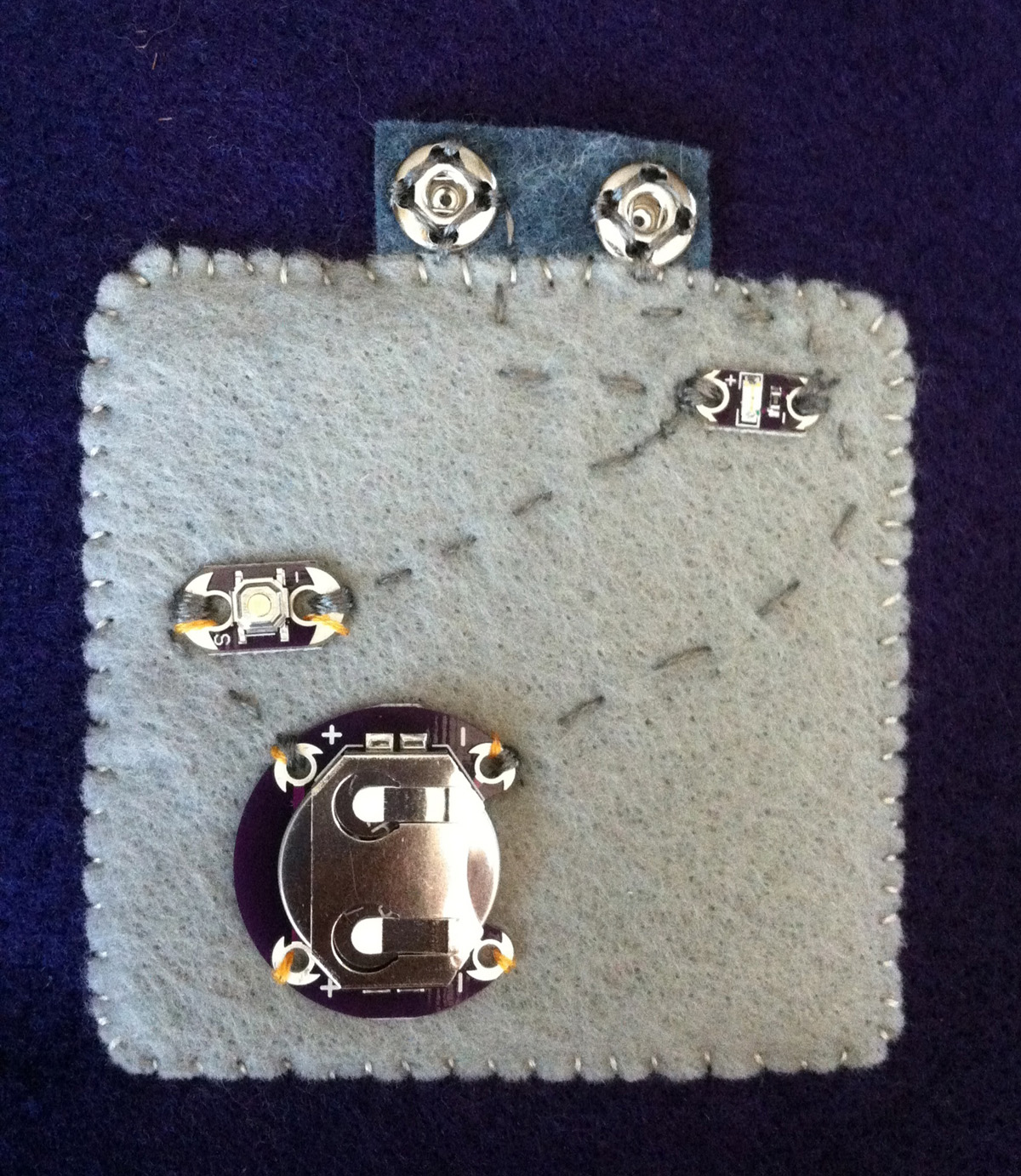
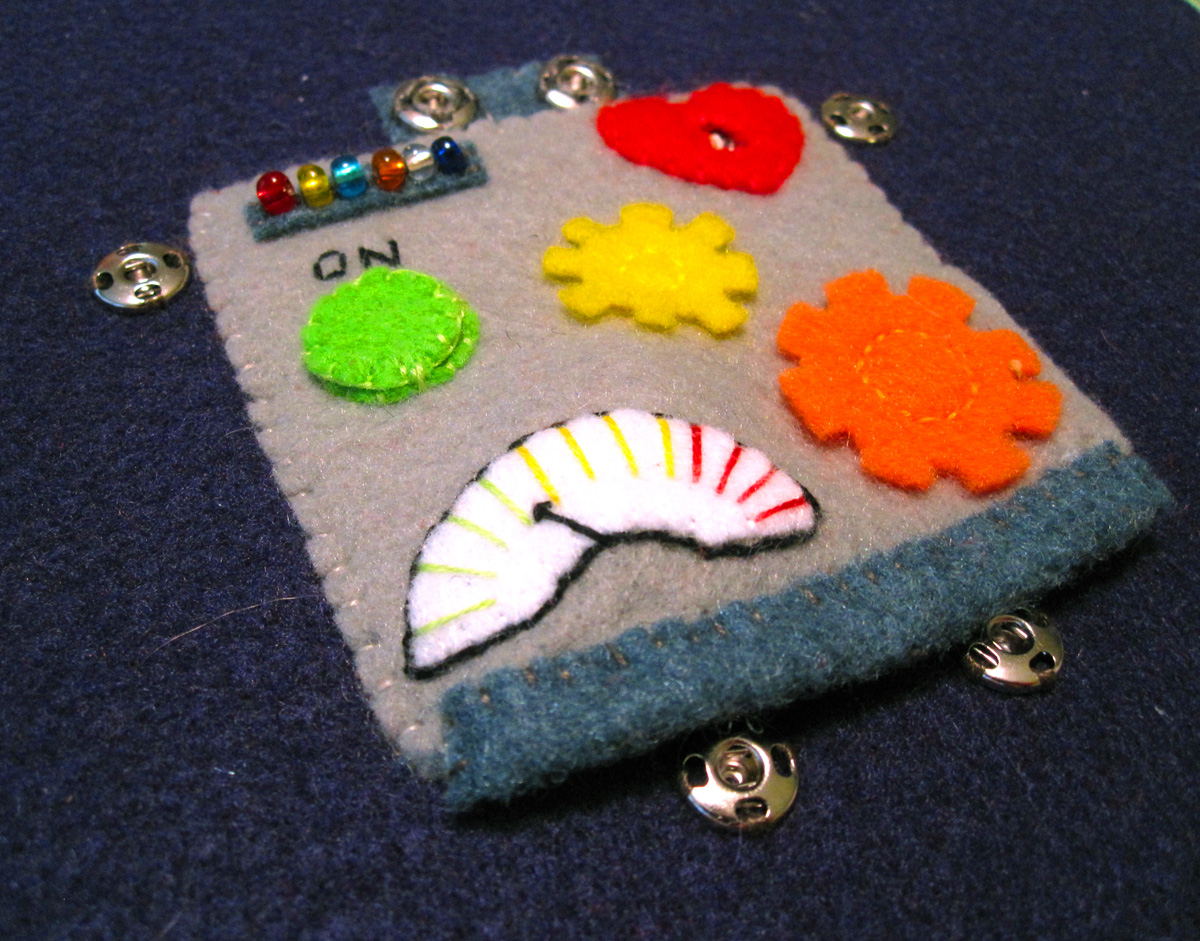
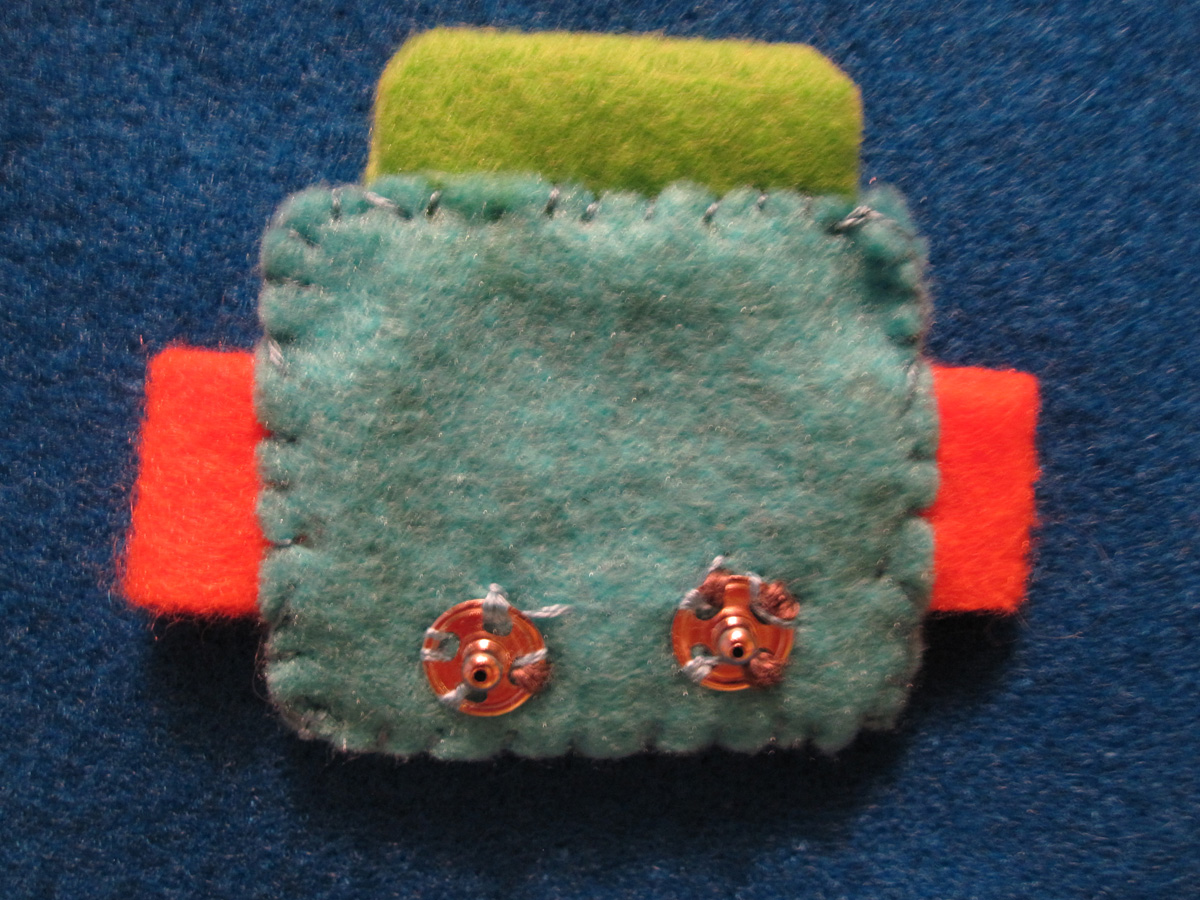
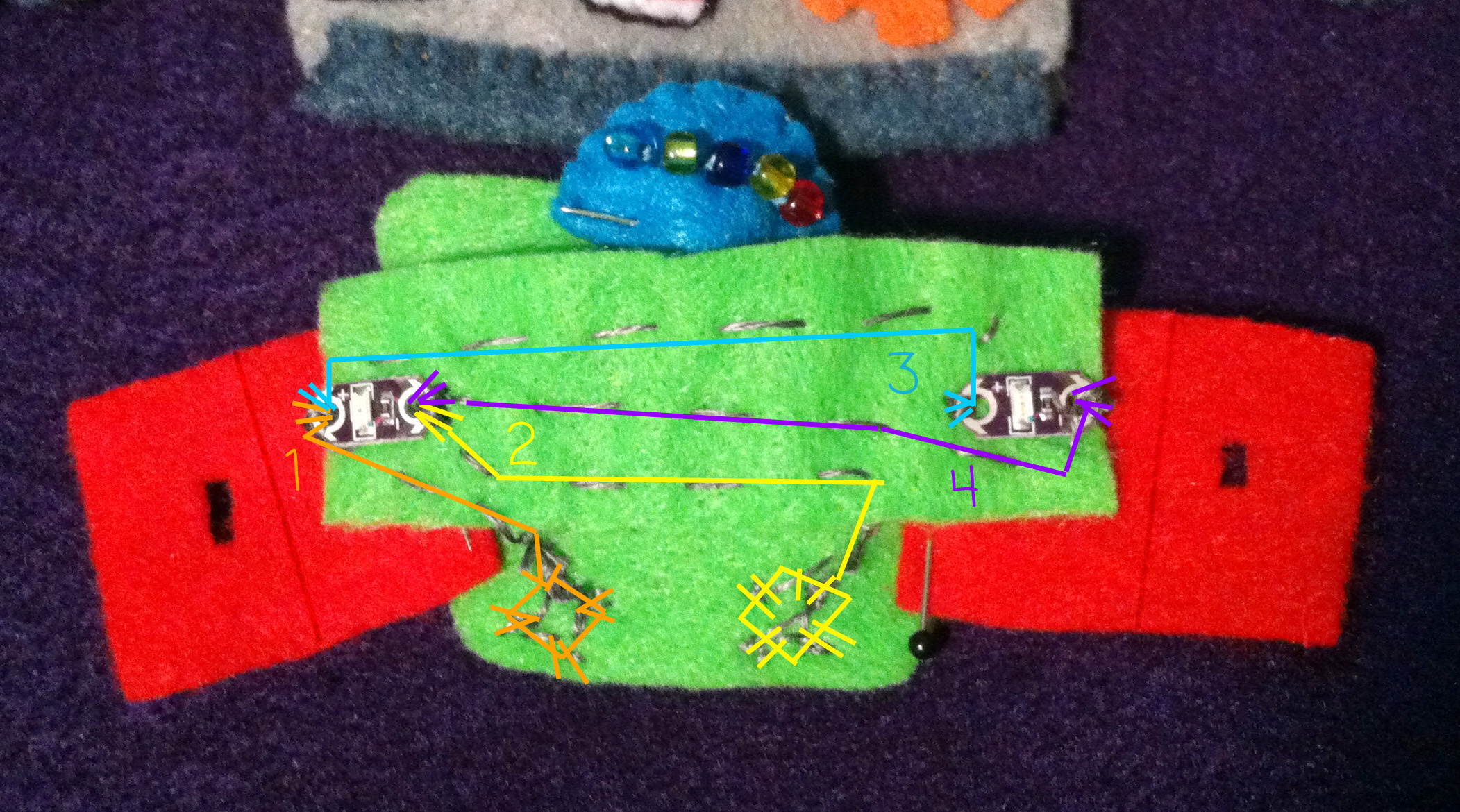
Start out with your body squares. Lay out the decorations on the front piece and the battery holder, button and 1 LED on the inside piece. Lay all the parts out so the + is on the left and the – is on the right, like the photo below. The button and LED will need to line up with the front. Cut a circle out of the green button piece so the button can stick through. You’ll make a button top later. Cut a tiny rectangle out the the heart for the LED. I stitched around both holes to keep them from stretching. Sew down your front pieces. On the white meter, I stitched green, yellow and red lines, as well as a black arrow. For the gears, I stitched them down with a circle in the center of each. Sew some seed beads down along the gray rectangle. I made 2 stitches through each bead for strength. Confirm the placement of the electronics and baste them down. Baste a scrap of felt to the top as the robot’s neck and sew down some snaps.
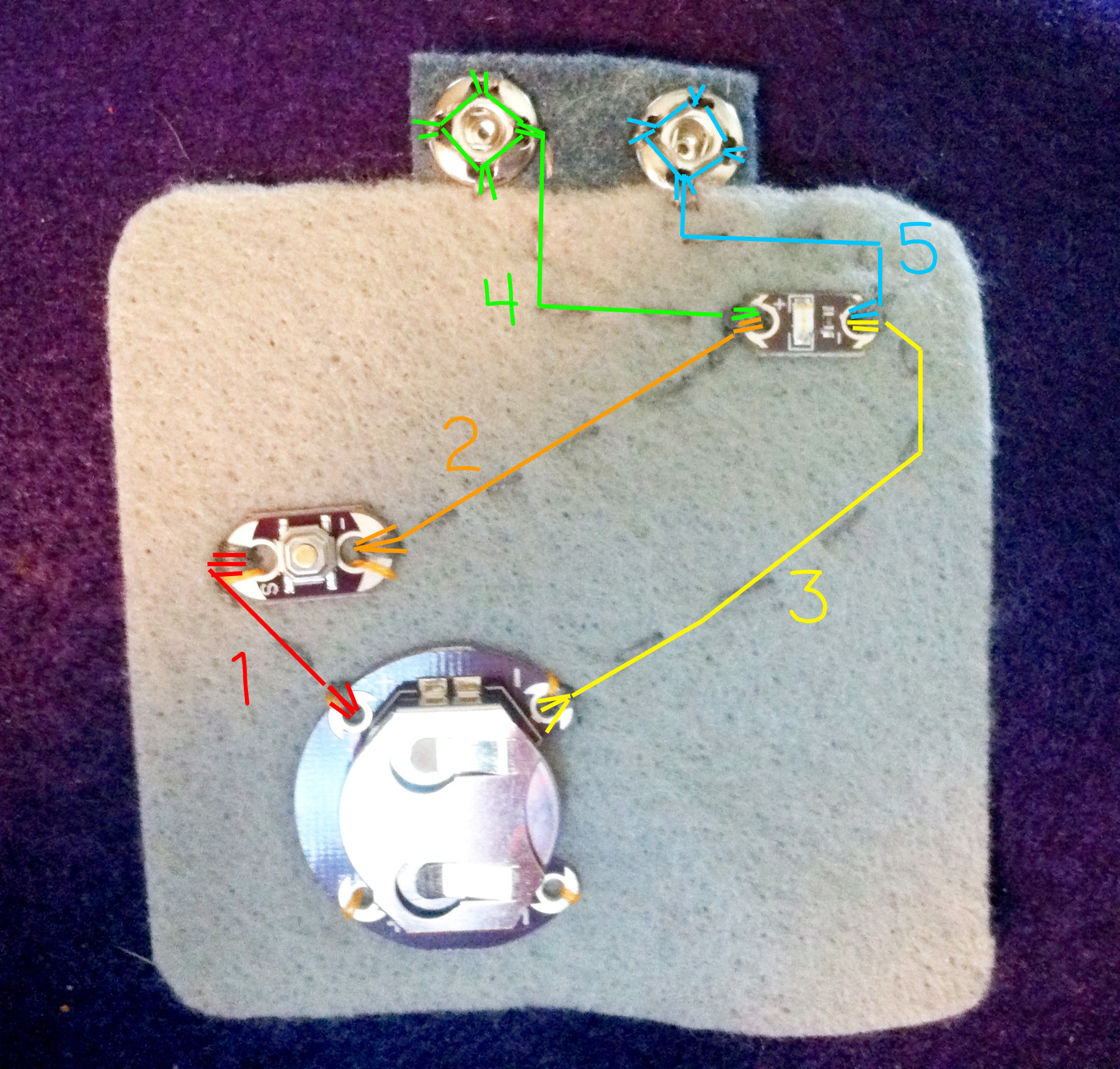
For each of the next steps you will need to thread a large-eye needle with a length of conducive thread. I only used about 12″ – 18″ at a time. Tie a knot in the end. Make several stitches in the upper + hole of the battery holder. Use a simple running stitch (looks like a dashed line) from the battery holder + hole to the button’s + hole. Make several passes through the hole and tie off.Start a new thread and make several stitches in the button – hole. Running stitch from there to the LED + hole. Make several stitches in that hole and tie off.Start a new thread and make several passes through the LED – hole. Running stitch from there to the battery holder’s top – hole. Stitch through the hole several times and tie off. Steps 1 – 3 complete a circuit. You can put your battery in and test the LED by pressing the button.
Next we need to create half of a second circuit for the head LEDs. The additional circuit needs to be piggy-backed off the first LED. If the circuit is a diamond shape, the body LED is the bottom point, the neck snaps are the left and right points and a head LEDs will be the top point when snapped on. Start a new conducive thread and make several passes through the LED + hole. Running stitch up to the left snap. Make several stitches through all 4 holes on the snap, and make long stitches between each hole in a diamond shape. Tie it off. The idea is to get a lot of coverage with the thread on the snap. Start a new thread and make several passes through the LED – hole. Running stitch up to the right snap and sew it just like the first snap. Tie off your thread. Having the second circuit incomplete should not affect your body LED’s circuit. It should still light when you push the button.
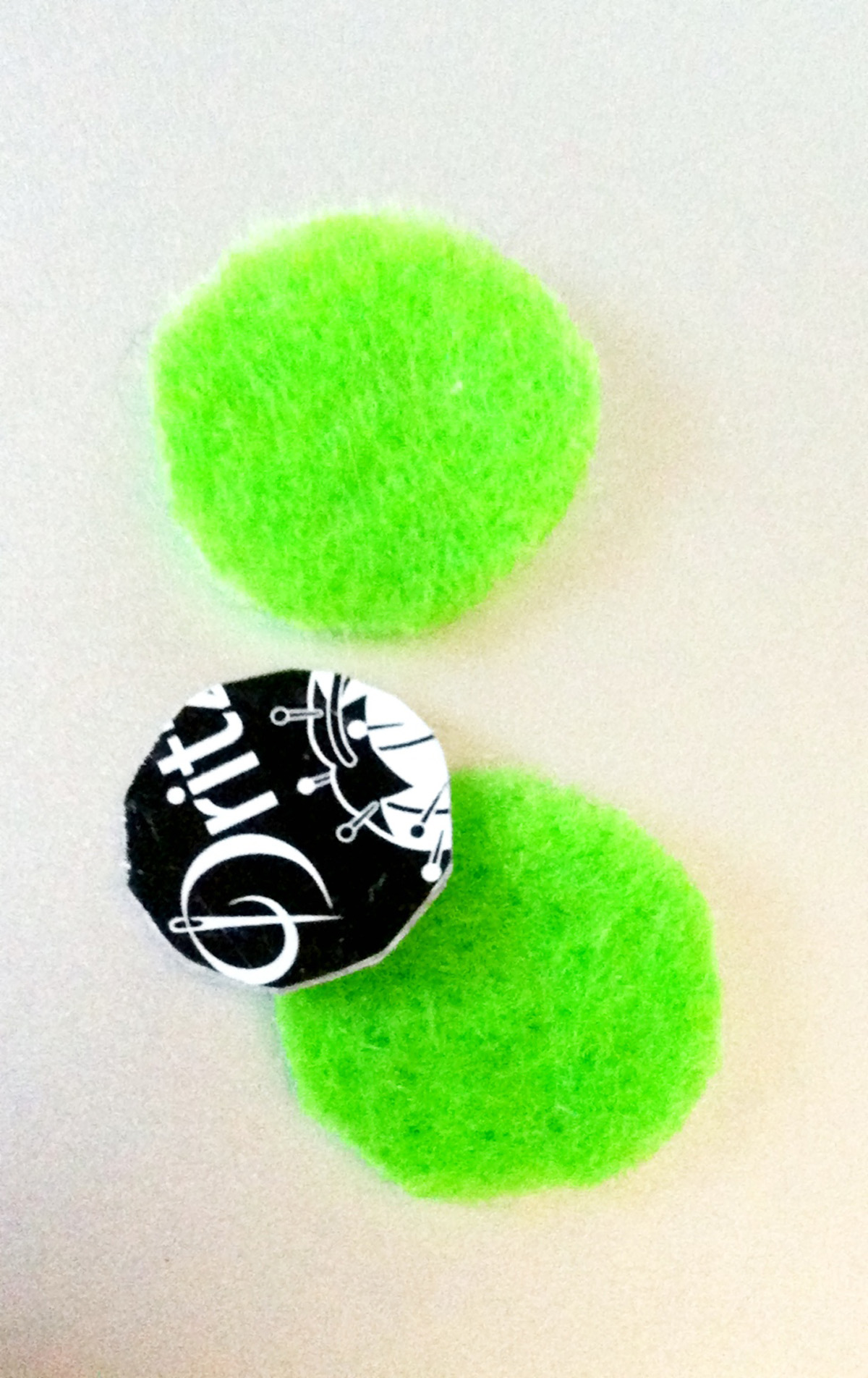
Layer some light cardboard cut a bit smaller than your body under the inner body piece and stitch it down to the page. Since quiet books are squishy, the cardboard will make it a bit easier to press the button. Next we make a button cover. Cut a circle of cardboard that is slightly larger than the button hole in your front body piece. Cut two felt circles that are large enough to cover the cardboard and sew it in between them. Lay the button cover over the button hole and sew it down with four stitches: top, right, bottom and left. Lay your body front over the inner body and test that the button cover presses the button. The button should be sticking up through the hole, making the cover press it easily.
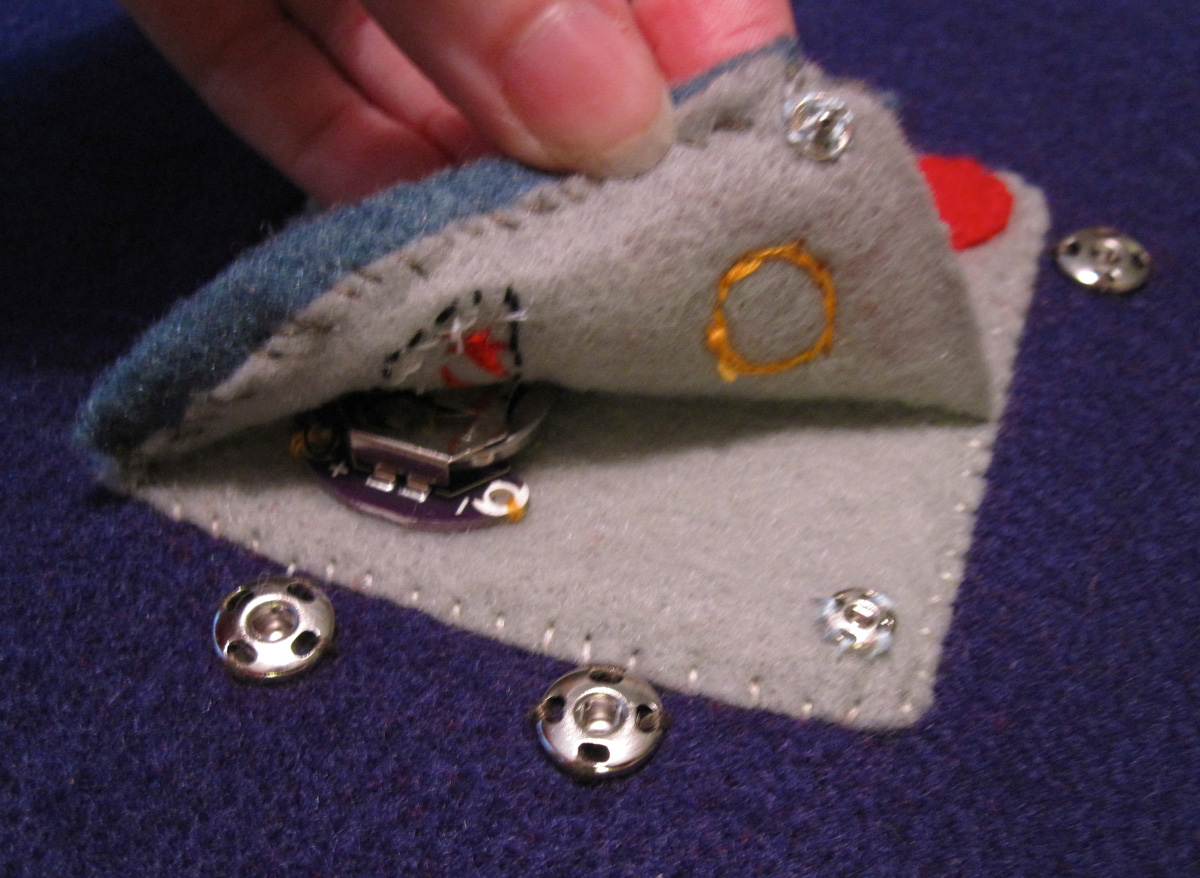
Sew a strip of felt along the bottom of your front body piece to finish it off. Sew the front body piece down to the page, leaving the bottom and the lower half of the right side unstitched. You need to be able to lift up the front to get to the battery for changes. I added a small snap to the corner.
Sew snaps on (with regular thread) for your arms and legs.
Robot Head 1
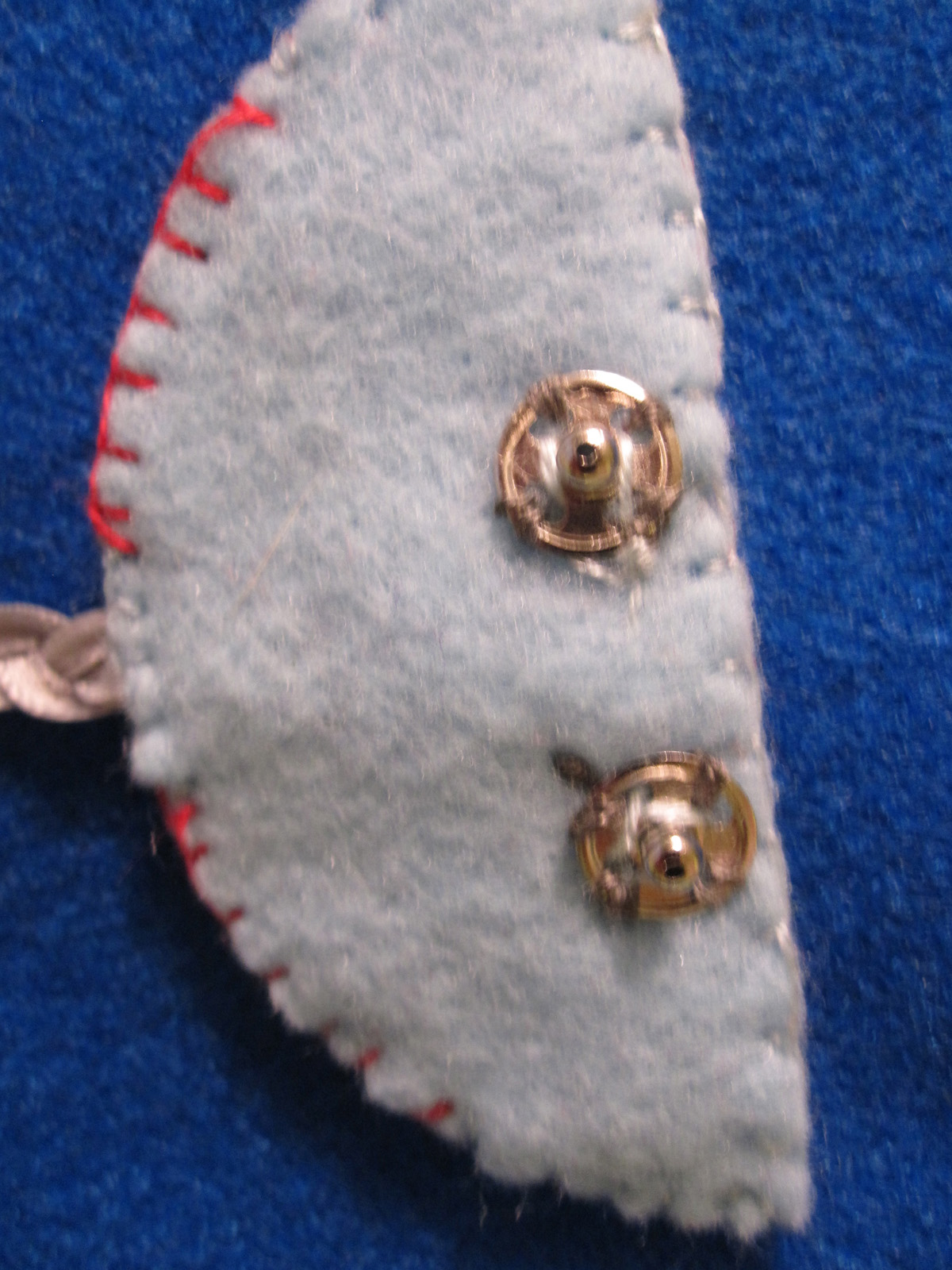
Sew down your two snaps to the back side of the back piece of head 1. Make sure you use the opposite snap parts as the ones you sewed to the page! (I used the “male” sides on the body parts and the “female” side on the page.) Flip the back piece over and baste your LED down with the + on the left and the – on the right. Have the LED part line up with the center of the mouth.
Thread your needle with conducive thread and sew through the + hole of the LED several times. Make a stitch or two to connect the thread to the left snap (the one on the left when you are looking at the robot’s face.) Tie it off. Start another conducive thread and sew through the – hole of the LED several times. Make a stitch or two to connect the thread to the right snap. You can now test the head by snapping it to the body and pressing the button. Both the body LED and head LED should light up.
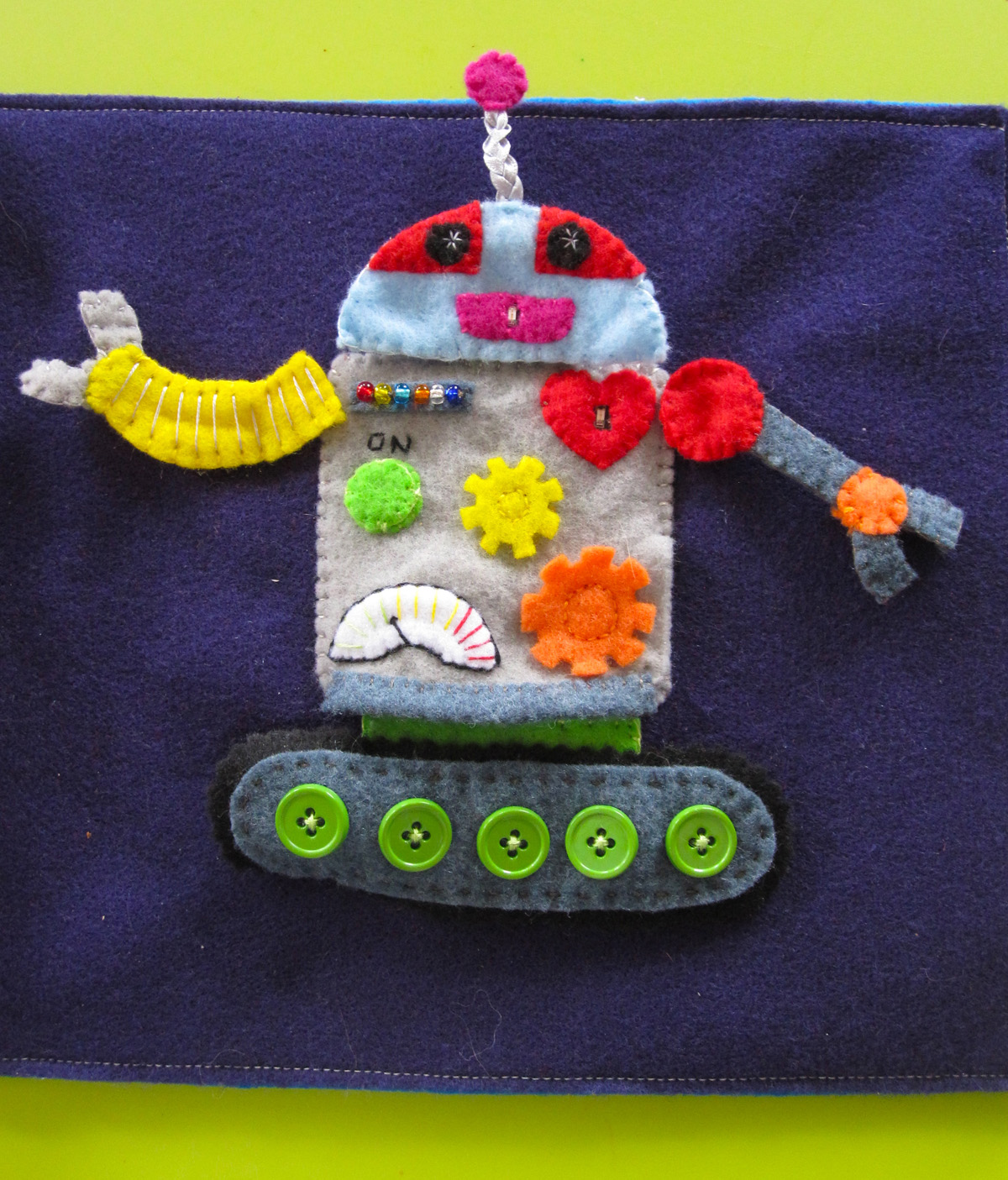
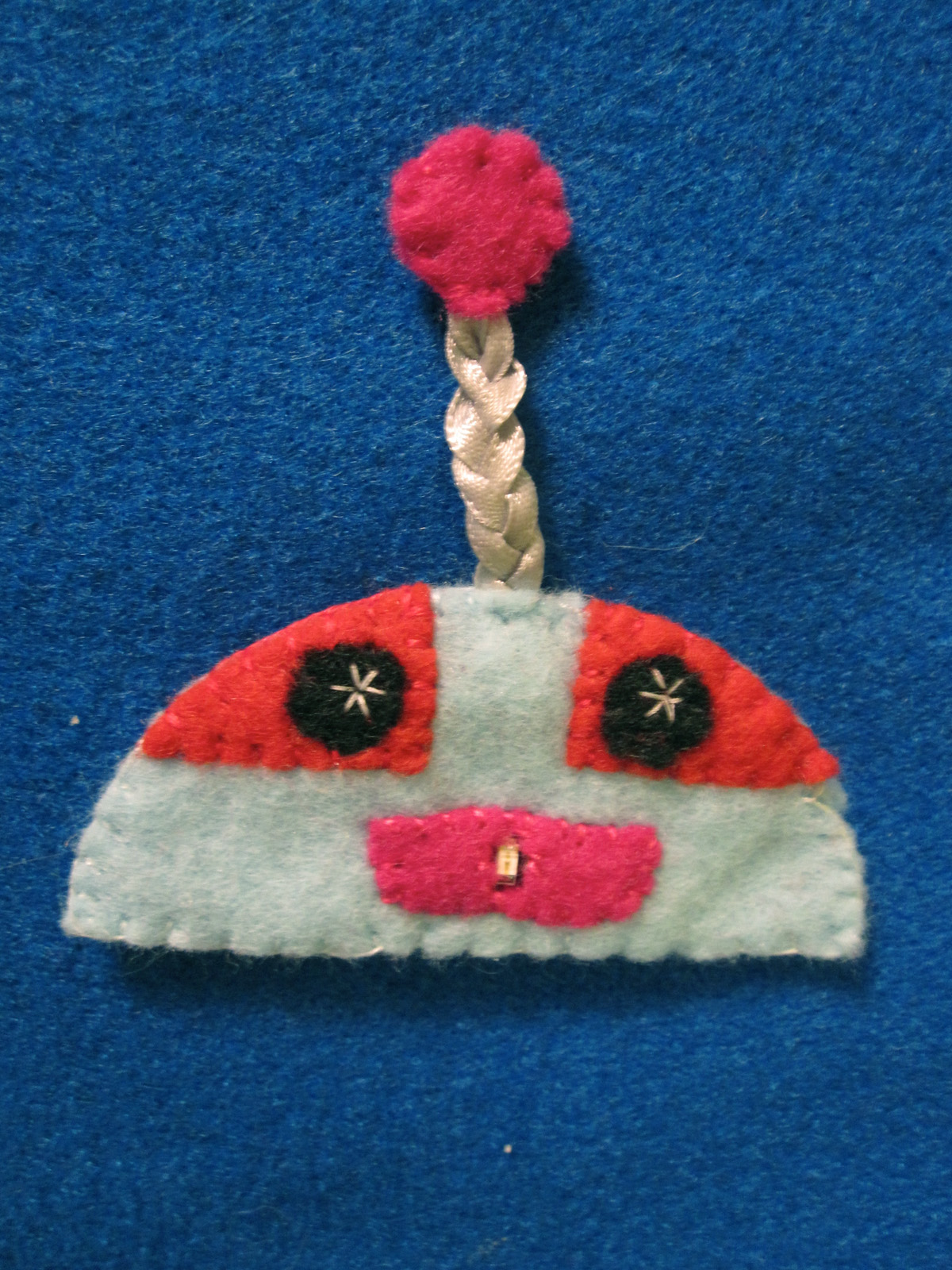
Decorate the front head piece. Cut a small rectangular hole in the front head piece for the LED to stick through. Cut a matching hole in the mouth piece. I made red eye pieces with black felt circles. I stitched little white starburst shapes in the eyes for extra cuteness. I sewed the mouth down and stitched around the hole for strength. For the antennae, I braided some gray ribbon and sewed pink circles of felt to the top. Sew the front and back pieces together with the antennae in place.
Robot Head 2
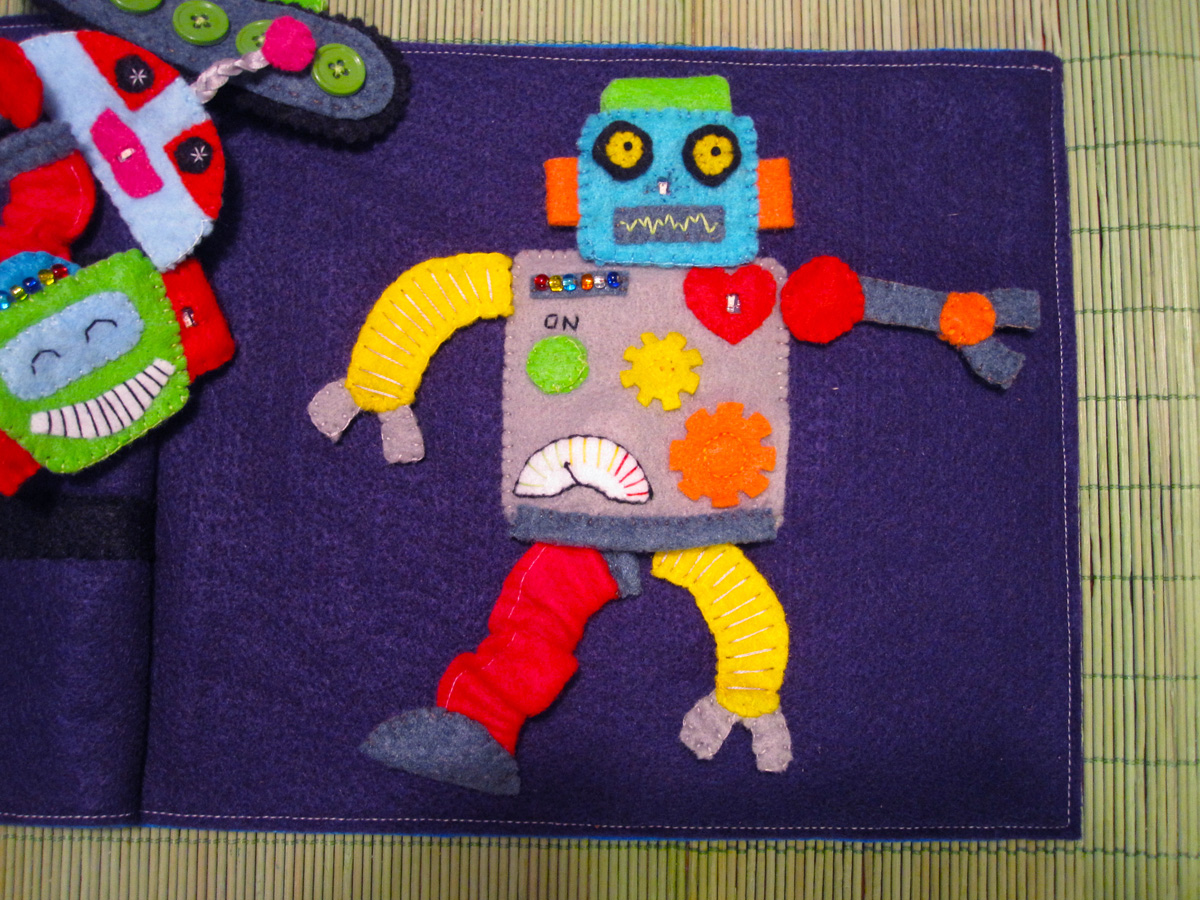
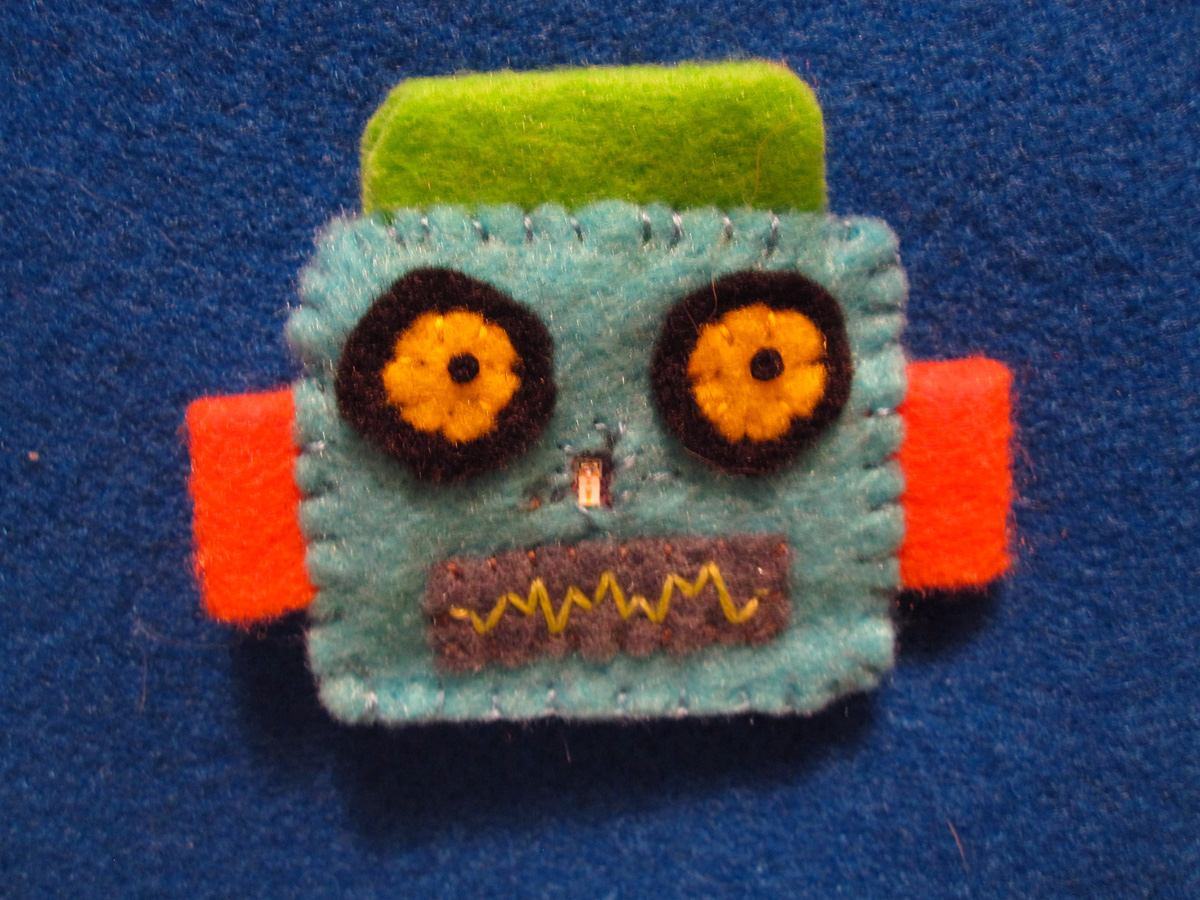
Sew the snaps and LED onto the back piece of head 2 in the same way as head 1, but position the LED to be the nose. Decorate the front piece. Cut a hole for the nose LED and sew around it for strength. I sewed a zigzag line on the mouth piece in lime green. My eyes are yellow circles on top of black circles, with a black French knot in the center. The ears and hat pieces are folded but not sewn, so they are loops that are open on the sides. Sew the front to the back.
Robot Head 3
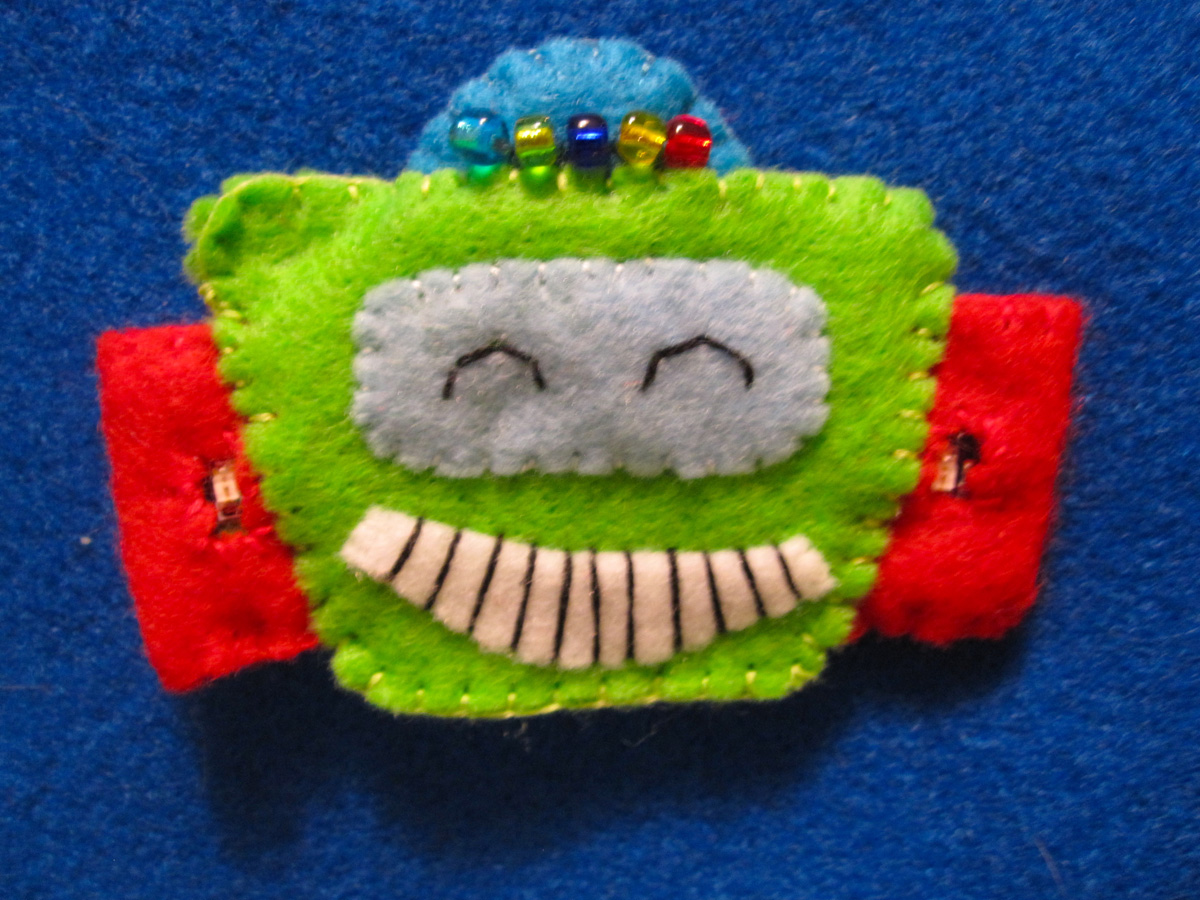
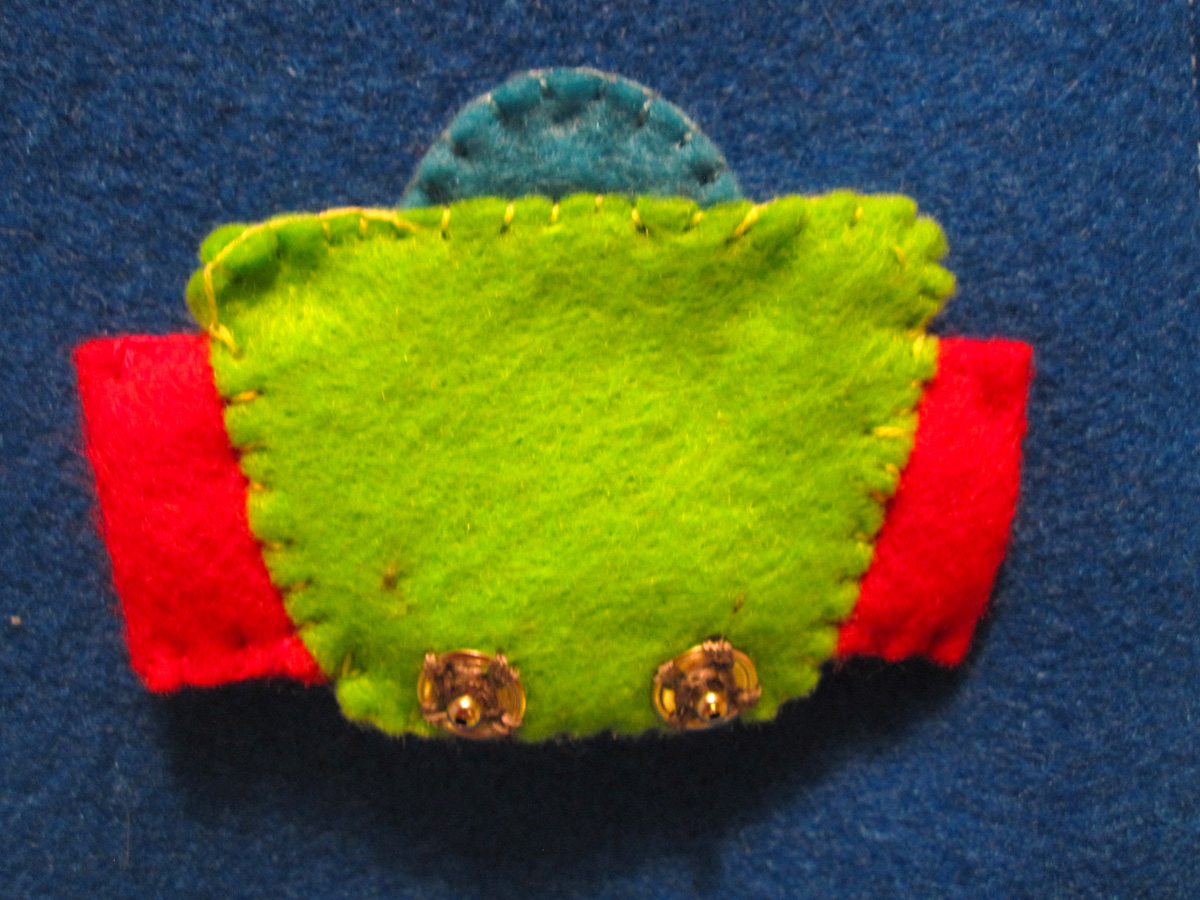
This head is a little trickier because it has 2 LEDs. The first LED (I did the one on the left) will be sewn to the two snaps like the previous heads. The second LED will be sewn in a circuit to the first LED. Baste the snaps down to the back of the back head piece. The ears are folded pieces of felt. Pin them in place to figure out where the holes need to be for the LEDs. I cut a scrap piece of felt to lay inside the head and do all the conducive stitching (except the stitches that are on the snaps) so the back of the head doesn’t look too messy.
Baste down the two LEDs with the + sides on the left. Thread your needle with conducive thread and make several stitches in the + hole of the LED on the left. Running stitch down the the snap on the left (when looking at the robot’s face) and stitch on the snap as before. Tie off the thread.Start another thread and make several stitches in the – hole of the same LED. Running stitch over to the right snap and sew on the snap as before. Tie off the thread. If you test the head on the body at this point, the left LED should light up. Start a new conducive thread and make several stitches in the + hole of the same LED you’ve been stitching in. Running stitch over to the + hole of the right LED and make several stitches. Tie it off.Start one more conducive thread and make several stitches in the – hole of the first (left hand) LED. Carefully running stitch over to the – hole of the right LED. You don’t want the running stitches to touch any of the others (the stitches you make in the LED holes are fine touching each other.) Make several stitches in the – hole and tie off. Testing the head now should light up both LEDs.
Decorate the head. Sew around the LED holes for strength. Fold the ear pieces down and sew the sides shut. For my mouth, I made long black stitches for teeth. For his hat, I sewed seed beads along the bottom (leave room to stick the hat in between the head pieces) and the sewed the two sides together. I used light blue for the eye piece and stitched arches for the eyes. Sew the front and back of the head together.
Other Parts
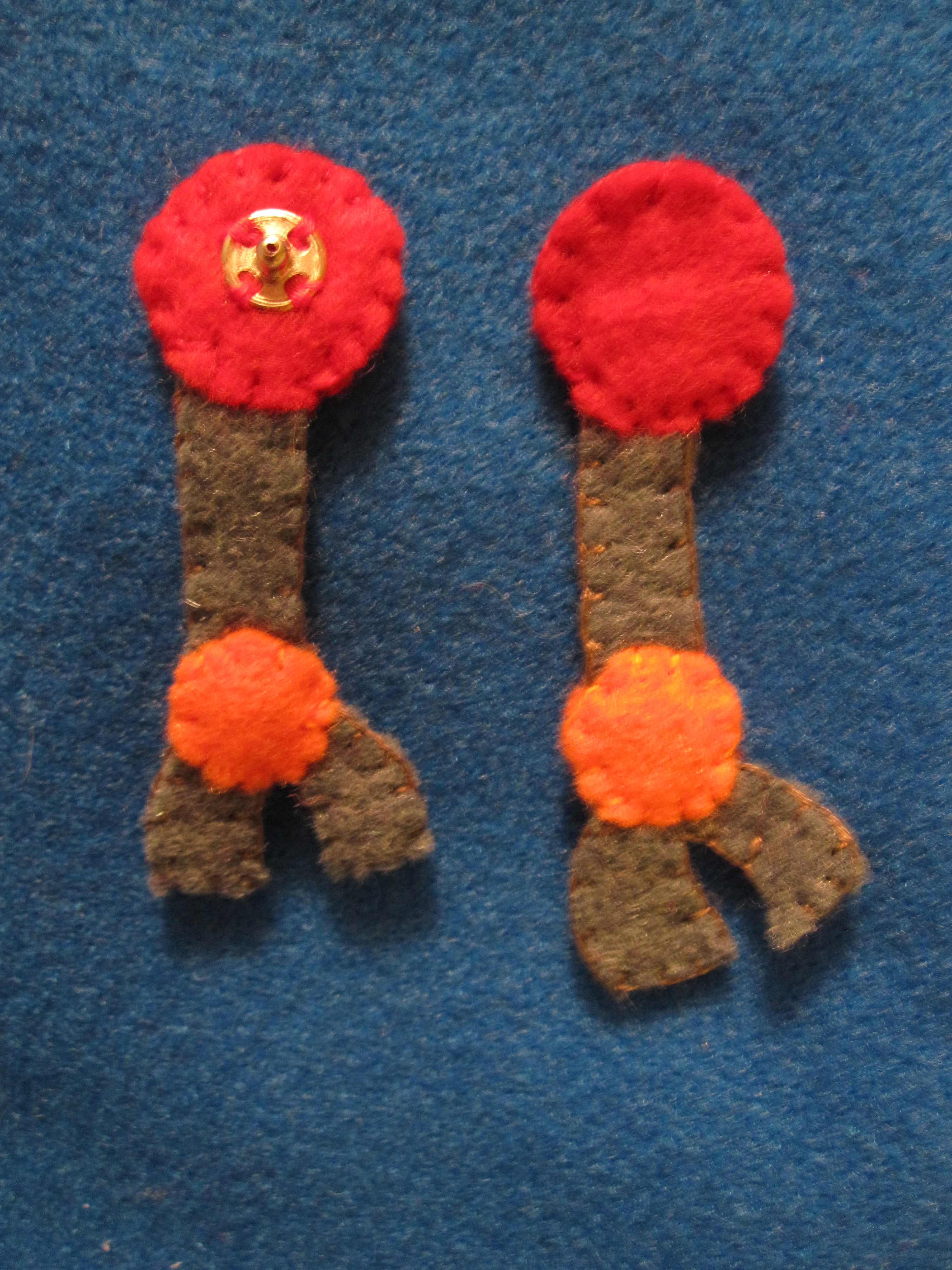
For the first set of arms, long gray pieces are layered between circles for the shoulder and wrist joints. Gray claw shapes are layered in the wrist joint.
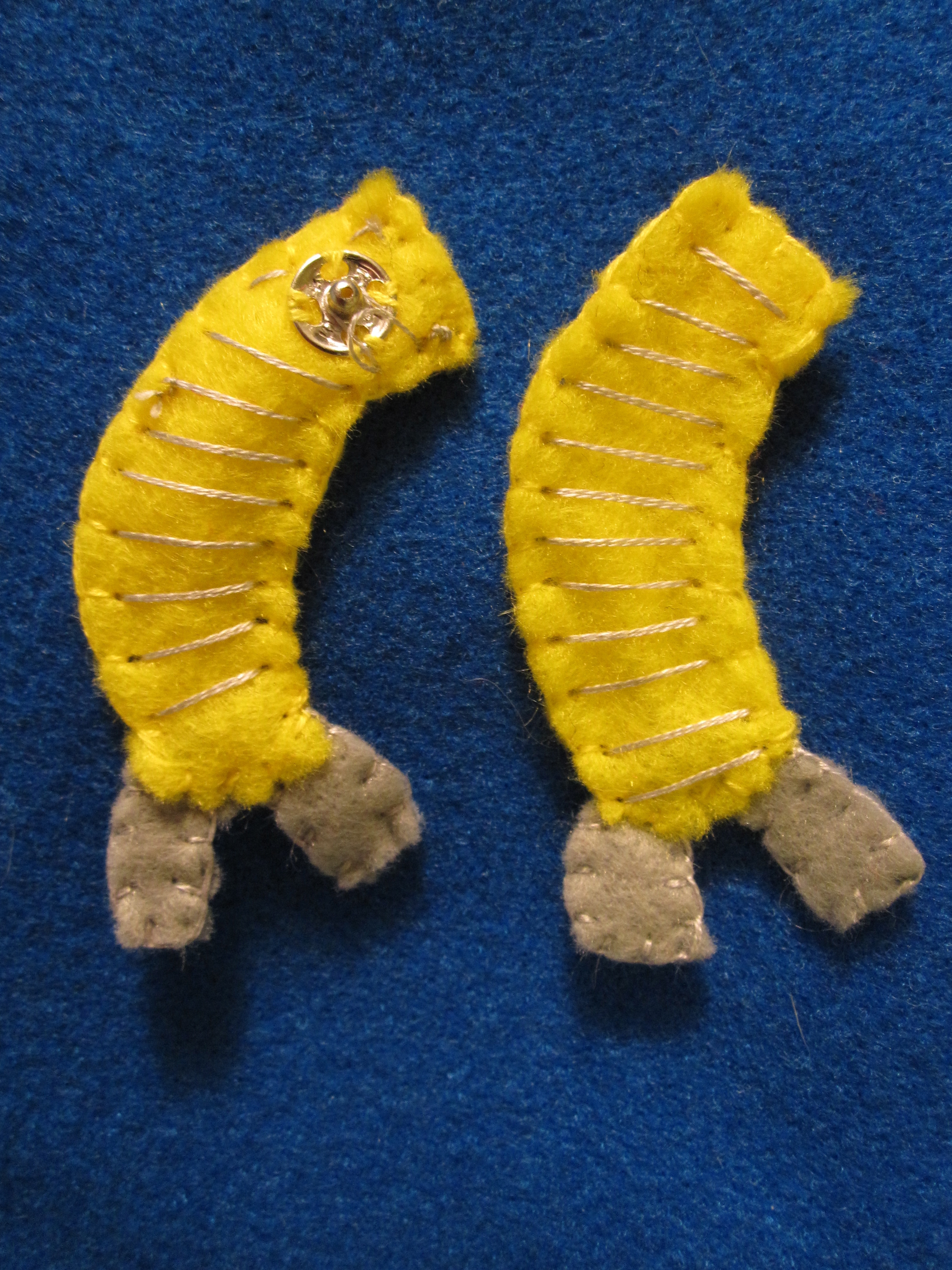
The yellow arms have the claw shapes layered into the bottom. I made long stitches to make the arms look like tubes.
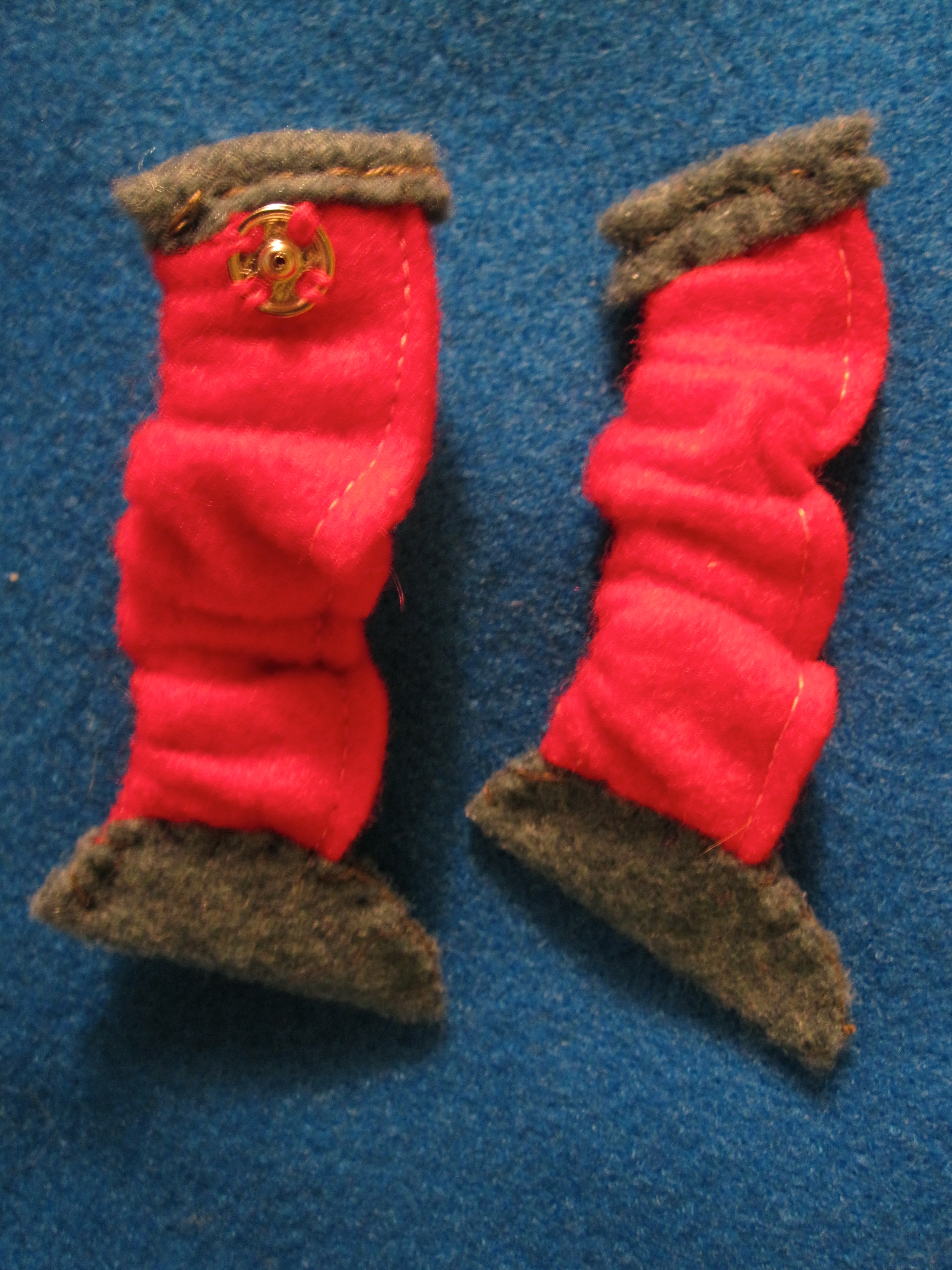
For the stretchy legs, I cut folded rectangles an inch or so longer than I wanted them to be. With a piece of elastic inside the folded felt, sew across the top, catching the elastic. Continue sewing down the side (I did all this on the machine). When you get the the bottom, stretch the elastic tight before sewing across, again catching the elastic. When you let go, the leg with scrunch up. Clip off the extra elastic. Sew scraps of gray to hide the elastic at the top. Sew the foot pieces to the bottoms.
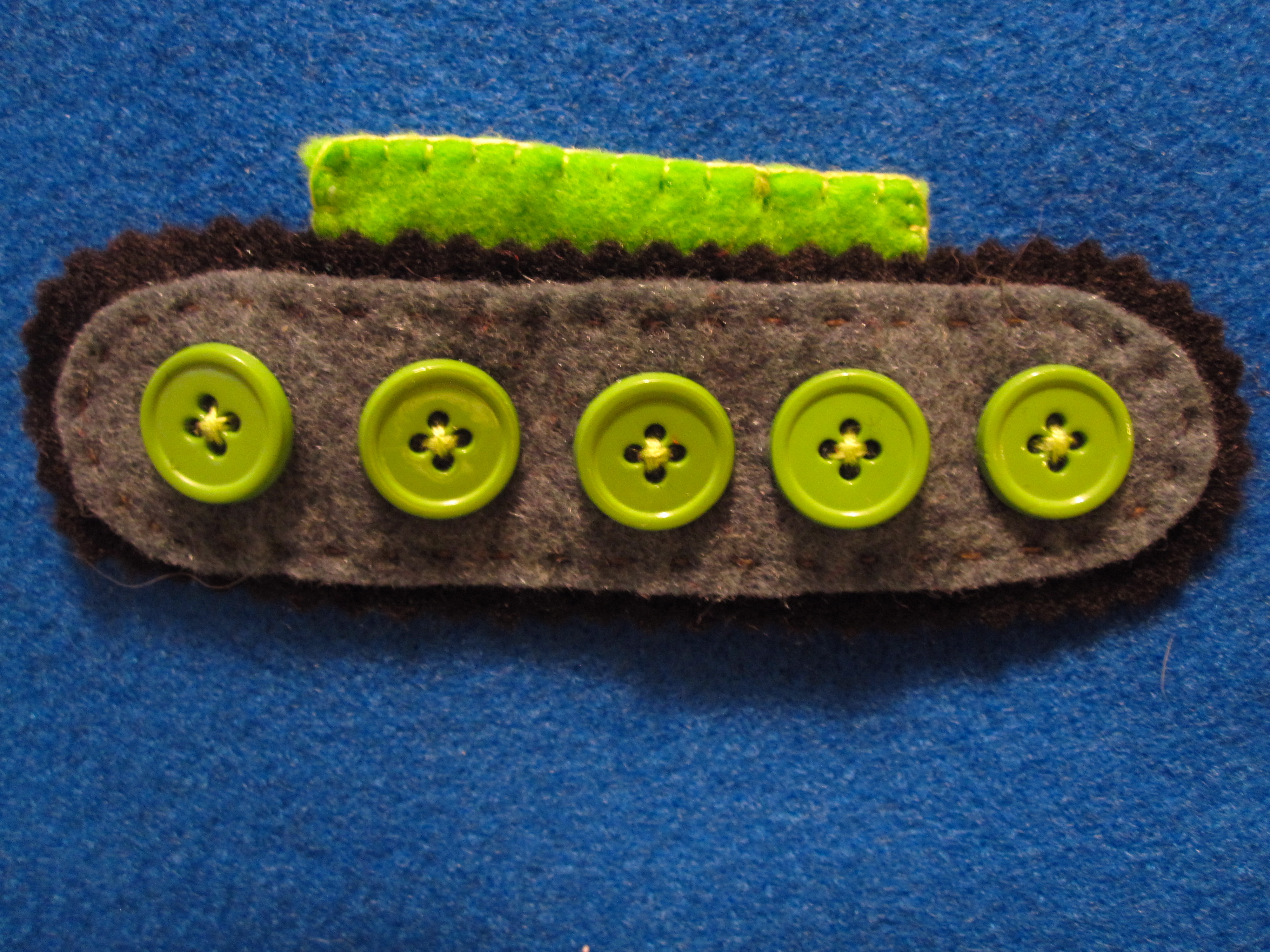
For the tank-style tread, cut out the black tread with pinking shears. Add a row of buttons to the gray piece and sew it down. cut two scrap rectangles to sew your snaps to. Sew them together and attach it to the back of the tread so it can hang down below the body.
Spare Part Storage
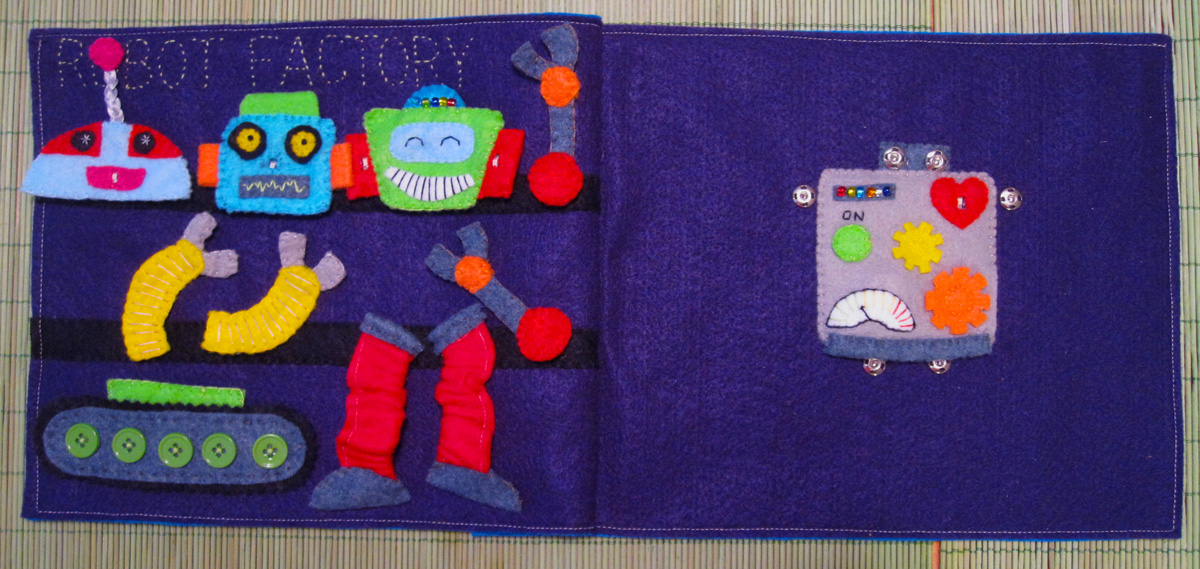
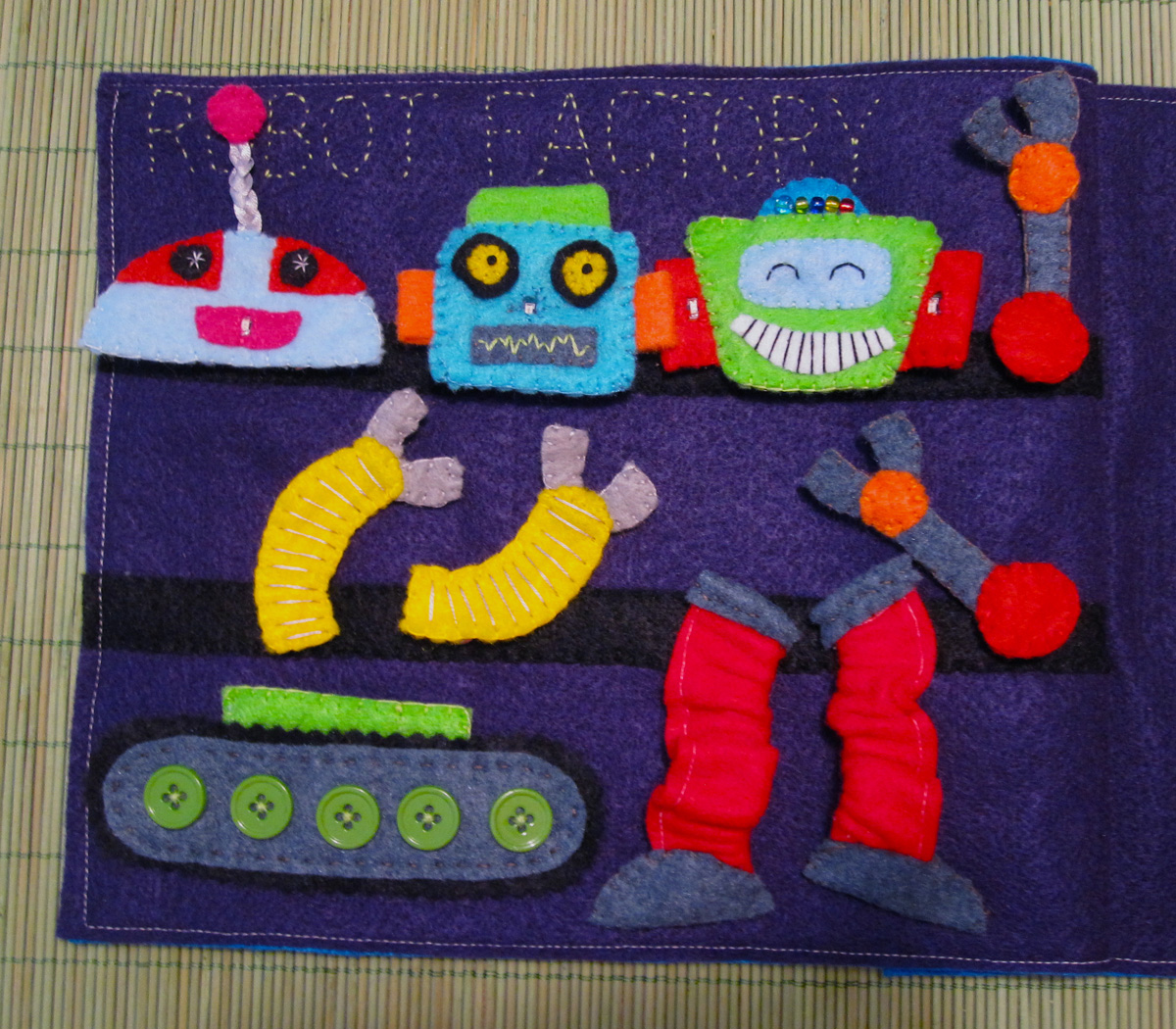
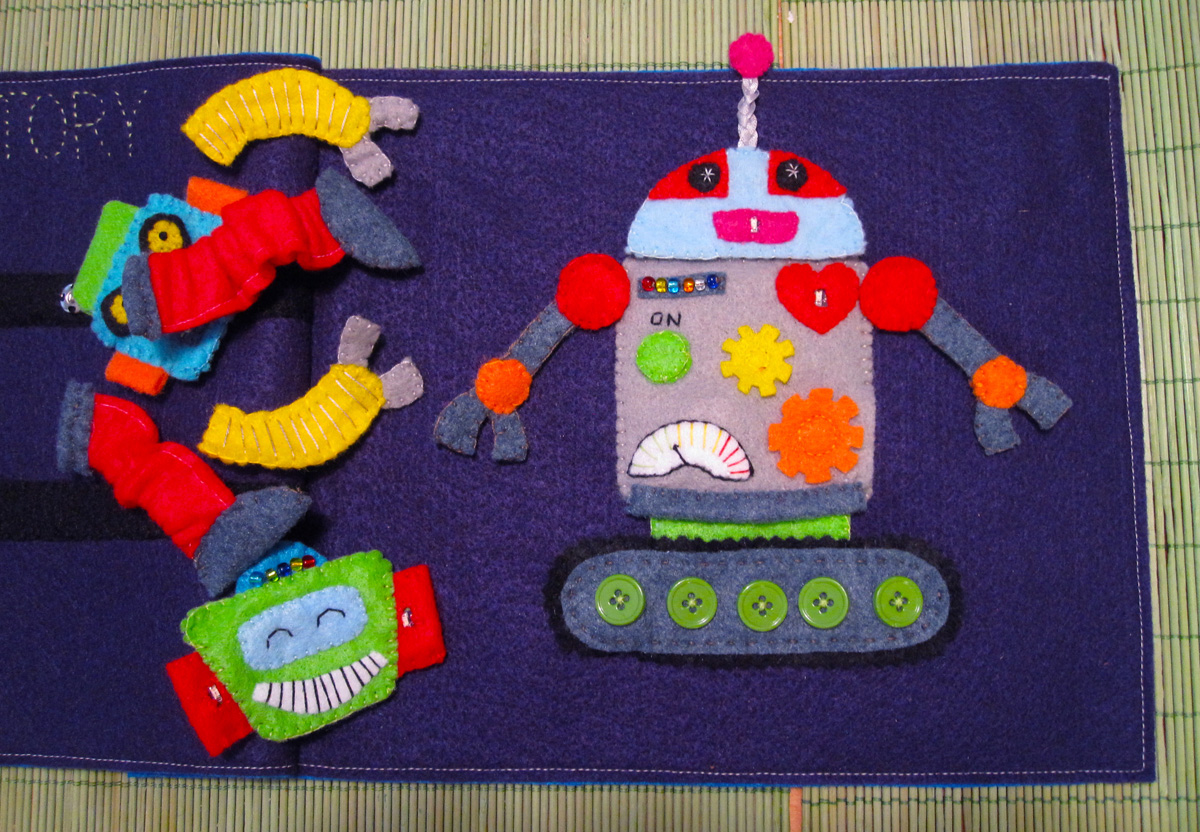
On the facing page, I stitched the words “ROBOT FACTORY” by pinning the word template down and sewing right through the paper. I then ripped the paper away gently. I sewed strips of black felt down to make “shelves” and added snaps to hold all the pieces. Because you have the “female” halves of the snap on both the body and the storage shelves, you will have some orphaned “male” snap halves.
All done!
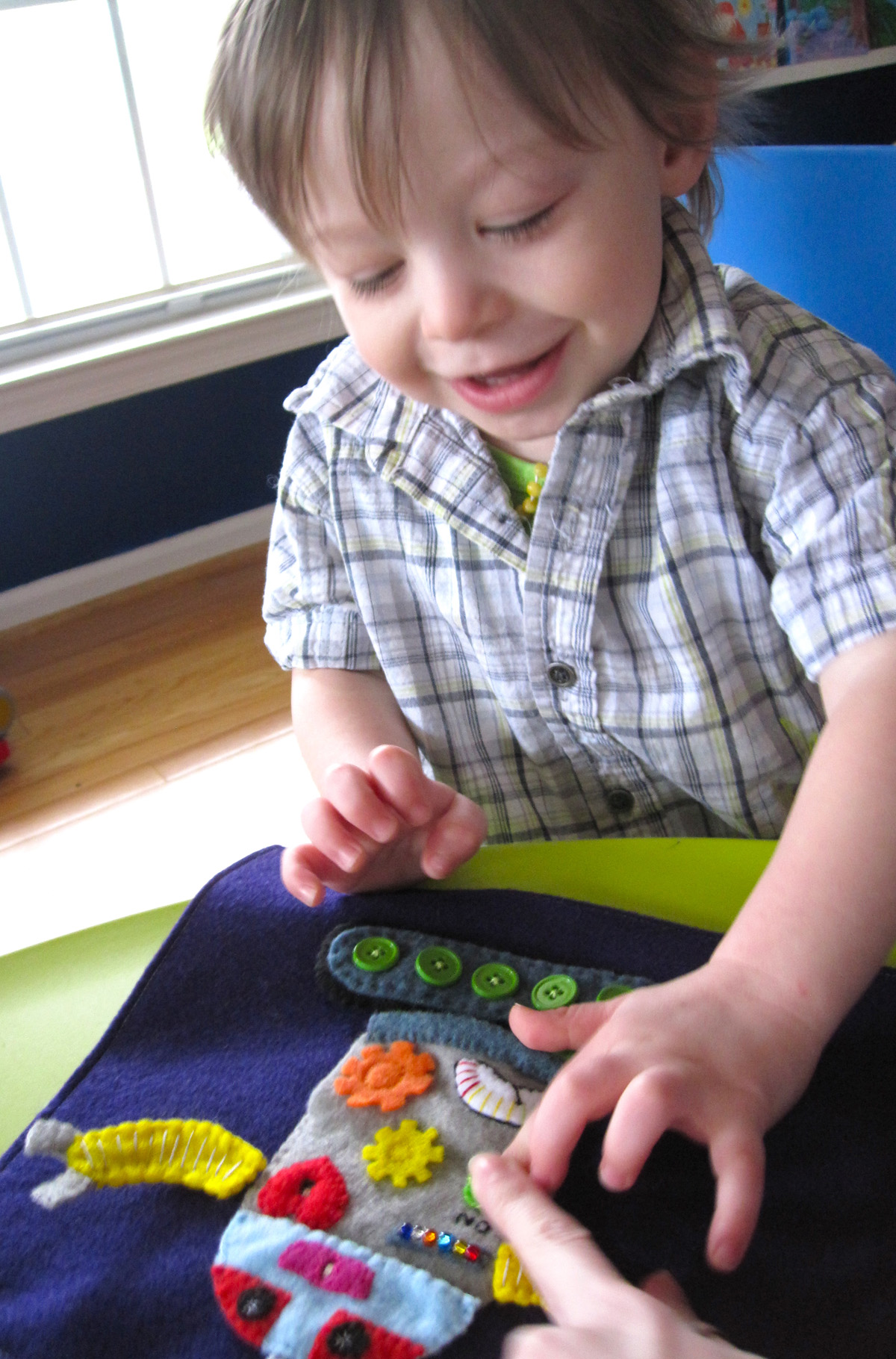
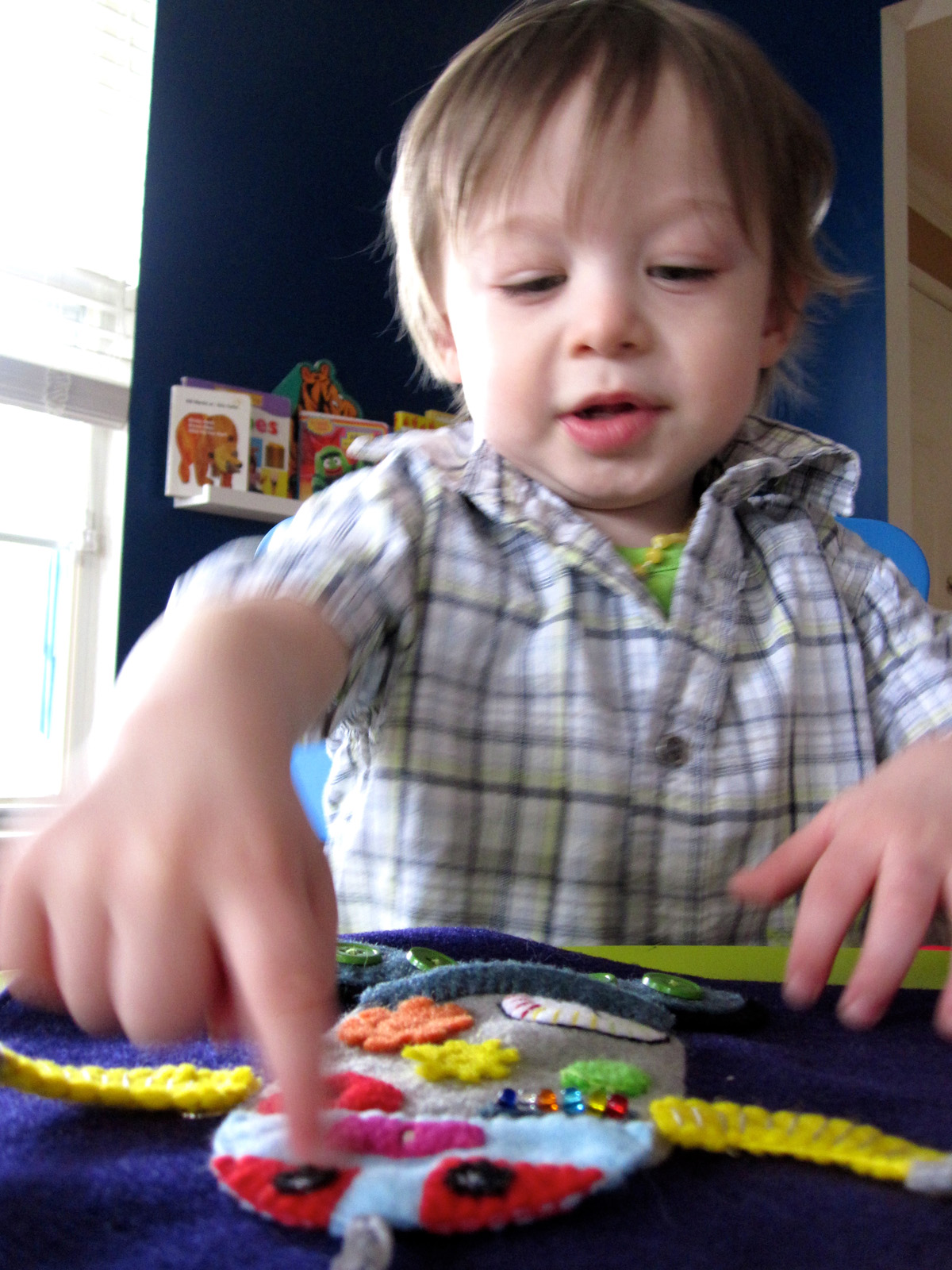
I love, love, love how this came out!! Hopefully my tutorial and diagrams make sense. This is definitely the most complicated page I’ve had to explain. It was very worth it. I haven’t let Jax play with it much because it is for our vacation, but he already loves to push the button and choose robot parts.
If you make this page, leave a comment with your link or stop by the Facebook page and post a photo. I’d love to see yours!
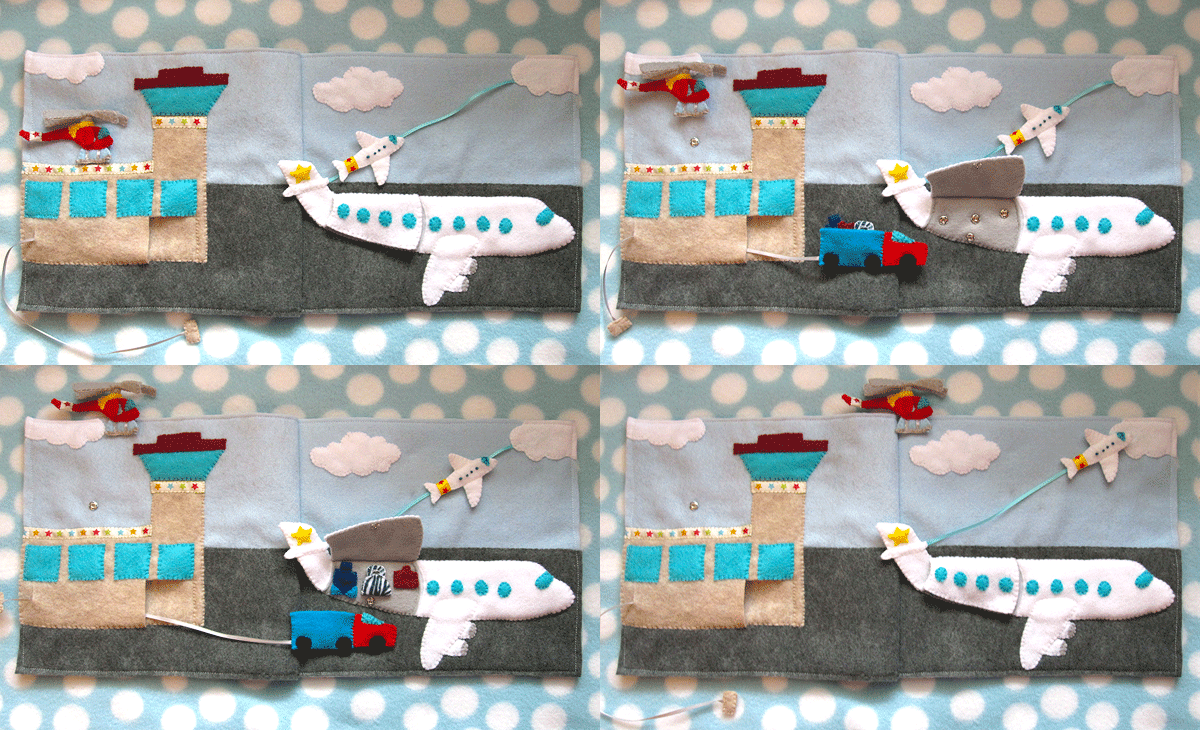
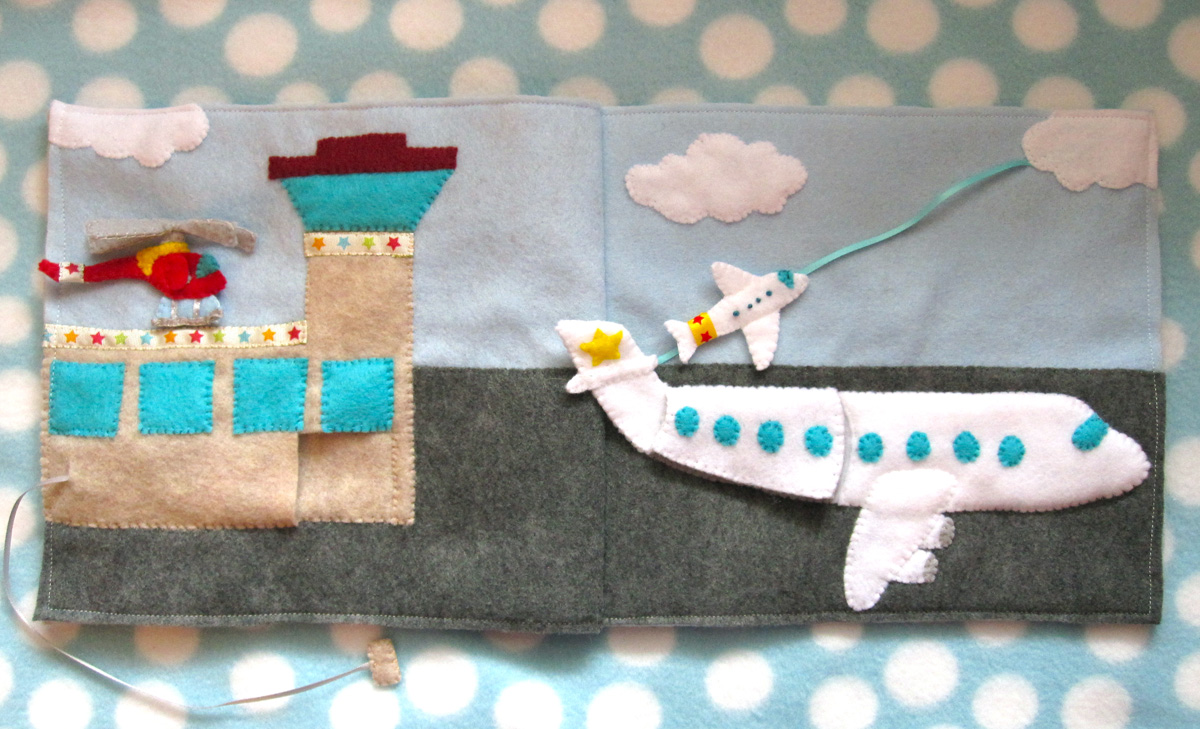
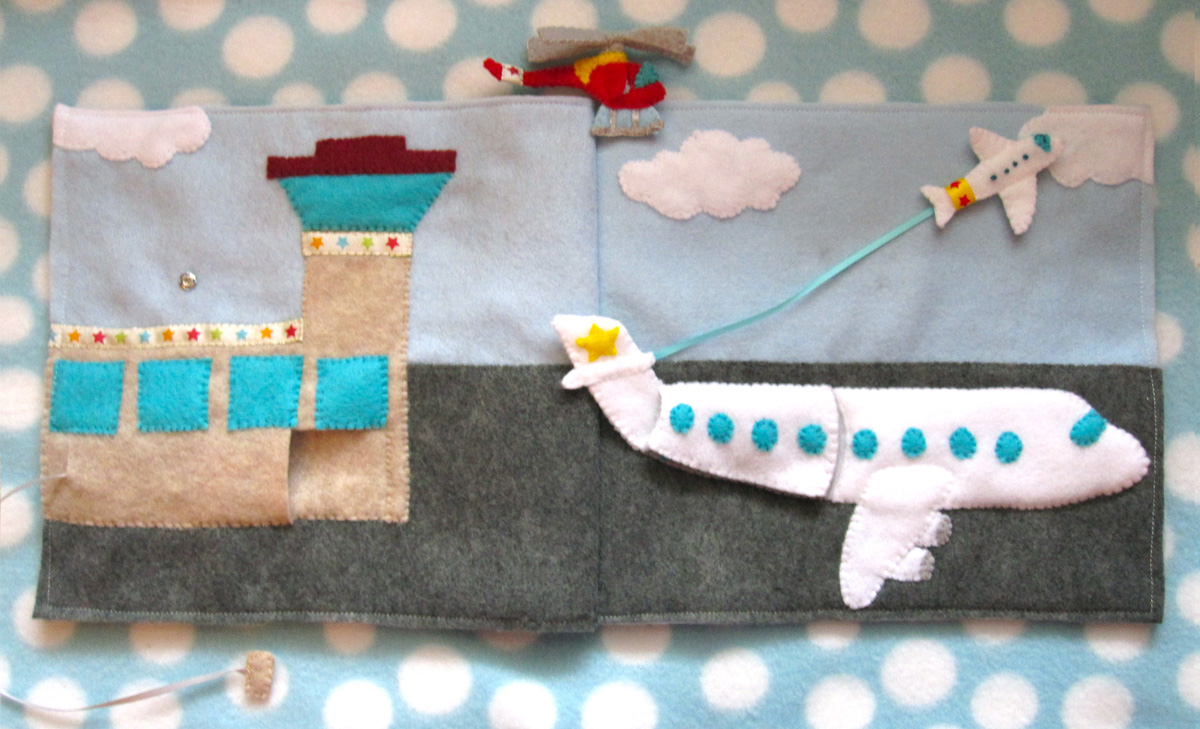
Here’s one more vacation/travel themed page! This page was about 3 weeks in the making due to two weeks of me being quite sick. It was all I could do to make it through each day taking care of Jax and doing as much work for my day job as possible. I still came out 12 hours short in work hours, ugh. Not that I’m well, I knocked the rest of the page out and I’m ready to move on!
What I used:the pattern, felt (in light blue, dark gray, white, natural, brick red, aqua, yellow, blue, red, gray and scraps), thin blue ribbon, thin gray or tan ribbon, decorative ribbon, snaps or Velcro and matching thread.
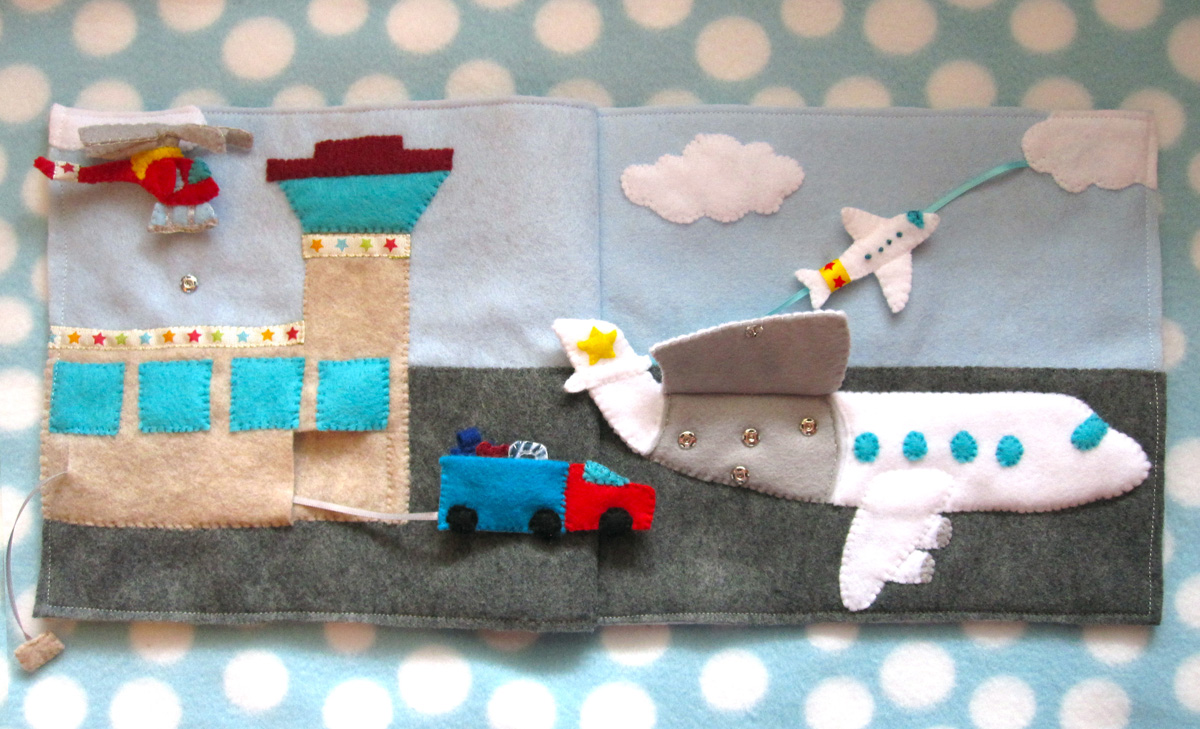
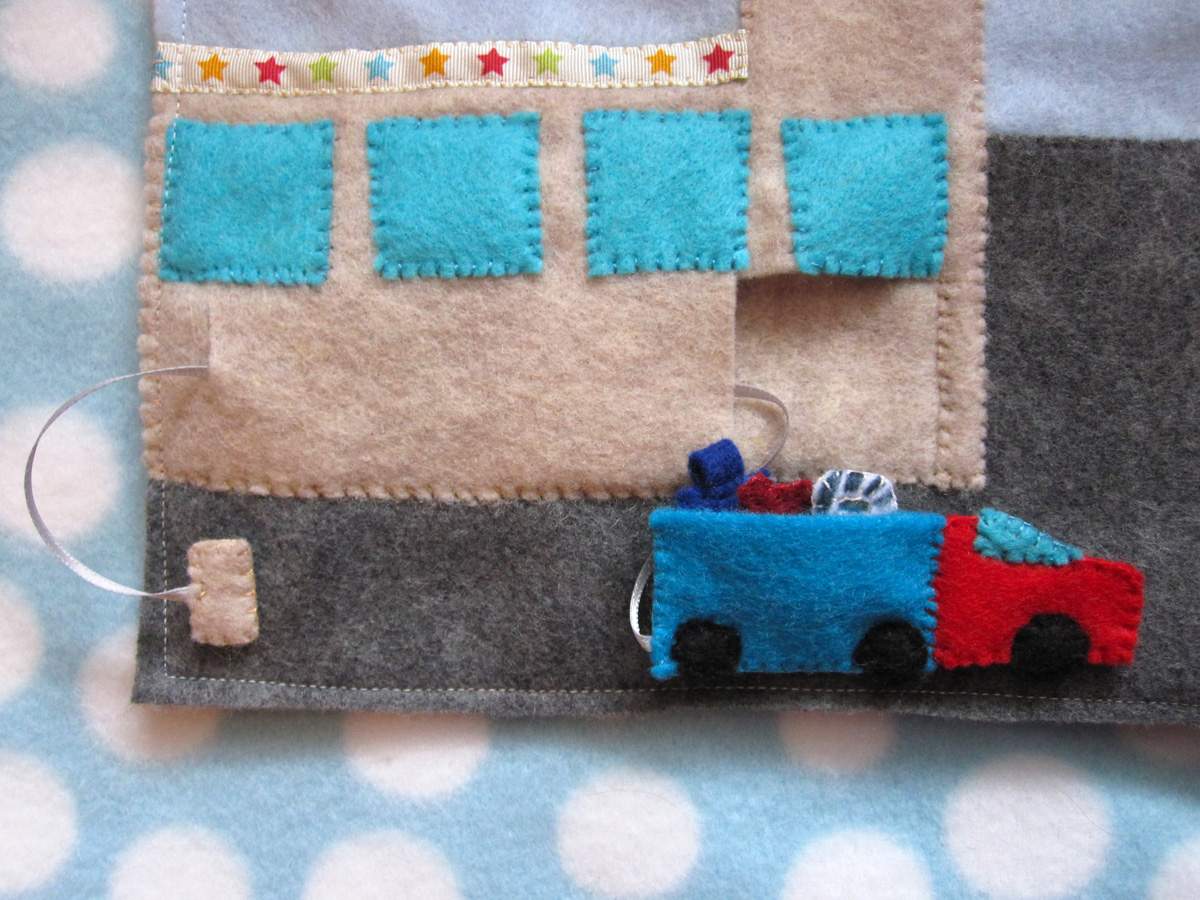
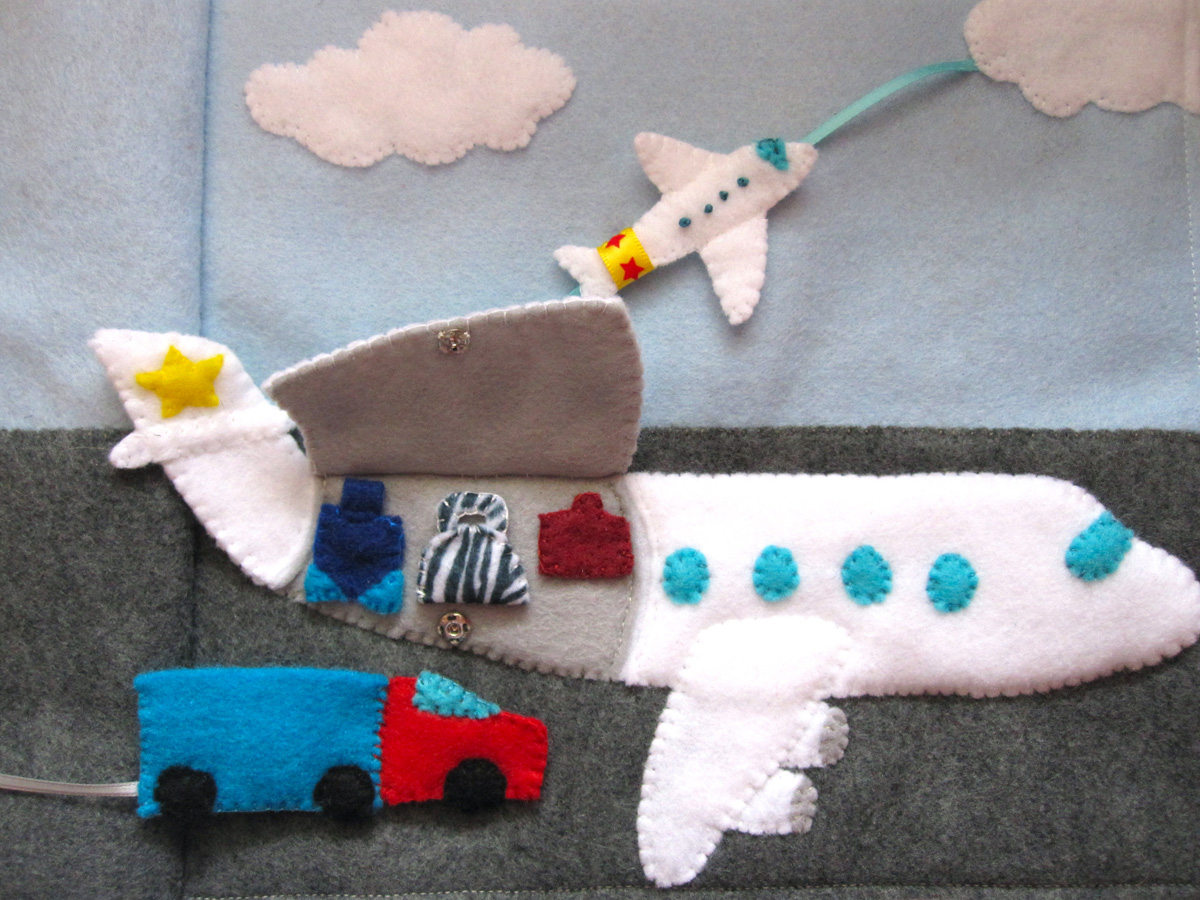
Background: Sew the windows on to the front of the airport. Cut out the door and a small slit for a ribbon to come through on the left side. Thread a length of ribbon through the slit, coming out of the door for the truck. Pin down your ground and airport pieces. You will need to layer a scrap block of felt behind the door of the airport. Sew down the airport building, leaving the door open. Sew the air traffic control window and roof on and add decorative ribbon if you’d like. (You could add photos of loved ones to the tower and windows of the airport and sew clear vinyl over top.) Pin and sew clouds to the sky. I caught one end of my blue “small plane” ribbon under the cloud in the upper right corner and the other end under edge of the ground. Sew down the ground.
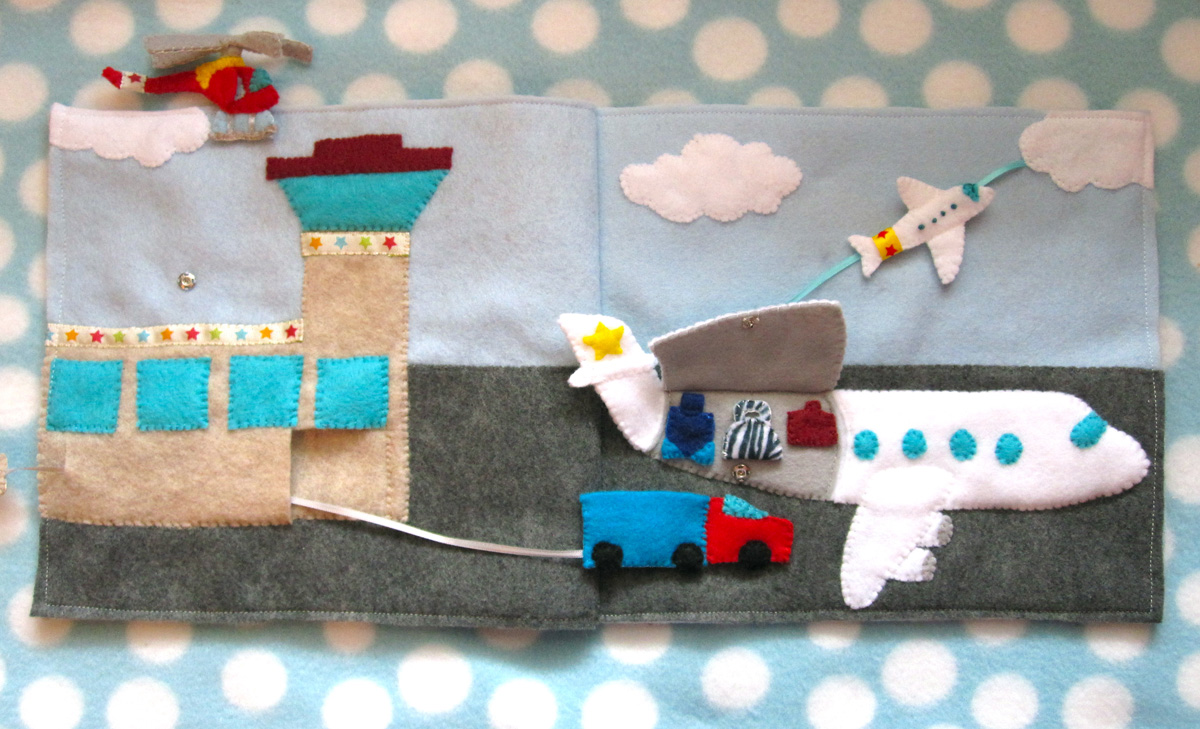
Baggage Truck: Pin the truck bed and cab pieces onto the end of the ribbon. Sew the sides and bottom of the bed (making a pocket for luggage) and all the way around the cab. Add the wind shield and wheels. Sew a folded scrap rectangle of felt to the left end of the ribbon to keep it from going through the slit.
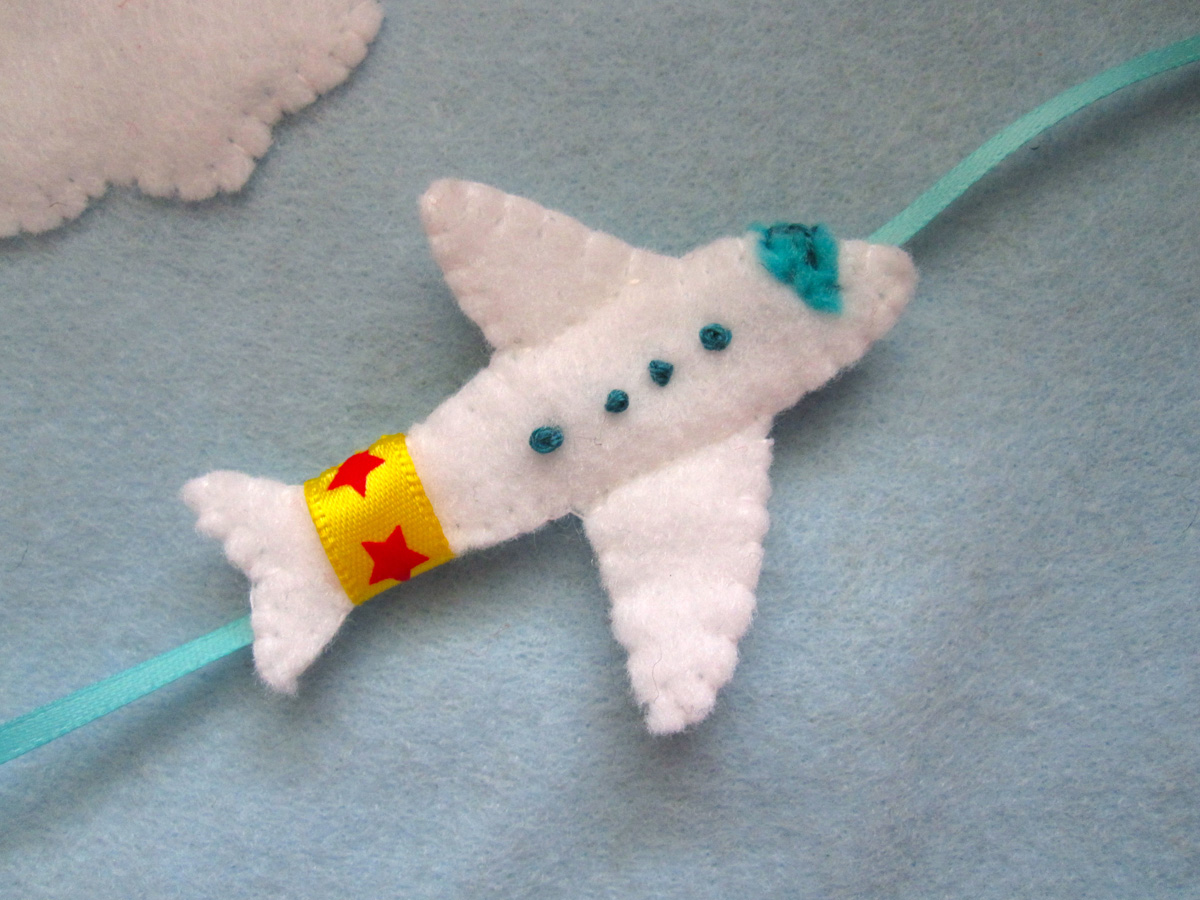
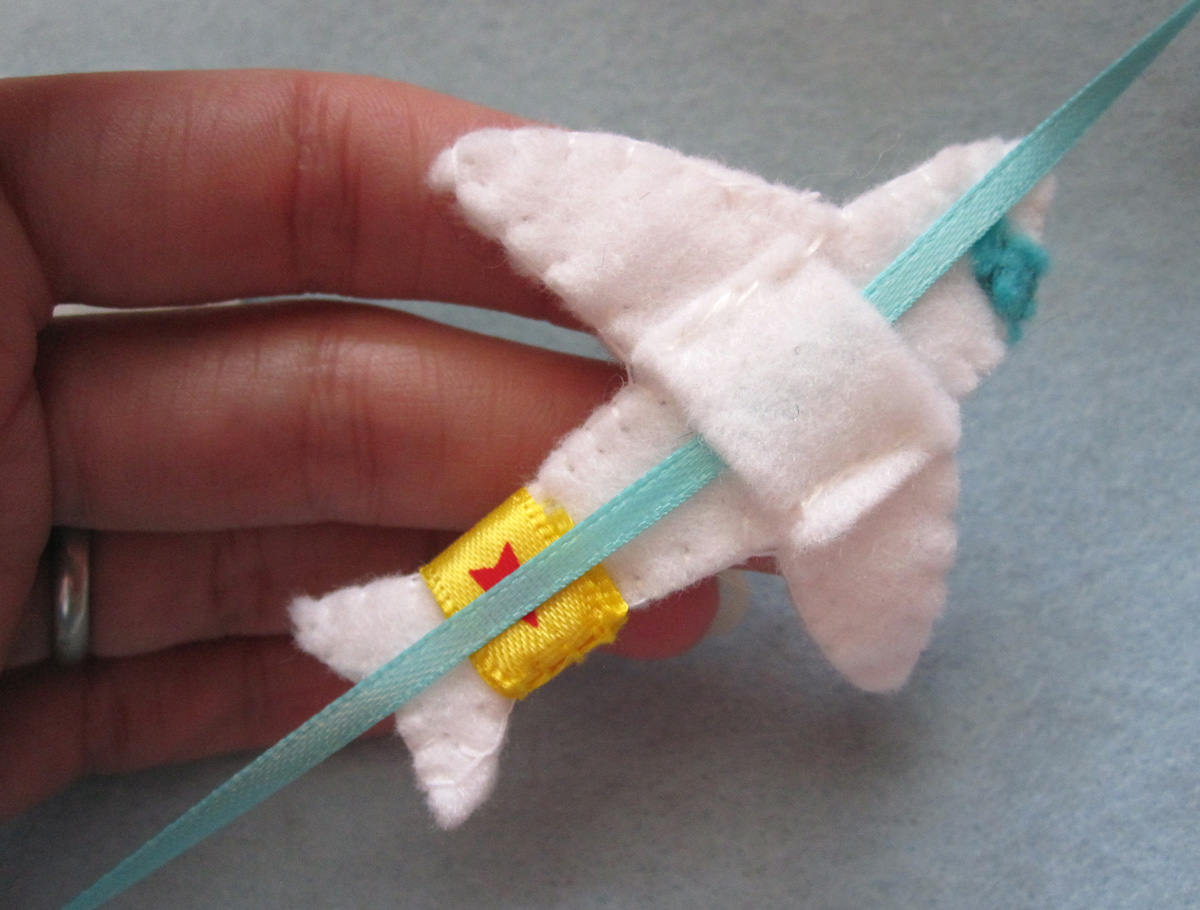
Small Airplane: Make 4 French knot windows on the top small plane piece. Sew the wind shield pieces on each side. Sew the two plane pieces together. Decorate the plane’s tail by sewing some decorative ribbon around it. Take a scrap square of white felt and sew the top and bottom of it to the back of the plane with the blue ribbon running through it. Your stitches will make the accent lines across the base of the wings. Your small plane should then “fly” up and down the ribbon.
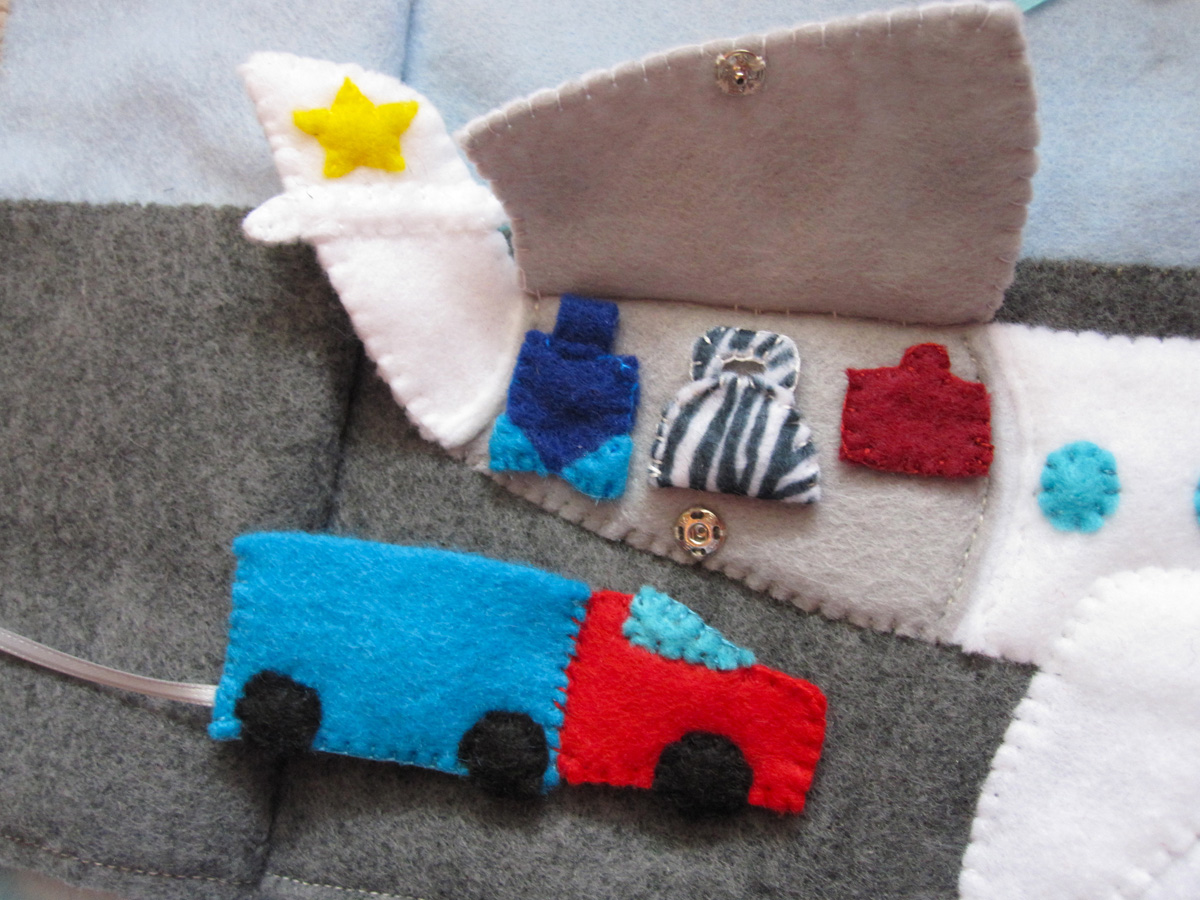
Large Airplane: (Because the airplane was wider than my 9″ pages, I had the airplane’s tail sticking off the page so it can fold over when the page closes. My instructions assume you do the same.) Pin the base airplane piece down to the page, leaving the tail unpinned. Cut the top airplane piece into 3 segments. Sew stars to the two tail side, then sew the tail together. Add the tail fins. Sew windows and wind shield to the front two airplane segments. Pin down and sew the engines, wing and front airplane segment. Sew the bottom half of the gray cargo hold piece to the page in the middle segment of the airplane. Fold down the rest of the cargo hold piece and sew the middle segment of the top airplane to it to make a flap that lifts to show the baggage. Sew a snap on to hold the flap closed, and add snaps to secure any bags you make.
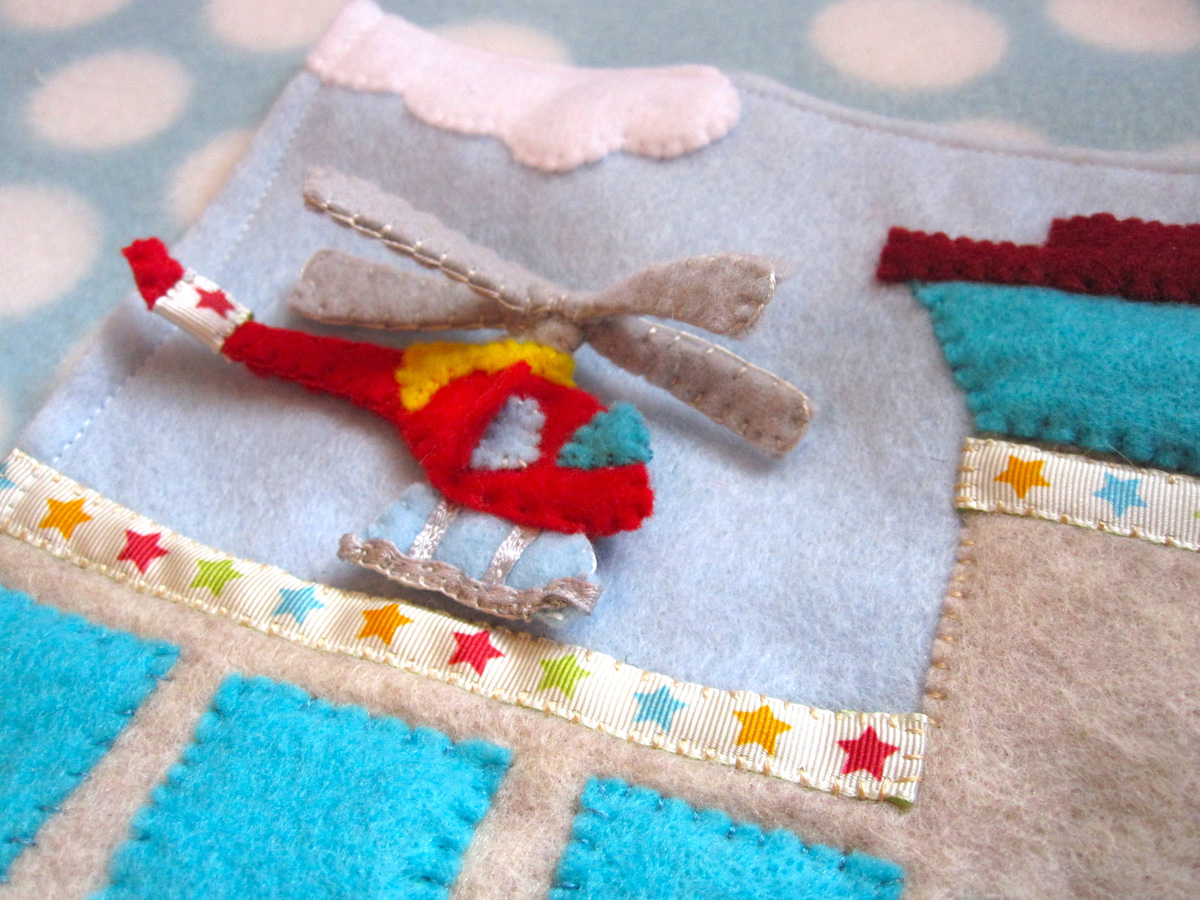
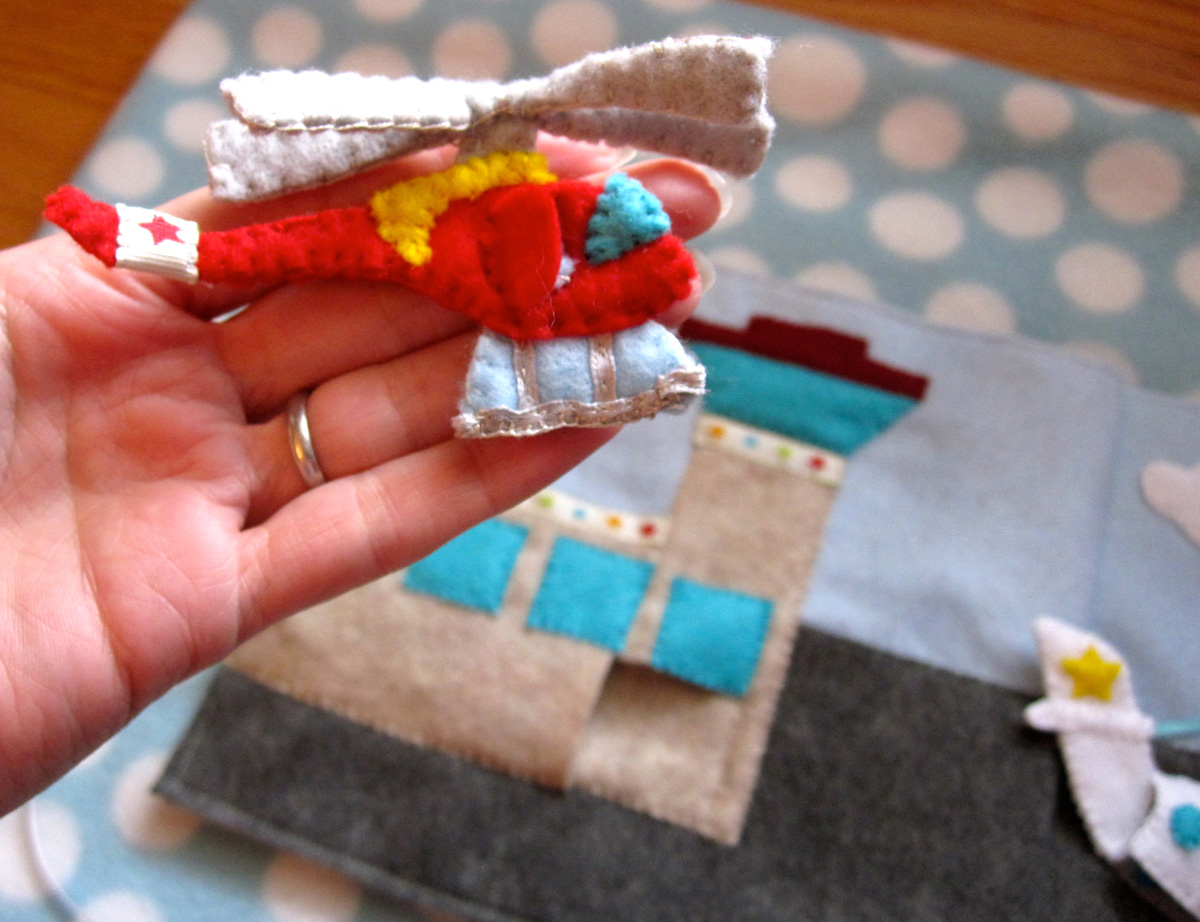
Helicopter: Sew the two blade pieces together. Fold the “x” in half where indicated on the pattern and make a few stitches int he center to hold it down. Sew thin ribbon down to both sides of the landing gear background pieces as indicated on the pattern. Sew the two sides together. On the front piece of the helicopter, sew down the wind shield, accent piece and inner door piece. Sew down the door along one side so it opens. On the back piece of the helicopter, sew down the wind shield, accent piece and a snap. Sew the front and back together with the blades and landing gear in place. Sew the other half of the snap to the page above the roof.
Luggage: I didn’t use patterns for my luggage because they are so tiny! I did draw up what I made afterwards, so you can use those as a guide if you’d like. They just need to fit in the cargo hold (and truck bed) and have snaps to attach them.
Jax hasn’t really played with this yet because it is for our beach trip, but he loves the little helicopter and the small plane that takes off. I think he’s going to enjoy it!
I am very behind here. Heck, I’m very behind in life! The weekend before this past one, I came down with a bad cold. It hit hard with a terrible sore throat and fevers. It turned into a regular bad cold as the week went on. Just as I started feeling better, I woke up early on Friday with a high fever again! I spent all day with fevers and no appetite, then Saturday it turned into a stomach virus. Ugh!! I was pretty much in bed all weekend and didn’t eat anything but some toast for Easter brunch. Finally Sunday night I was able to eat a baked potato, and it was heaven!
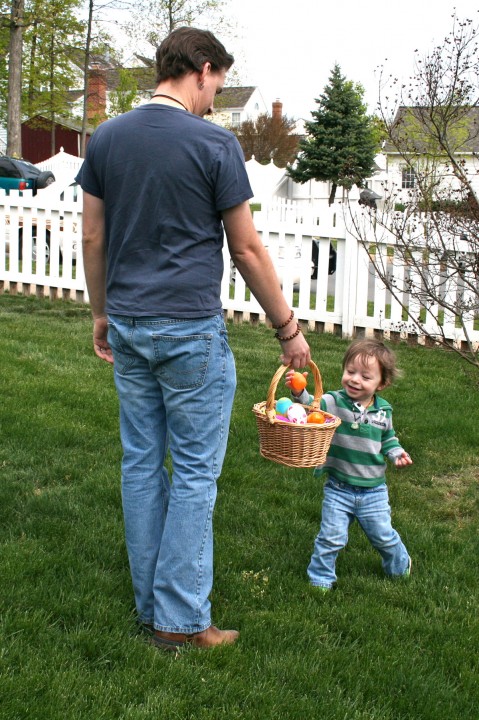
I did at least hide eggs for Jax on Sunday morning. The egg hunt was a big success. And Jax LOVED having me nap in bed with him both days this weekend. He took 4 – 5 hour naps!
Today I am incredibly weak and only able to eat a few bites at a time, but thankful to be on the mend. I am practically doubled over from this bad cough that is trying to kick the mucus out of my lungs, but it makes me optimistic the cold is ending too.
I have to give a huge, special thank you to Barbara C. Halfway through my terrible (horrible, no-good, very bad) week, a little package arrived. Inside was a gorgeous handmade card (with moving parts!), a Joann’s fabric store gift card, a big bag of amazing stickers for Jax and a thank you note about my blog. Jaw, meet floor. Barbara, are you physic? Your little package of kindness couldn’t have been better timed. That gift card will be used to buy supplies so I can sew a bunch of quiet book pages while on vacation in May. Thank you, thank you, thank you!! Jax went nuts over the stickers – I normally get him dollar store ones. These are quality stickers! His current favorites are the strawberries, “space ships” (space shuttle) and fire engine.
Barbara, you’ve inspired me to pass on your random act of kindness to a fellow blogger who inspires me in the future!
You can follow me on Instagram (now out for Android phones too!) at username iolstephanie. I post a lot!
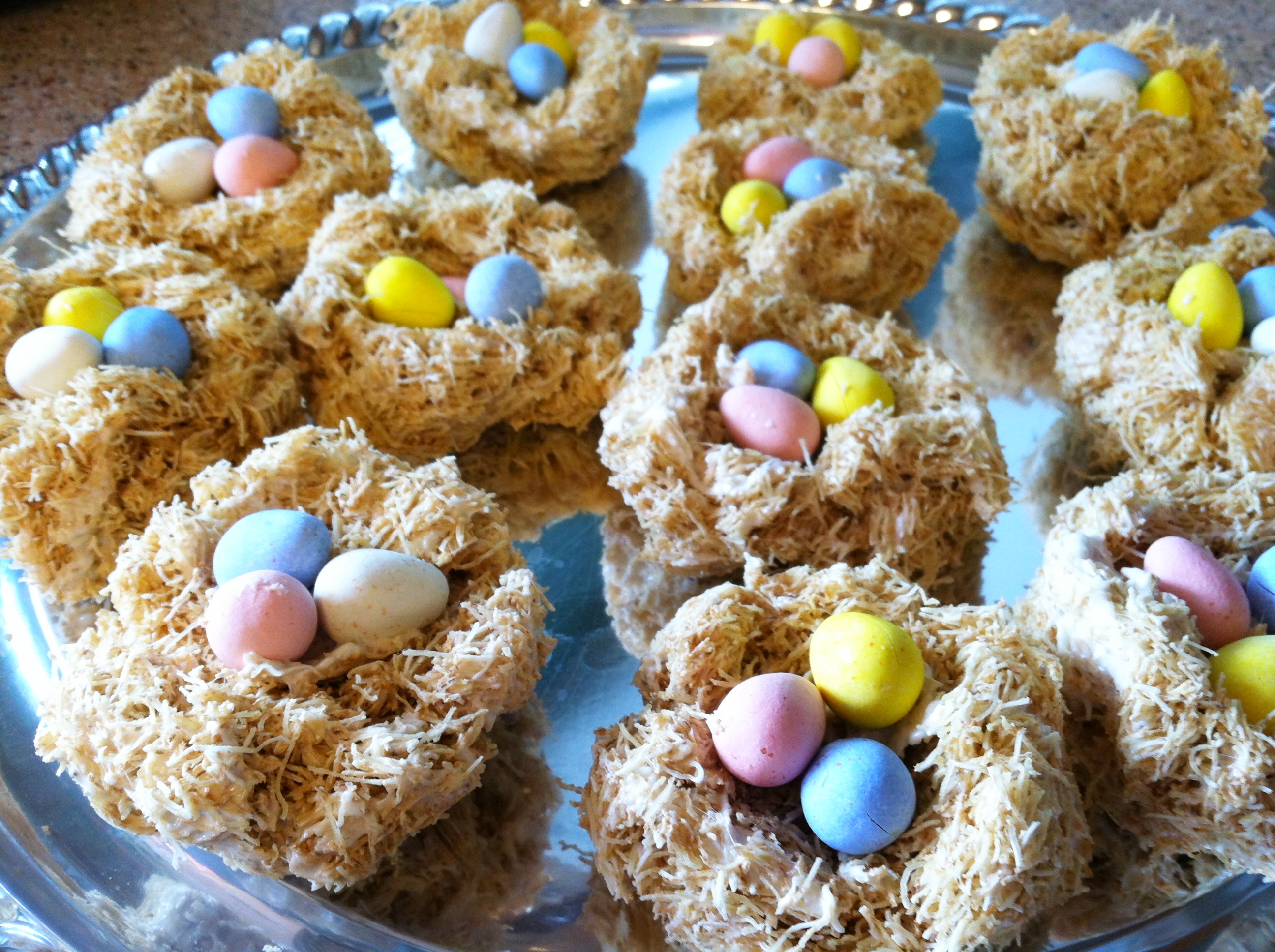
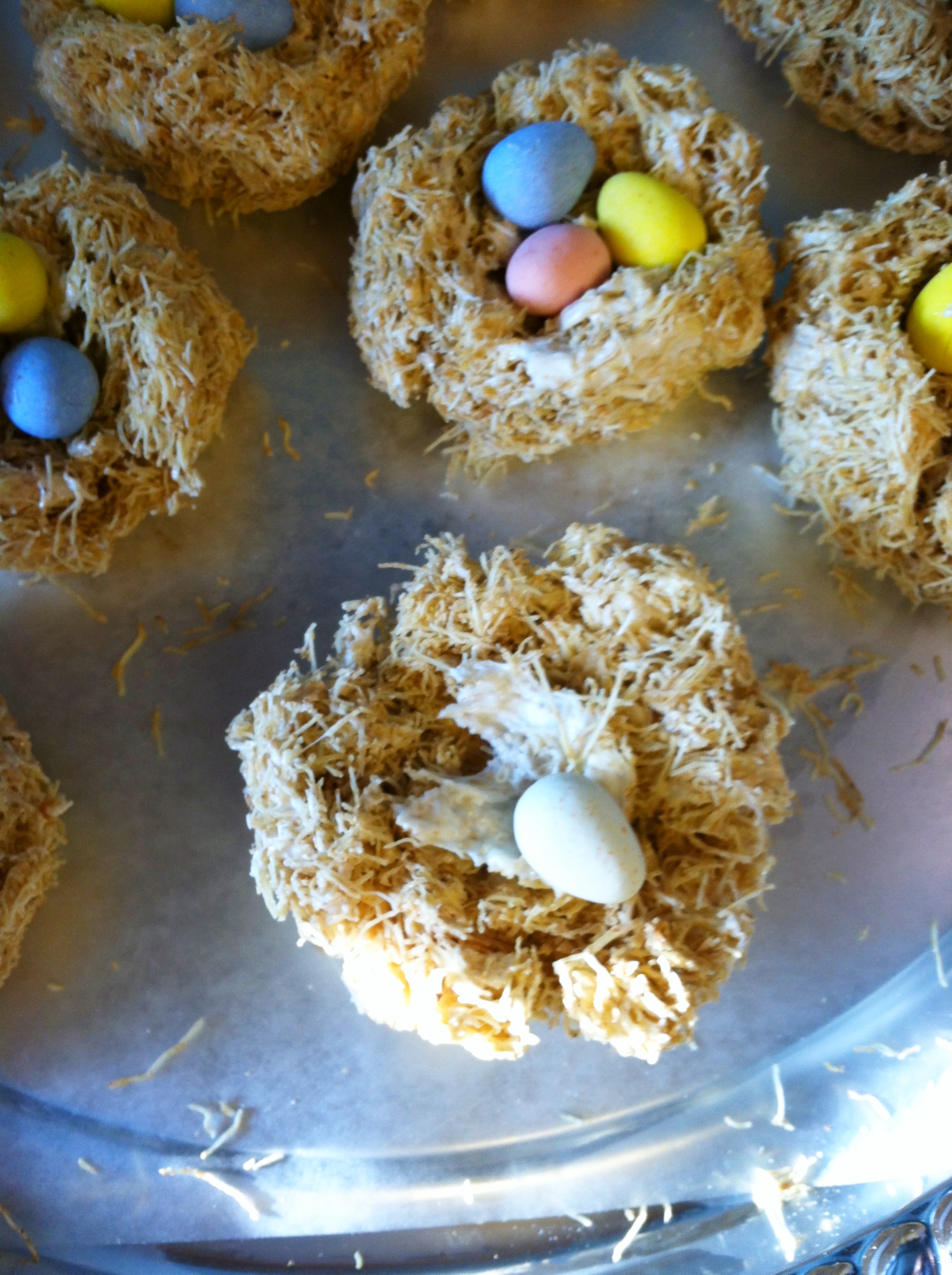
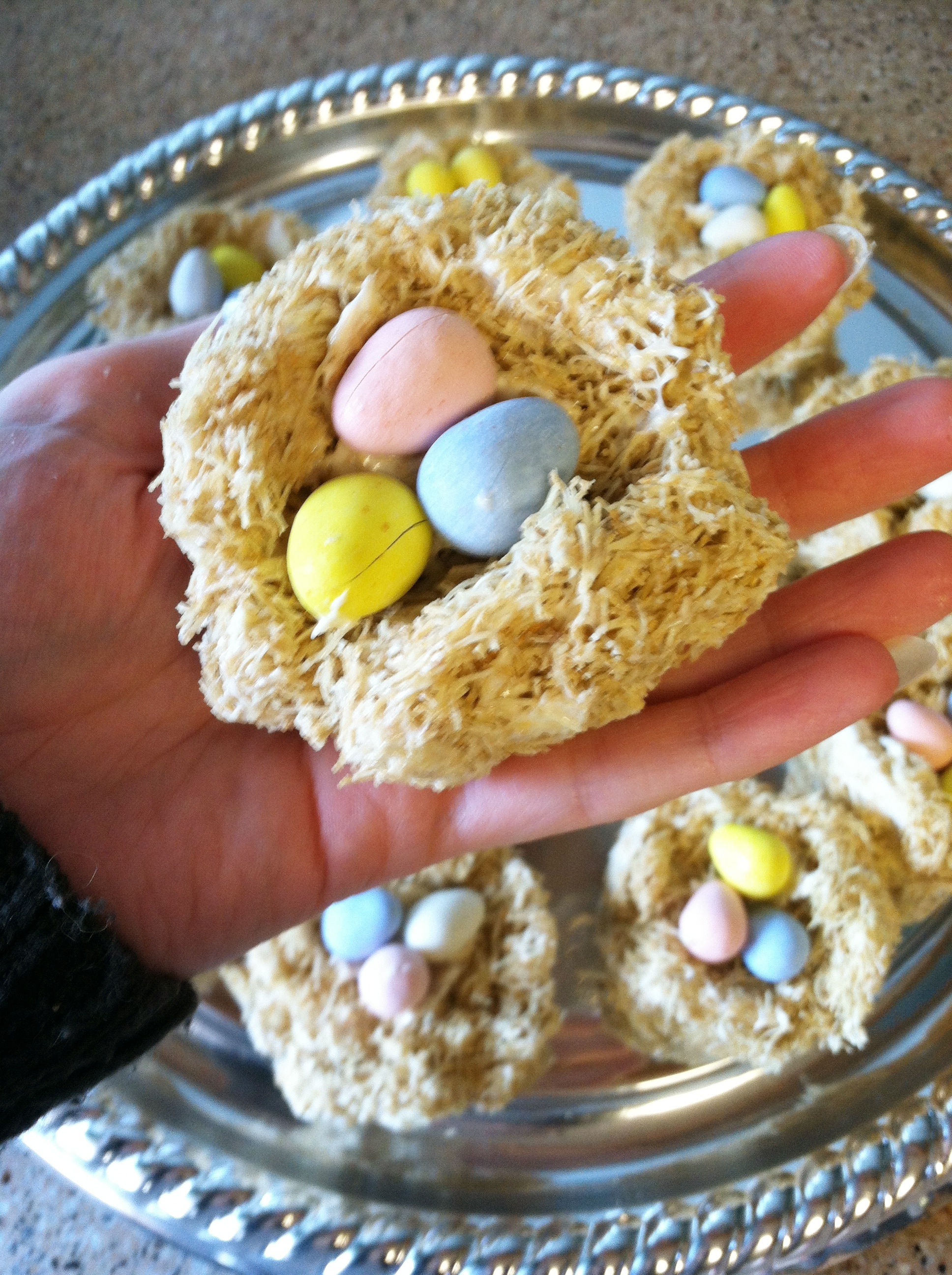
When I saw these bird nests on one of my favorite blogs, Enjoying the Small Things, I knew they’d be a perfect activity for Jax and I. She didn’t go into details, but they are very simple to make. I highly recommend reading her blog. Her photos and words are both so beautiful and I’ve been enjoying watching her little girls grow up for some time.
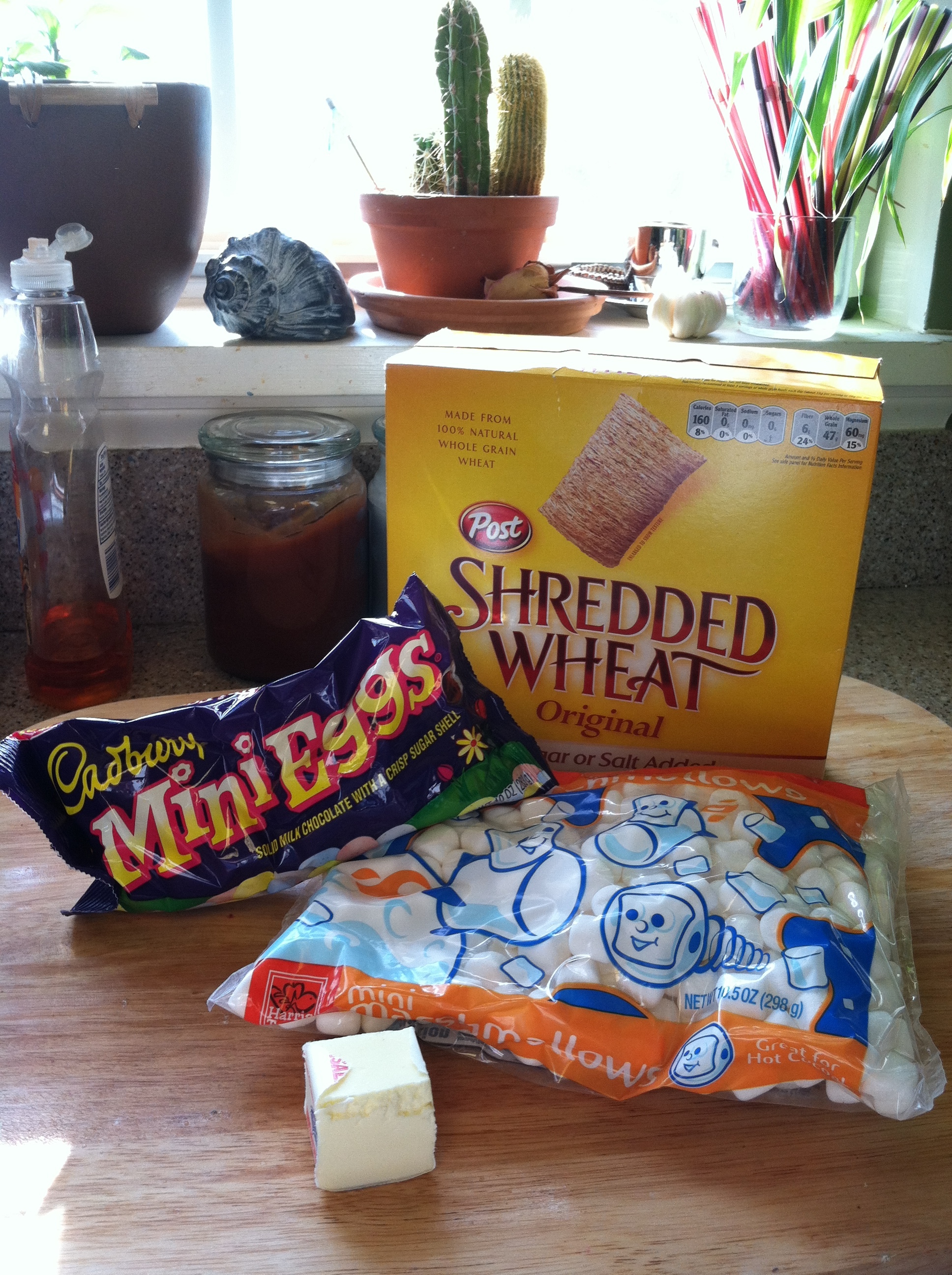
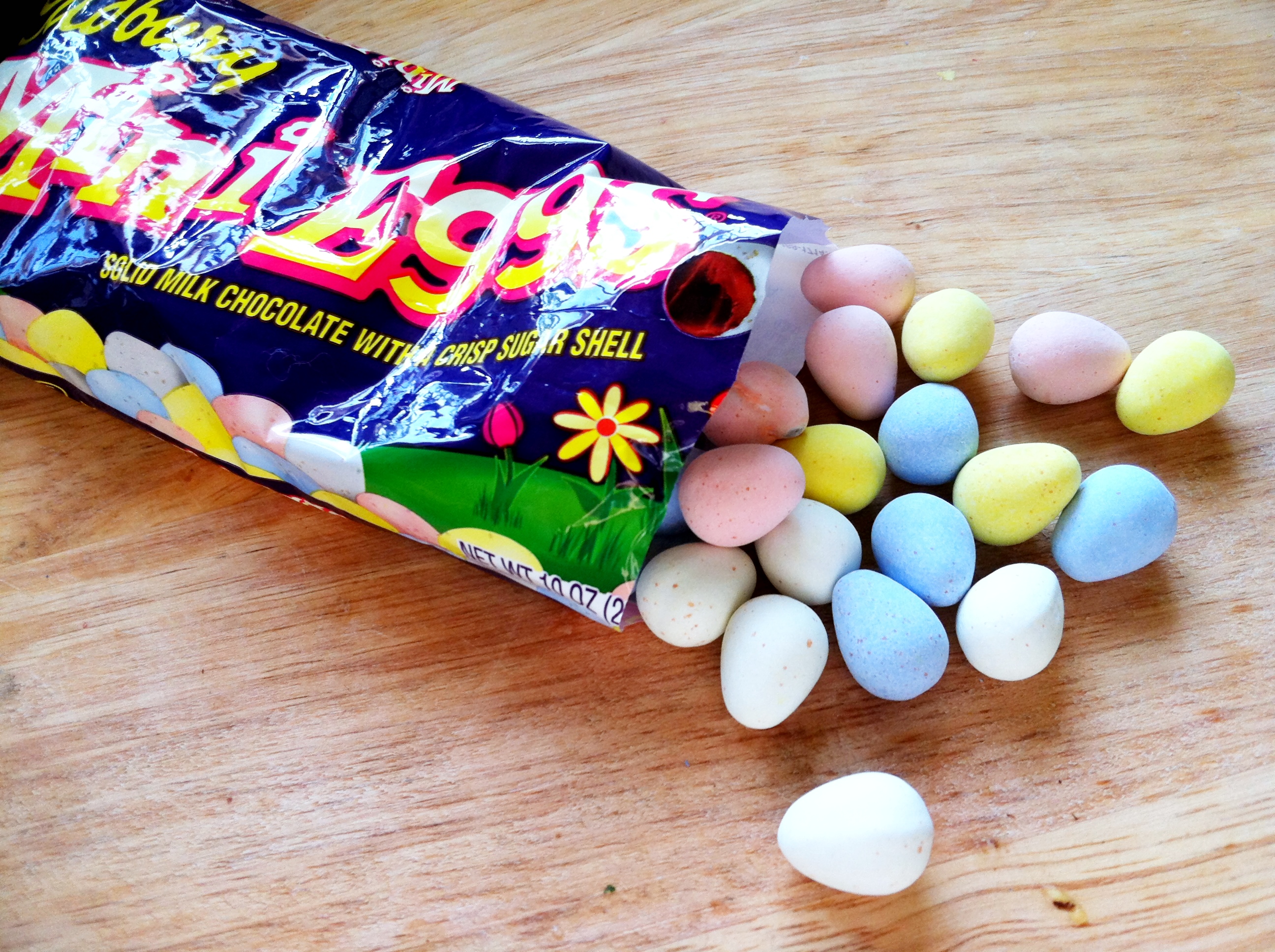
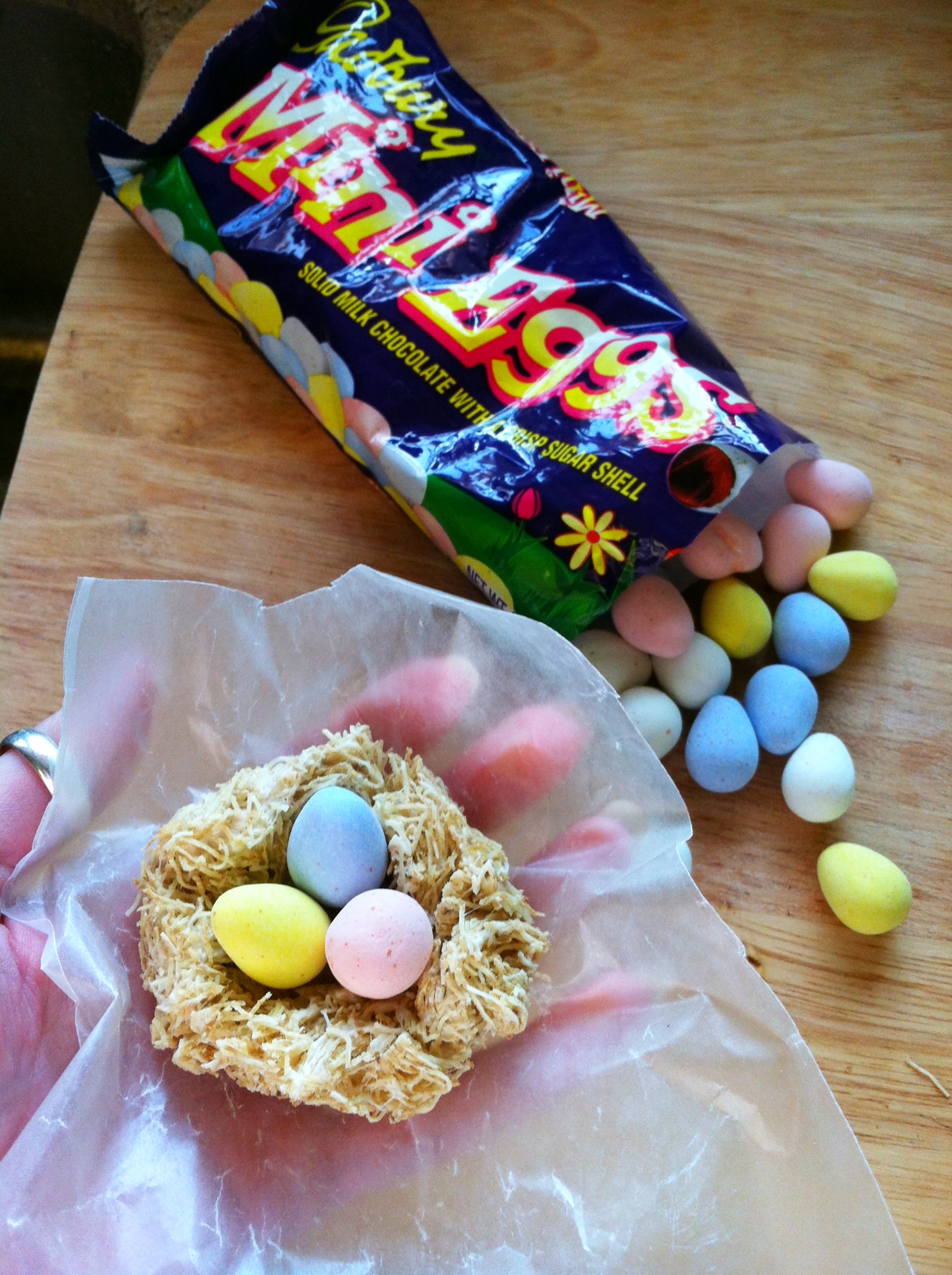
To make the marshmallow treat bird nests you need: a bag of marshmallows, a box of shredded wheat, candy covered chocolate eggs and 2 tbsp of butter. Think rice crispy treats, but with shredded wheat.
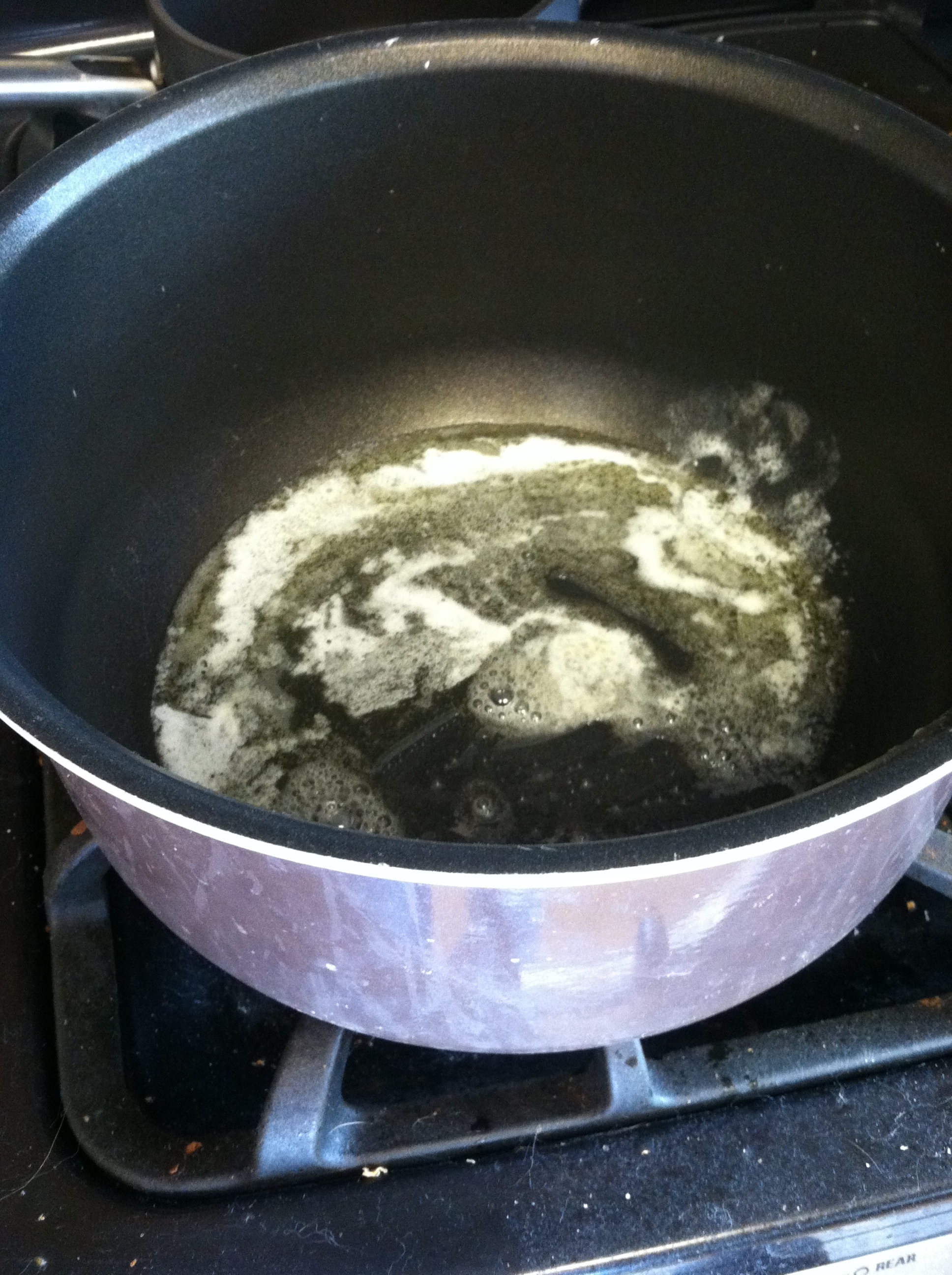
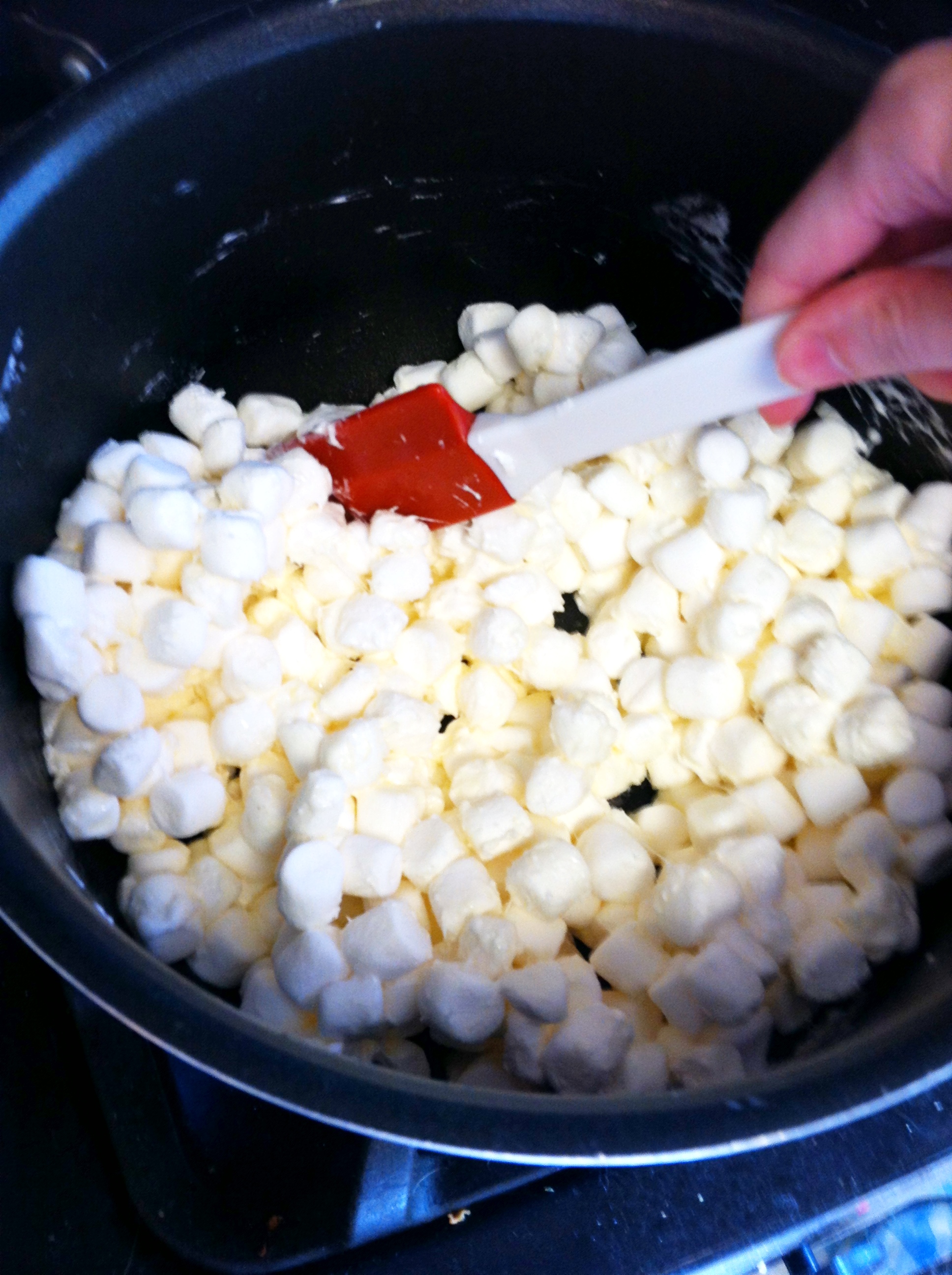
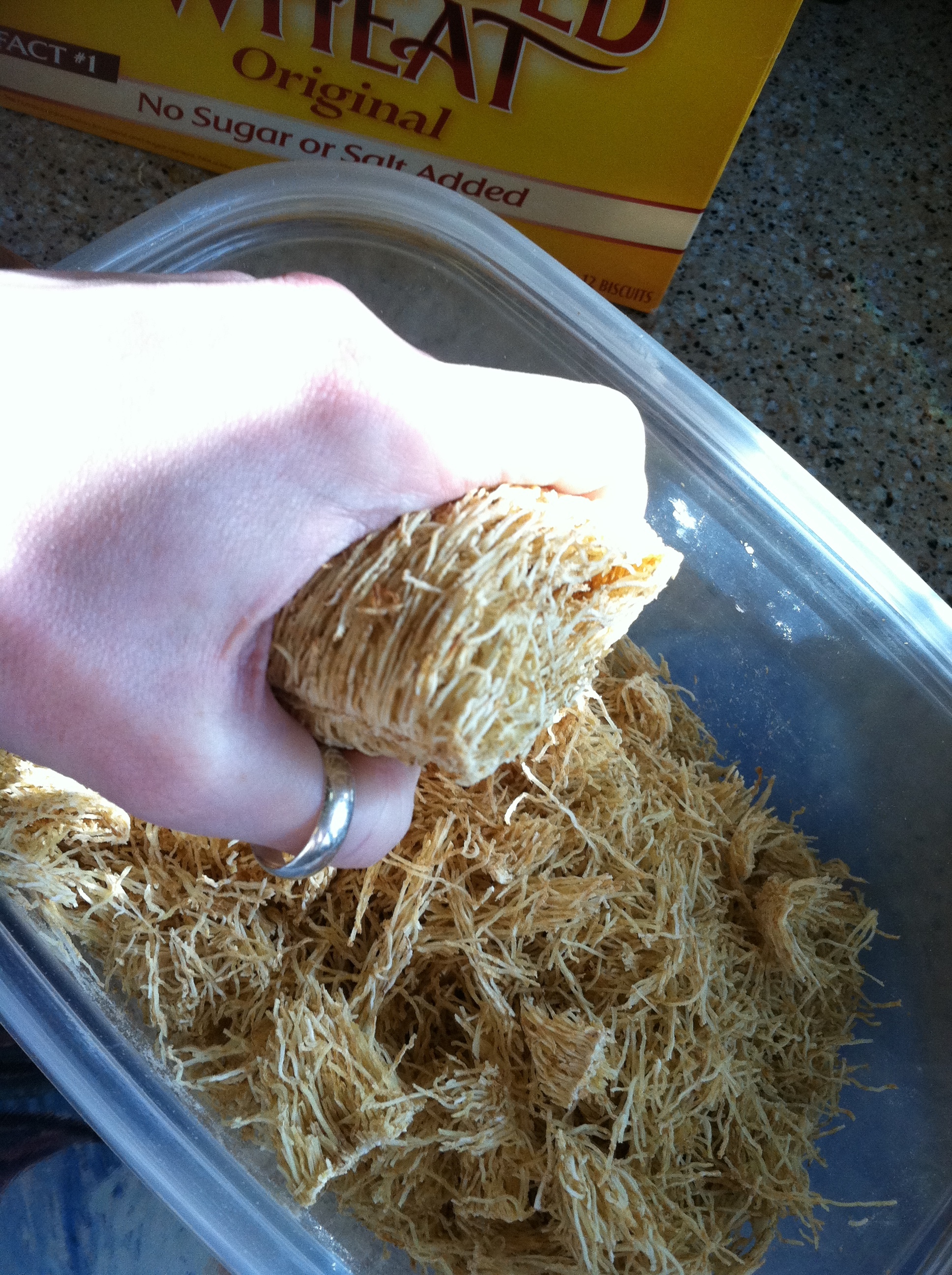
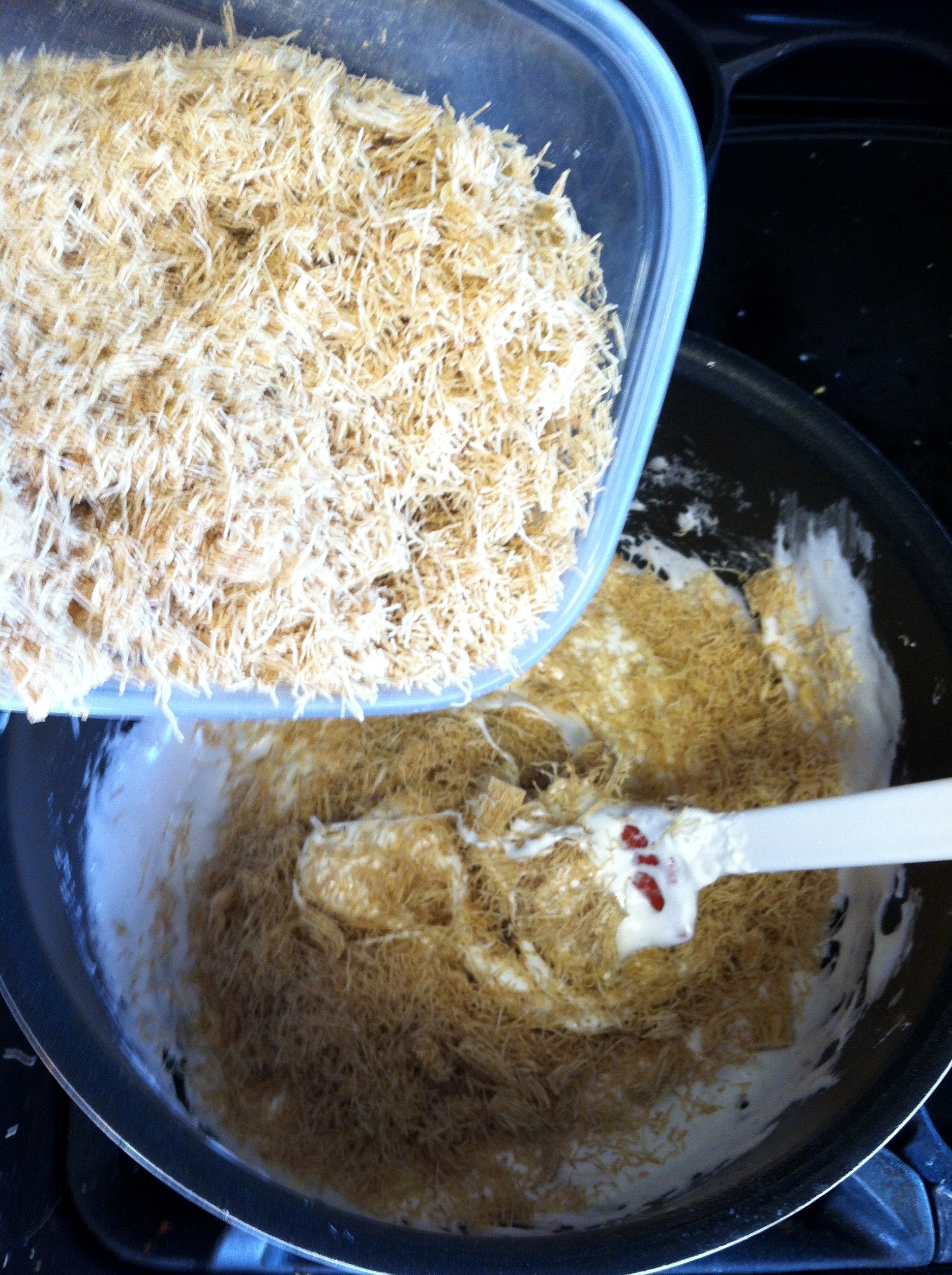
Start by melting the butter on low heat. I used a stock pot so I’d have room to mix in the cereal later. When the butter is melted, add the marshmallows and stir until they are melted and smooth. While stirring, I used my other hand to crumble the shredded wheat biscuits. You could do this beforehand. Remove it from the heat when your marshmallows are melted. I set aside about 2 tbsp of melted marshmallow to act as glue for my candy eggs. Stir the crumbled cereal into the melted marshmallows bit by bit.
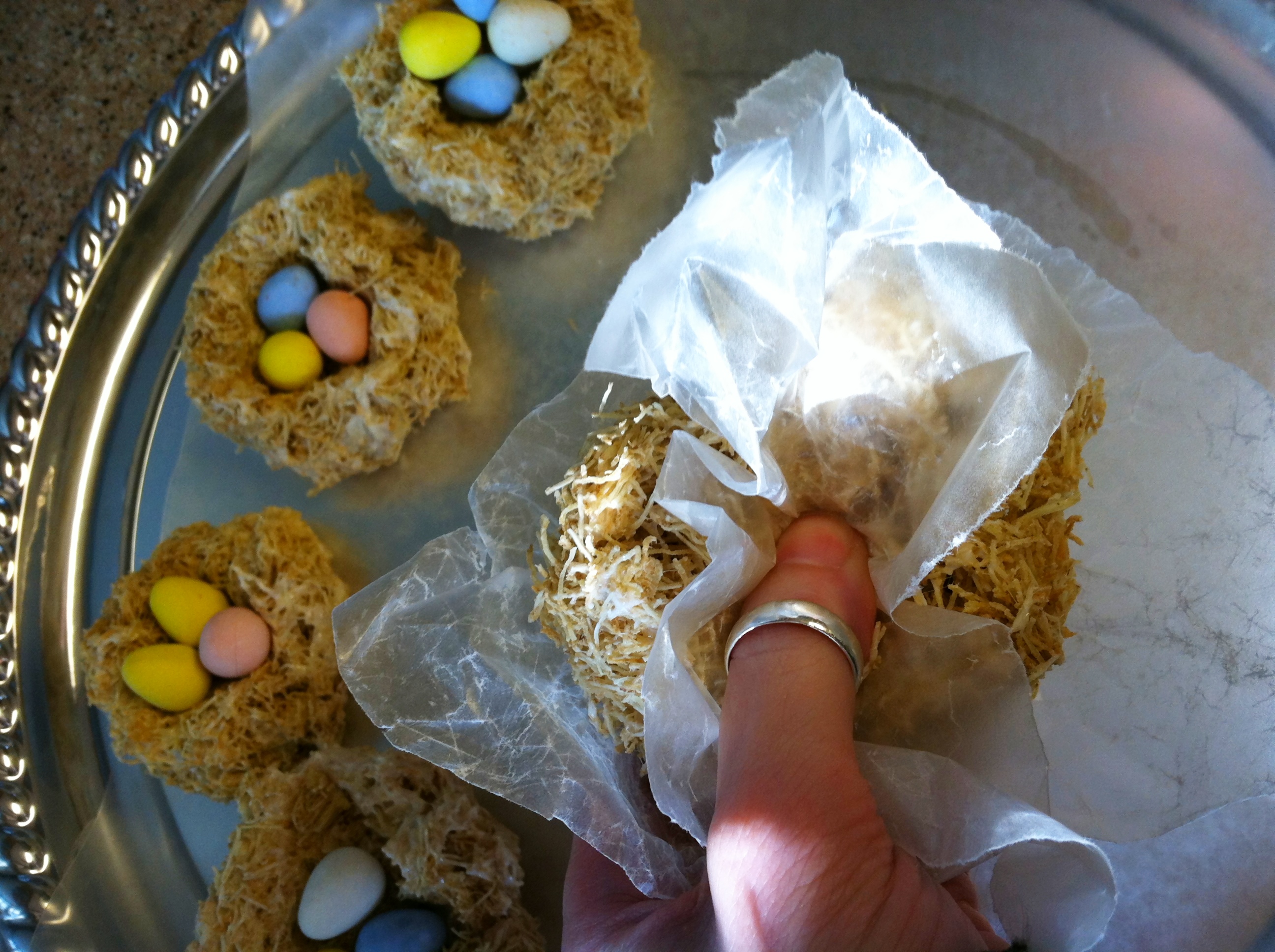
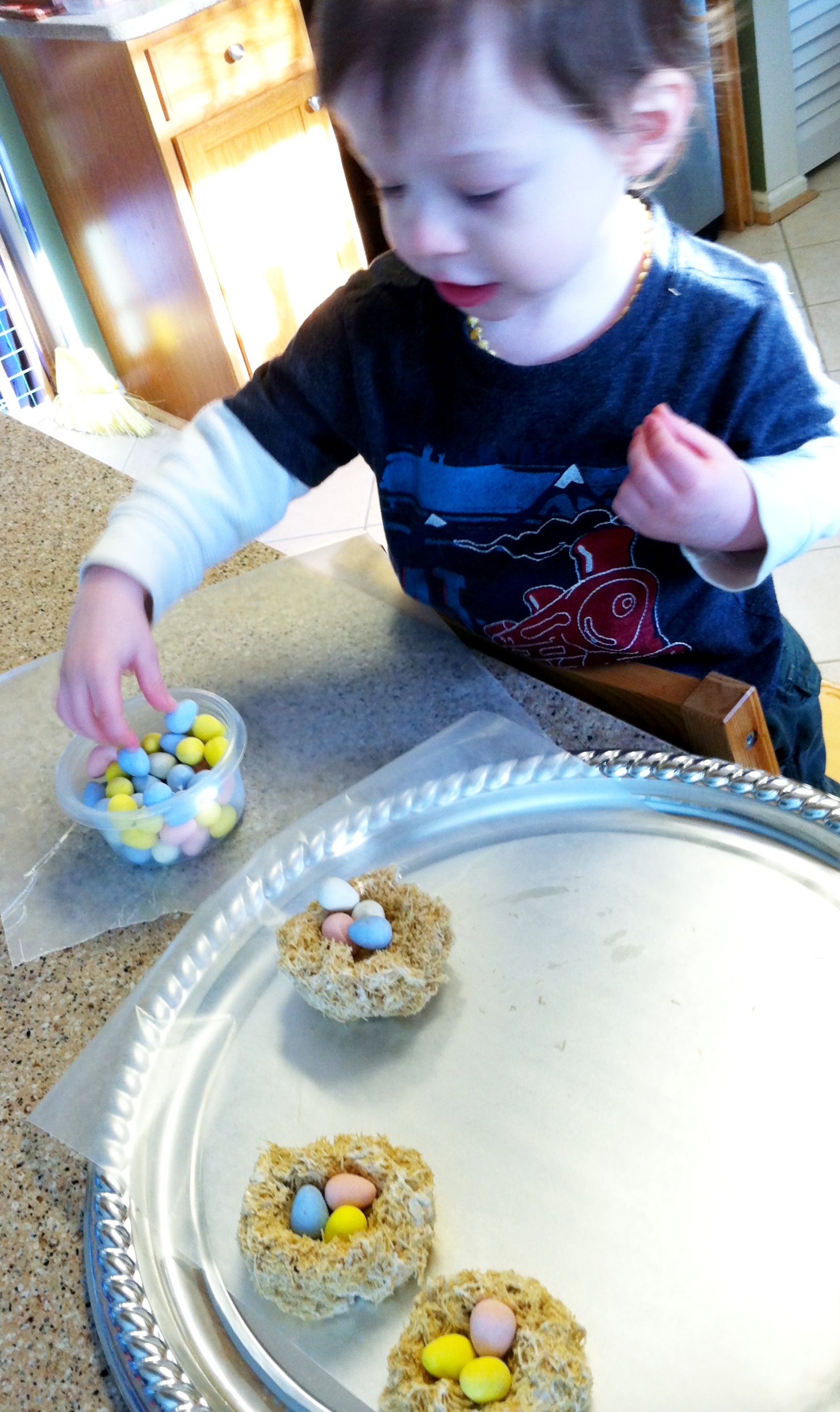
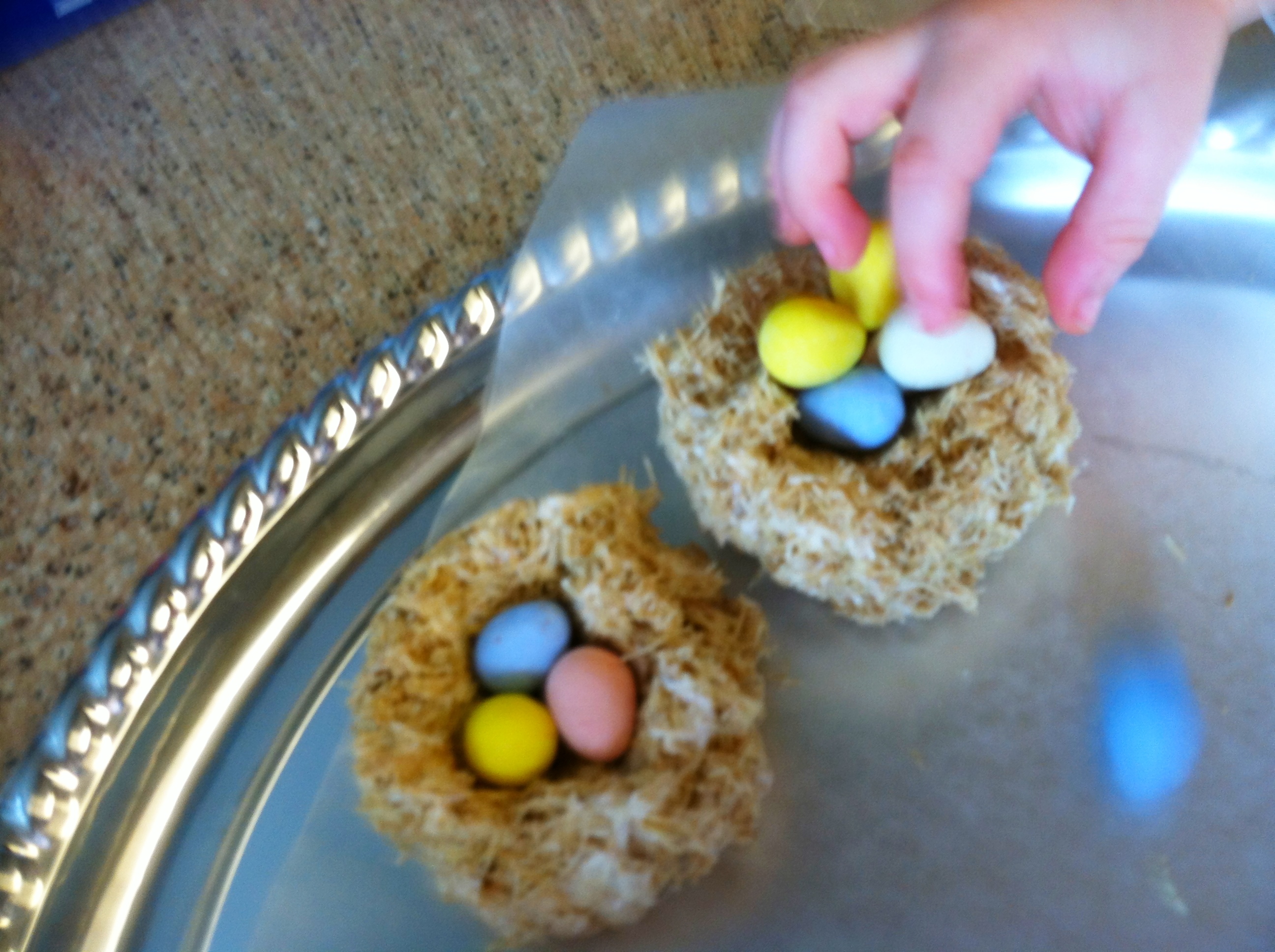
At this point, I called my little helper in from outside. (He had been helping his daddy lay down mulch.) after a hand washing, I put him on egg duty. Jax is very enamoured with baby birds, eggs and nests at the moment. He was thrilled to see a bowl of tiny eggs and watch as I formed a nest. Using a square of waxed paper, I formed a small ball of the marshmallow treat. I then placed another square on top and pushed down to make the hollow of the nest. I added a dollop of the marshmallow I had set aside and Jax placed eggs on top. My little nests held 3 eggs and I made 12 nests.
Jax didn’t realize the eggs were edible until the last nest. He held one up to his mouth and licked it. His eyes got wide and he said, “Oh, delicious!” I gave him permission to eat it and he said “Delicous, chocolate…” while he crunched away.